






Table of Contents
[ Show/Hide ]- • What are the main forex order types?
- • What is a market order?
- • What is a limit order?
- • What is a stop order?
- • Is a stop order the same as a Stop Loss?
- • What is a stop-limit order?
- • Market vs limit vs stop vs stop-limit
- • Which price triggers a pending forex order?
- • Trigger price and fill price are not the same thing
- • Worked examples: market, limit, stop and stop-limit orders
- • What happens to a pending order before it is filled?
- • Common mistakes with forex order types
- • A simple checklist before placing a forex order
- • Final words
- • FAQ
- • Risk warning and disclaimer
- • Sources and methodology
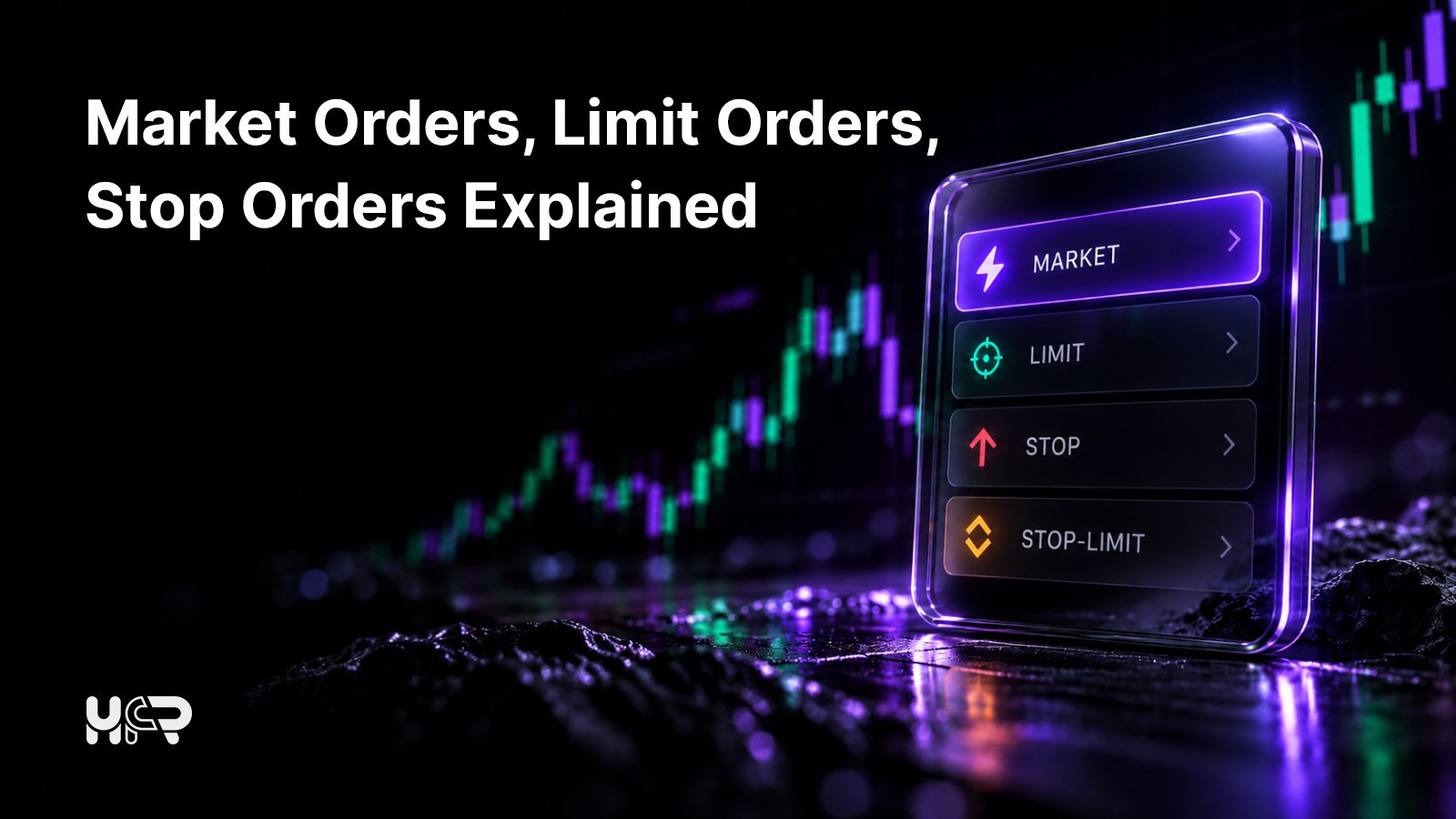
Forex order types control whether a buy or sell instruction acts immediately or waits for a specified price condition. The main types are market, limit, stop, and stop-limit orders.
Each type balances execution speed, price control, and the risk that an instruction remains unfilled.
The price that triggers an order is not necessarily the price at which it executes. Bid and Ask quotations, gaps, liquidity, and broker settings can all affect the outcome.
What are the main forex order types?
MetaTrader 5 (MT5) distinguishes market orders from six pending-order types: Buy Limit, Sell Limit, Buy Stop, Sell Stop, Buy Stop Limit and Sell Stop Limit. Market orders request execution immediately; pending orders wait for a price condition.
Exact availability and execution rules can vary by broker, platform, account and instrument.
What is a market order?
A market order requests a buy or sell at the available price without waiting for a future trigger. It prioritises prompt execution over a fixed entry price.
In typical over-the-counter (OTC) forex trading, buys use Ask and sells use Bid. The displayed quotation is not a guaranteed fill: prices and liquidity can change, while the broker's execution mode may permit a requote or rejection.
If EUR/USD is 1.1000 Bid / 1.1002 Ask, a market buy is sent against Ask. If the available Ask changes before execution, the fill can differ from 1.1002.
For the execution-price side of this issue, see HFR's Forex Slippage Explained guide.
What is a limit order?
A limit entry order normally targets a more favourable price than the current market. Under standard limit-order rules, any fill must be at the specified limit or better, but the order may not execute at all.
How does a Buy Limit work?
A Buy Limit is placed below the current market. In MT5 OTC trading, Ask triggers it when Ask reaches or falls below the order price.
How does a Sell Limit work?
A Sell Limit is placed above the current market. In MT5 OTC trading, Bid triggers it when Bid reaches or rises above the order price.
Why can a limit order remain unfilled?
A chart touch alone does not prove a limit order should have filled. The relevant Bid or Ask, available liquidity and platform rules still matter.
What is a stop order?
A stop-entry order waits for a less favourable price than the current quotation. Once the stop condition is met, it seeks execution; the stop price is not a guaranteed fill price.
How does a Buy Stop work?
A Buy Stop is normally above the current market. In MT5 OTC trading, Ask triggers it when Ask reaches or exceeds the stop level.
How does a Sell Stop work?
A Sell Stop is normally below the current market. In MT5 OTC trading, Bid triggers it when Bid reaches or falls below the stop level.
Why can a stop order fill away from the stop price?
The stop level activates the order; it does not guarantee the fill. Gaps, fast movement or limited liquidity can move execution away from the stop.
Is a stop order the same as a Stop Loss?
No. A stop-entry order requests a new position after its trigger. A Stop Loss is an exit instruction associated with an open position. In MT5 OTC trading, a long position's Stop Loss normally triggers on Bid, while a short position's triggers on Ask. An exit fill can still differ from its stop level.
For the detailed mechanics of exit stops, see HFR's Why Did My Stop Loss Trigger When Price Never Reached It? guide.
What is a stop-limit order?
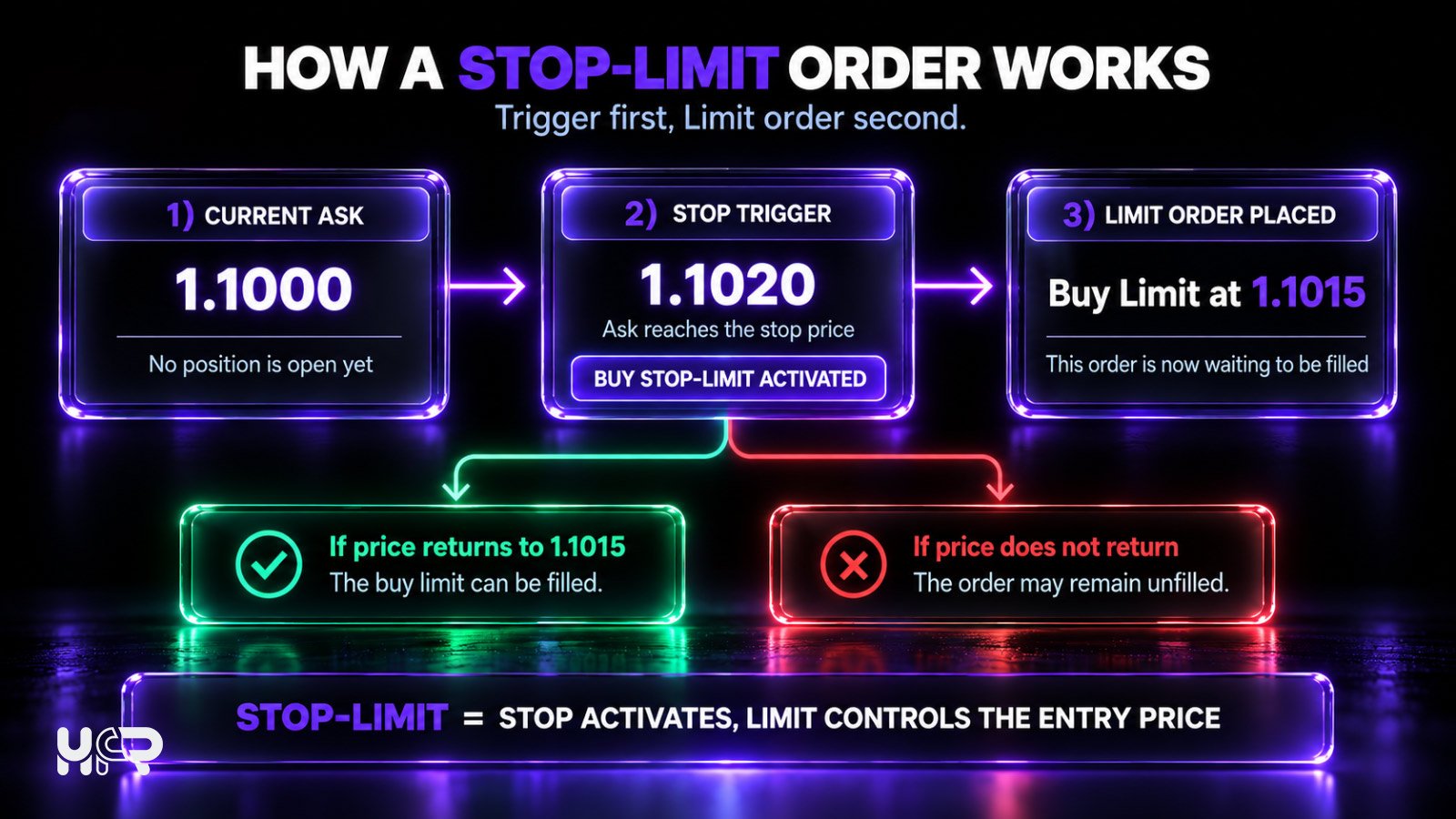
A stop-limit order has two stages: a stop trigger is reached, then the platform places a limit order instead of immediately seeking market execution.
In MT5, a Buy Stop Limit uses a stop above the current Ask and then places a Buy Limit at the Stop Limit price below that stop. A Sell Stop Limit uses the opposite structure below the current Bid.
A stop-limit therefore sets a limit price after activation, but it does not guarantee execution. The limit order can remain pending even after the stop triggers. Availability varies by broker, platform, and symbol.
Market vs limit vs stop vs stop-limit
| Order | When it acts | Price control | What can go wrong |
|---|---|---|---|
| Market | Immediately | Lowest: seeks the available market price | Price can move before the fill; rejection or partial execution can also depend on broker rules. |
| Limit | When the limit price or a better price is executable | High: no worse than the limit under normal limit-order logic | The order may never fill. |
| Stop | After the stop trigger is reached | Lower after activation | The fill can differ from the stop level because of slippage or gaps. |
| Stop-Limit | A stop trigger first places a limit order | High after the limit order is placed | The trigger can occur but the limit order can remain unfilled. |
Market and stop orders can fill away from the displayed or trigger price; limit-based orders can remain unfilled.
Which price triggers a pending forex order?
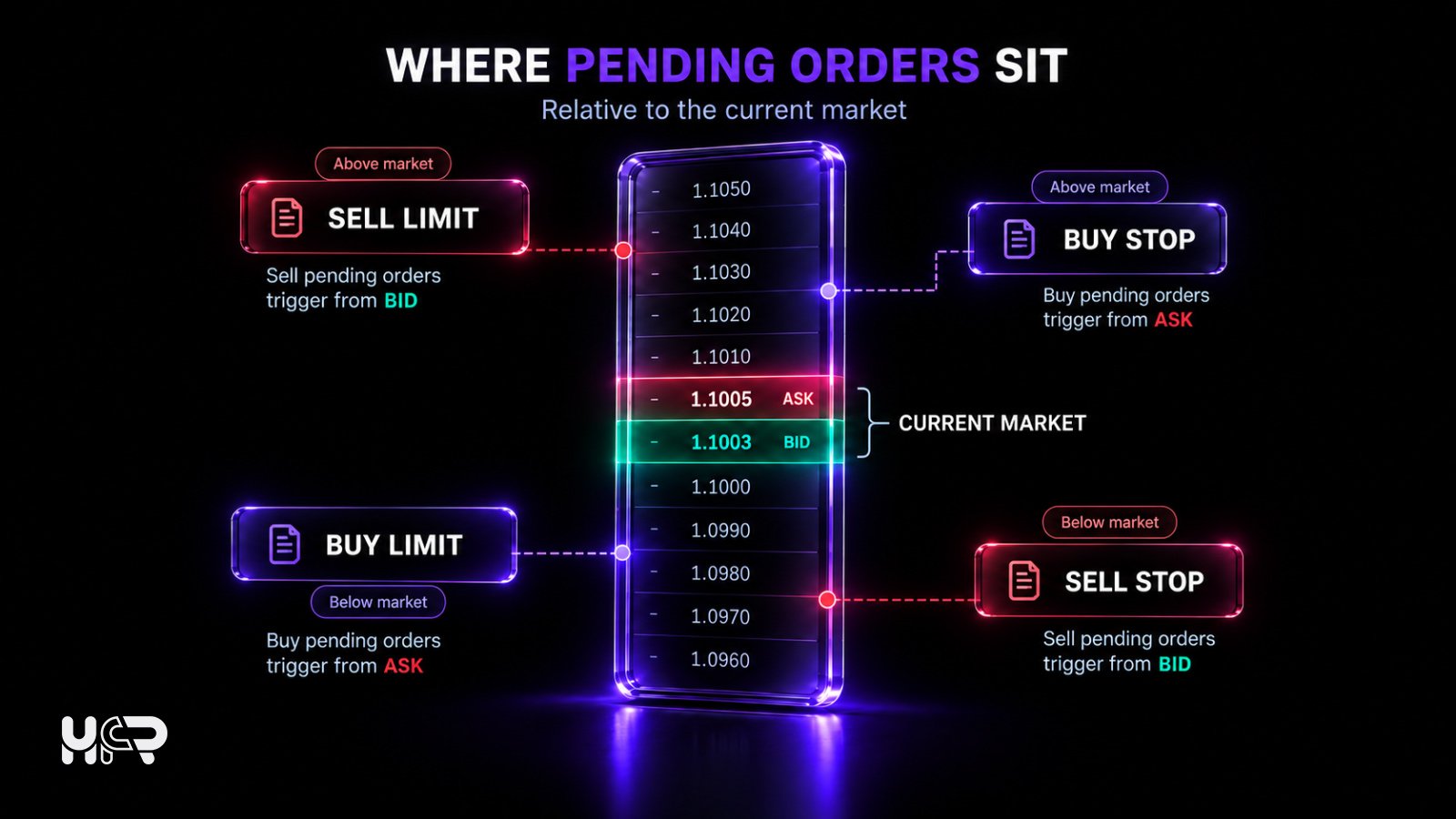
For MetaTrader 5 OTC instruments, buy pending orders are typically triggered by Ask and sell pending orders by Bid. This can differ from a single chart line.
| Pending order | Typical MT5 OTC trigger | Placement relative to current market |
|---|---|---|
| Buy Limit | Ask <= order price | Below the current Ask |
| Buy Stop | Ask >= order price | Above the current Ask |
| Sell Limit | Bid >= order price | Above the current Bid |
| Sell Stop | Bid <= order price | Below the current Bid |
For a fuller explanation of the two-sided quote, read HFR's Bid vs Ask in Forex guide.
Do not apply these OTC rules automatically to every market. MT5 documents separate exchange-traded behaviour, where pending orders commonly trigger from the last price under exchange rules.
Trigger price and fill price are not the same thing
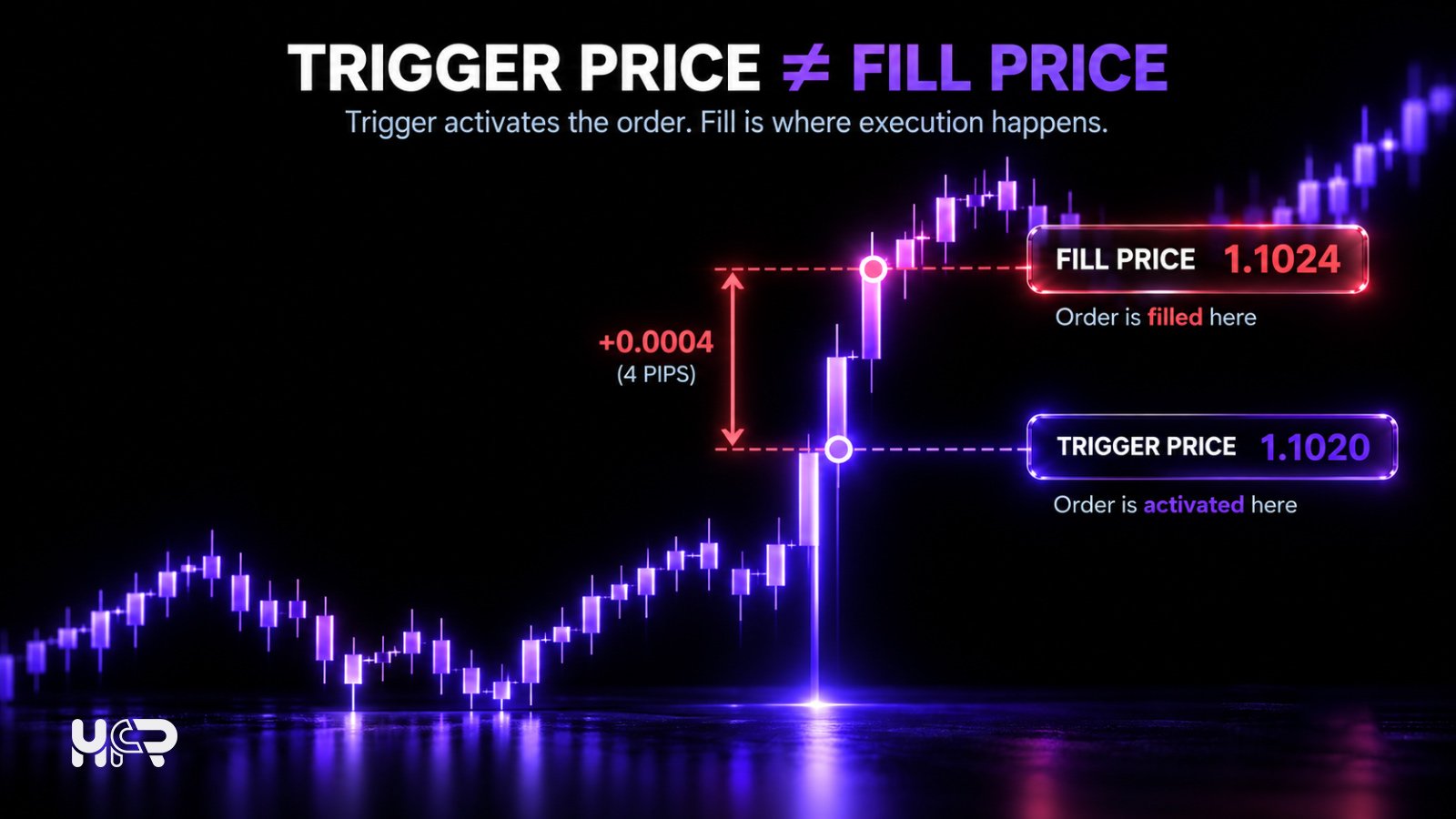
The trigger price determines when a pending instruction activates. The fill price records the price at which an ensuing deal is executed. A stop-limit trigger can place a limit order without producing any deal.
A gap makes this distinction obvious: price can jump across a stop level without trading at every intermediate price, leaving the next executable price beyond the trigger.
For context on fast-changing quotations, see HFR’s guide to why forex spreads widen.
Worked examples: market, limit, stop and stop-limit orders
EUR/USD market, limit and stop example
Assume EUR/USD is quoted at 1.1000 Bid / 1.1002 Ask. These simplified examples ignore commission, margin, and later price movement.
| Instruction | Example level | What happens |
|---|---|---|
| Market Buy | Current market | Seeks execution now on the buy side. The fill may differ from the displayed Ask if the quote changes. |
| Buy Limit | 1.0980 | Waits for Ask to reach 1.0980 or lower, then seeks execution at the limit or better. |
| Buy Stop | 1.1020 | Waits for Ask to reach 1.1020 or higher, then activates an order that seeks execution. |
| Sell Limit | 1.1020 | Waits for Bid to reach 1.1020 or higher, then seeks execution at the limit or better. |
| Sell Stop | 1.0980 | Waits for Bid to reach 1.0980 or lower, then activates an order that seeks execution. |
When reviewing a trigger, use the price side defined by the platform and instrument rather than only the visible candle.
MetaTrader 5 stop-limit example
Suppose EUR/USD Ask is 1.1000. A Buy Stop Limit has a stop at 1.1020 and a Stop Limit price at 1.1015. When Ask reaches 1.1020, MT5 places a Buy Limit at 1.1015; no position is opened merely because the stop triggered.
If price stays above 1.1015, the Buy Limit can remain pending; a simple Buy Stop instead seeks execution after triggering.
What happens to a pending order before it is filled?
Good Till Cancelled and order expiry
MT5 supports expiration modes such as Good Till Cancelled, Today, and specified dates, subject to server settings. If the broker disables an option, it may not be selectable.
Why a triggered order can still be rejected
Activation does not guarantee a deal. MT5 says a pending order can be rejected at activation if the required operation cannot be executed, including when available free margin is insufficient.
Fill policy, trading sessions, minimum distances, and partial-fill rules can vary by broker and symbol. Check the current symbol specification.
Common mistakes with forex order types
Assuming a market order guarantees the displayed price. The quote can change before execution.
Confusing Limit and Stop placement. Buy Limit is normally below the market and Buy Stop above it; Sell Limit is normally above the market and Sell Stop below it.
Confusing a stop-entry order with a stop-loss. One opens after a trigger; the other requests an exit.
Assuming trigger equals fill. A stop can activate without fixing the execution price, while a limit controls price but not whether execution occurs.
Ignoring Bid and Ask. Buy and sell pending orders can use different quote sides.
Assuming every platform uses the same rules. Supported order types, expiry, fill policies and margin requirements can differ by broker and symbol.
A simple checklist before placing a forex order
- What are the current Bid and Ask?
- Do I want execution now or only after a price condition?
- Is my requested price more favourable or less favourable than the current market?
- Should the pending order therefore be a Limit or a Stop?
- Which quotation - Bid, Ask, Last, or another reference - triggers it?
- After the trigger, does it seek market execution or place a limit order?
- Can the final fill differ from the trigger price?
- Does the order expire?
- Do my broker and platform support this order type and fill policy?
- Could insufficient free margin prevent execution at activation?
These checks clarify how an order behaves; none can remove trading risk or establish that a market view is correct.
Final words
A market order seeks prompt execution. A limit order controls the worst acceptable price but may remain unfilled. A stop order activates at its trigger and can slip; a stop-limit instead places a limit order that may never fill.
Order instructions, trigger rules and execution prices are separate. Confirm which quotation governs the trigger and which execution, expiry and margin rules apply to the instrument and broker.
To continue, read HFR's Bid vs Ask in Forex for quote-side mechanics and Forex Slippage Explained for the difference between an expected price and the actual fill.
FAQ
What is the difference between a market order and a pending order?
A market order seeks execution immediately at the available market price. A pending order waits until a predefined price condition is met before it can activate.
What is the difference between a limit order and a stop order?
A limit order waits for a more favourable price and may remain unfilled. A stop order waits for a less favourable trigger and may fill away from that trigger.
What is the difference between a Buy Limit and a Buy Stop?
A Buy Limit is normally below the current market; a Buy Stop is above it. In MT5 OTC trading, both use Ask as the trigger side.
What is the difference between a Sell Limit and a Sell Stop?
A Sell Limit is normally above the current market; a Sell Stop is below it. In MT5 OTC trading, both use Bid as the trigger side.
Is a stop order the same as a Stop Loss?
No. A stop-entry order opens after a trigger; a Stop Loss requests closure of an existing position.
Does a market order guarantee the price I see?
No. A market order seeks immediate execution, but the available price can change before the fill.
Can a stop order be affected by slippage?
Yes. After a stop triggers, the transaction can execute at a different price, especially during gaps or fast markets.
Can a limit order fail to execute?
Yes. It can remain unfilled if no executable price is available at the limit or better.
What is a stop-limit order in MT5?
An MT5 stop-limit uses a stop as the activation trigger and then places a limit order. The stop can trigger without a position opening.
Risk warning and disclaimer
Forex and CFD trading involve risk of loss, particularly when leverage is used. Order types change how instructions activate or execute; they do not remove market risk. Market and stop orders can slip, while limit and stop-limit orders can remain unfilled. Gaps, spreads, liquidity, and margin constraints can affect results.
This article is for educational and informational purposes only. It is not financial, investment, or trading advice, or a recommendation to use any order type, broker, exchange, digital asset, or derivative.
Sources and methodology
This educational guide was rechecked on 30 October 2026 against MetaTrader 5 documentation covering order types, OTC Bid/Ask triggers, stop-limit orders, symbol settings, expiry, and activation. OANDA and IG explain additional broker-specific execution conventions. The rules of the actual broker, platform, and instrument remain decisive.
Sources checked:
 5
Share Posts


Further Reading
- Weekly Market Recap, 19–25 October 2026: Gold and Silver Fall as Crypto Flows Diverge
- Bitcoin, Ethereum, Solana, Gold and Silver: Daily Technical Outlook After the October Pullback
- Why Forex Spreads Widen: News, Rollover, Liquidity and Volatility
- What is Proof of Reserves on a crypto exchange? What it shows and what it does not