





Table of Contents
[ Show/Hide ]- • What is forex slippage?
- • How does slippage happen?
- • Positive, negative and zero slippage
- • Forex slippage example
- • Why does slippage increase during volatile markets?
- • How order type affects slippage
- • Slippage vs spread vs requote
- • Does MetaTrader execution mode affect slippage?
- • Can forex slippage be avoided?
- • Can larger orders experience more slippage?
- • How to compare broker execution and slippage
- • Does forex cashback cover slippage?
- • FAQ
- • Final Words
- • Sources and methodology
- • Risk warning and disclaimer
You click to buy EUR/USD at one price, but the completed trade appears a few points higher or lower. A stop-loss can also trigger at one level and close at another. That difference may be slippage.
Forex slippage occurs when an order is executed at a different price from the one requested or expected. It can be favourable, unfavourable or effectively zero, depending on the available price and the way the order is executed.
This guide explains why slippage happens, how market, limit and stop orders behave, and how slippage differs from the spread and a requote.
Data checked: 11 August 2026. Platform functions and broker execution rules can change. The applicable broker execution policy and symbol specification remain the final references.

What is forex slippage?
Forex slippage is the difference between the price requested or expected for an order and the price at which the trade is actually executed. The difference may be favourable, unfavourable or zero.
The requested price is the level shown or selected when the order is sent. The execution price is the price at which the order is actually filled. For a buy order, execution below the expected price is favourable and execution above it is unfavourable. For a sell order, the opposite applies.
A different execution price does not by itself explain why the difference occurred. Market movement, available liquidity, order type and the broker's execution rules need to be considered separately. IG also describes slippage as a difference between requested and executed prices that can be positive or negative.
How does slippage happen?
Slippage can occur because the price visible when an order is sent is not necessarily the price available when the order is processed. In a fast-moving market, the bid or ask can change before the execution request is completed.
A simplified sequence is: the platform displays current prices, the trader sends an order, the request reaches the broker's execution system, the available price or liquidity may change, and the order is then handled under the broker's execution rules.
Liquidity also matters. If the full requested volume is not available at the first price level, execution may need to use liquidity at additional prices. Order size can therefore affect the final fill when the requested volume is large relative to the quantity available near the quoted price. Processing and network latency can contribute to the time between submission and execution, but latency is not the only cause of slippage.
Positive, negative and zero slippage
Slippage is not always unfavourable. The execution price may be better than expected, worse than expected or the same as the requested price. For a buy order, a lower fill is favourable; for a sell order, a higher fill is favourable.

| Result | Buy example | Meaning |
|---|---|---|
| Positive slippage | Requested 1.1000, filled 1.0998 | Better price |
| Zero slippage | Requested 1.1000, filled 1.1000 | Same price |
| Negative slippage | Requested 1.1000, filled 1.1003 | Worse price |
For a sell order, the direction is reversed. A sell requested at 1.1000 and filled at 1.1002 receives positive slippage, while a fill at 1.0997 receives negative slippage. These labels describe the execution difference, not whether the trade later makes a profit or loss.
Forex slippage example
Assume a trader sends a market buy order for EUR/USD while the displayed ask is 1.10000. By the time the order is executed, the available price is 1.10004. The difference is 0.00004, or 0.4 pip. For EUR/USD, one pip is normally 0.0001, so 0.00004 equals 0.4 pip.
Because this is a buy order and the fill is higher than the requested price, the result is 0.4 pip of negative slippage. If the same order instead fills at 1.09997, the 0.00003 difference equals 0.3 pip of positive slippage because the buy is completed at a better price.
These figures are fictional and are used only to explain the calculation. Actual slippage depends on the available execution price and the broker's order-handling rules.
Why does slippage increase during volatile markets?
Slippage can become more likely when prices move quickly or available liquidity near the quoted price is limited. During major economic releases, unexpected events, market openings or gaps, a displayed price can change before an order is processed.

Liquidity affects the result as well. If the requested volume is larger than the amount available at the first price, execution may use additional price levels. MetaTrader's Depth of Market documentation illustrates this with a 20-lot market order filled from several offers. For OTC instruments such as forex, the depth and volume information available in MetaTrader depend on what the broker provides.
None of these conditions guarantees slippage or guarantees that it will be negative. The final result still depends on price movement, available liquidity, order type, and the execution rules that apply to the account and instrument.
How order type affects slippage
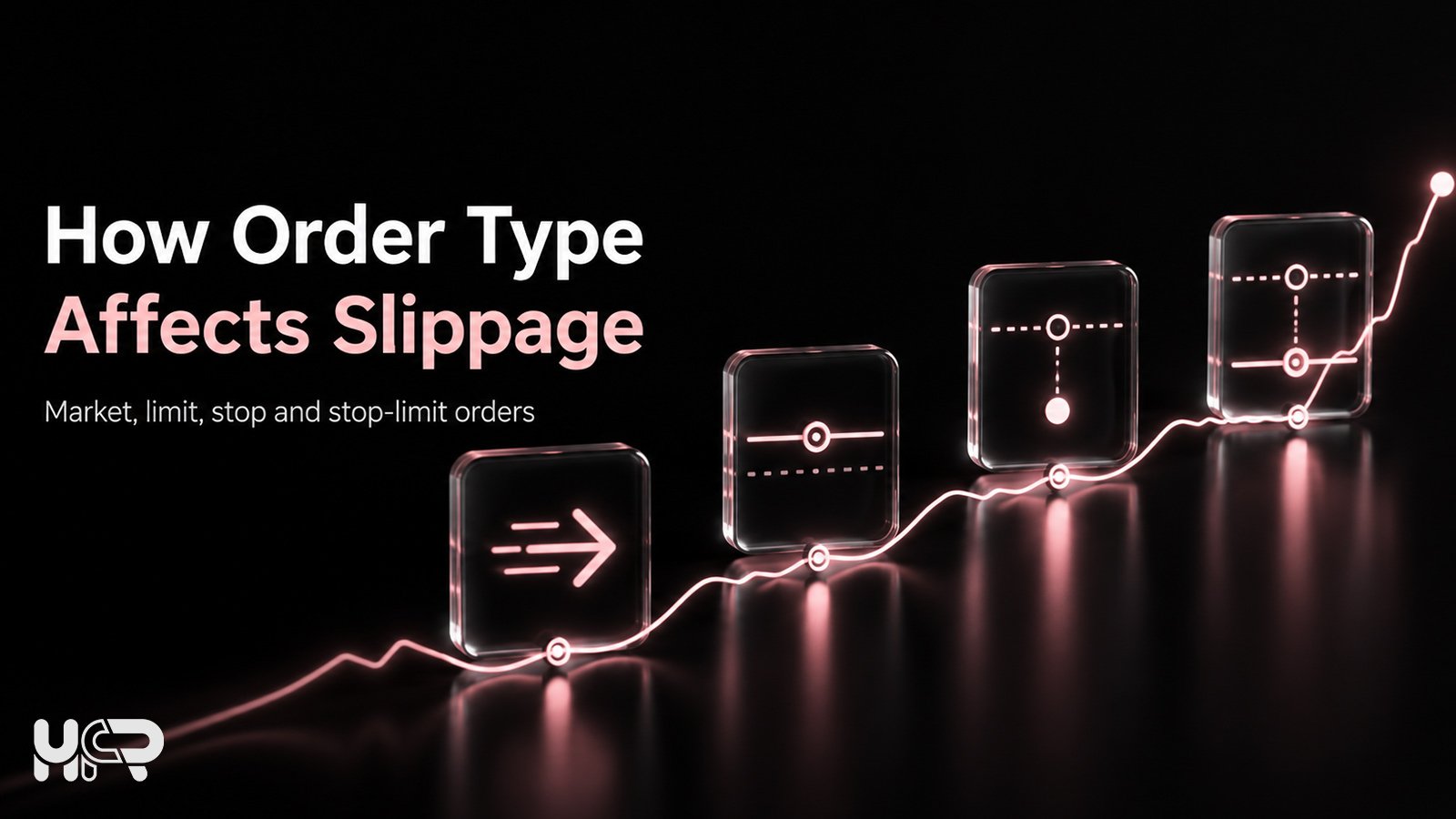
Order type changes the balance between execution certainty and price control. A market order generally prioritises execution, while a limit order restricts the acceptable price. Stop orders behave differently because the selected stop level acts as a trigger.
Market orders
A market order is an instruction to buy or sell under the available execution process rather than a guarantee of one displayed price. Under MetaTrader's Market Execution mode, the broker determines the execution price without another confirmation step from the trader. If the available price changes before the request is completed, the final fill may differ from the price previously displayed.
Limit orders
A limit order places a boundary on the execution price. In MetaTrader 5, a Buy Limit is designed to execute at the specified price or lower, while a Sell Limit is designed to execute at the specified price or higher. MetaTrader describes limit orders as being filled at the selected price or a better one.
Execution is not guaranteed. If suitable liquidity is unavailable under the applicable order and fill rules, the order may remain pending, be partially filled where supported or be rejected. The price restriction therefore comes with less certainty that the trade will be completed.
Stop and stop-loss orders
A standard stop level should not be treated as a guaranteed execution price. When a pending Stop order reaches its trigger level in MetaTrader, a corresponding market operation is sent for execution. The resulting trade can therefore be completed at the stop price or a worse price.
A Stop Loss attached to an open position is also triggered when its price condition is reached. For a long position, MetaTrader checks the Bid price; for a short position, it checks the Ask price. Triggering the Stop Loss initiates the closing operation, but the selected stop level should not be treated as a guaranteed fill. This is why a standard stop-loss can close beyond the selected level during a fast move or gap.
Stop-limit orders
A stop-limit order combines a trigger with a subsequent limit order. When the stop price is reached, MetaTrader places a limit request at the specified limit price rather than accepting any available market price. This restricts the acceptable execution price after the trigger, but it also creates the possibility that the order will not be filled.
Slippage vs spread vs requote
Slippage, spread and requotes all relate to pricing, but they describe different parts of the trading process.

| Term | What it describes |
|---|---|
| Spread | Difference between the current bid and ask prices. |
| Slippage | Difference between the requested or expected price and the actual execution price. |
| Requote | A new price offered instead of executing at the originally requested price under certain execution modes. |
The spread exists before execution and is the difference between the current bid and ask. Slippage concerns the difference between the expected or requested price and the actual fill. A wider spread can change the price visible to the trader, but it is not automatically slippage.
A requote is different again. Under MetaTrader's Instant Execution mode, the request includes a price and an allowed deviation. If the price changes beyond the permitted range, the server can return new prices for the trader to accept or reject. A requote therefore occurs before execution at the newly offered price; slippage describes a difference in the actual fill.
Does MetaTrader execution mode affect slippage?
MetaTrader 5 supports Instant, Request, Market and Exchange execution, with the available mode determined by the broker and instrument. These modes handle price confirmation differently, but none should automatically be labelled better or worse.
- Instant Execution uses a requested price and permitted deviation. A price change within the permitted range may execute, while a larger change can lead to a requote.
- Request Execution lets the trader request current prices and then accept or reject the quoted price while it remains valid.
- Market Execution sends the order for execution at the broker's applicable price without another confirmation step.
- Exchange Execution sends the trading operation to an external trading system, such as an exchange.
Execution mode is only one part of the process. The final fill can also depend on market movement, liquidity, order type, and the broker's execution rules.
Can forex slippage be avoided?
Slippage cannot be assumed to be completely avoidable when an order is executed at the available market price. Limit orders can restrict the worst acceptable execution price, but this also creates the possibility that the order will not fill. Standard stop orders may execute beyond their trigger level after becoming market orders.
Some brokers offer guaranteed-stop products under separate conditions. IG, for example, offers guaranteed stops in supported markets and applies a premium if the guaranteed stop is triggered. This is provider-specific and should not be treated as a standard feature across forex brokers.
Can larger orders experience more slippage?
Larger orders can be more sensitive to available liquidity because the full requested volume may not be available at the best quoted price. Where usable market-depth information is available, an order may be filled across several price levels when the requested size exceeds the volume available at the first level.
This can produce an average execution price that differs from the first quoted price. A larger trade does not automatically receive worse execution; if enough liquidity is available at the applicable price, the full order may still be filled there. The important relationship is between the requested size and the volume available at each price level.
How to compare broker execution and slippage
Comparing broker execution requires more than checking an advertised execution-speed figure. Start with the execution policy and the terms for the legal entity that would hold the account. Check the execution modes, order types, fill policies, and rules for rejection or partial fills.
Where comparable statistics are published, useful measures include:
- Positive and negative slippage rates
- Requote or rejection rates
- Order fill rates
- Average execution speed
- Partial-fill and liquidity information
Execution speed alone is not proof of execution quality. A small millisecond figure may show that requests are processed quickly, but it does not show how often orders receive price improvement, negative slippage, rejection, or partial fills.
IG provides one example of this type of reporting. Its best-execution page separates stop and limit slippage and provides average slippage and order-fill statistics for stated reporting periods. These figures apply to IG and should not be treated as industry averages.
Execution should be reviewed together with account costs, regulation, platform access and cashback eligibility when choosing a forex broker for cashback trading.
Does forex cashback cover slippage?
Forex cashback normally returns part of an eligible trading cost or broker-derived partner commission under the applicable rebate conditions. It does not reverse an unfavourable execution price or guarantee that an order will fill at the requested level.

Broker execution determines whether an order is filled and its execution price. HFR cashback determines whether the completed trade qualifies for a rebate after broker reporting and account confirmation. A trade can therefore receive negative slippage and still qualify for cashback; the rebate does not change the original fill price or compensate for slippage unless the programme specifically states otherwise.
Readers who are new to the process can review how forex rebates work. For a broader cost comparison, see forex rebates vs low spreads and the HFR guide to forex swap fees.
FAQ
What is slippage in forex?
Forex slippage is the difference between the price requested or expected for an order and the price at which the trade is actually executed. It may be positive, negative or zero and can occur when opening or closing a position.
Is forex slippage always negative?
No. Positive slippage means the order receives a more favourable price than expected, while negative slippage means the fill is less favourable. Zero slippage means the expected and executed prices are the same.
Why did my forex order fill at a different price?
The available price may have changed while the order was being processed. Market movement, liquidity, order size, processing time, order type, and the broker's execution rules can all affect the final fill.
Can a stop loss execute at a worse price?
Yes. A standard stop-loss normally acts as a trigger rather than a guaranteed execution price. During a rapid move or gap, the resulting closing operation may be completed at a less favourable available price.
Can a limit order experience negative slippage?
A limit order is designed to set the worst acceptable execution price and should execute at that price or a more favourable one under the applicable rules. If suitable liquidity is unavailable, it may remain unfilled instead.
What is the difference between spread and slippage?
The spread is the difference between the current bid and ask prices. Slippage is the difference between the requested or expected price and the actual execution price. A wider spread is not automatically slippage.
What is the difference between slippage and a requote?
Slippage describes a difference in the actual fill. A requote occurs before execution when a new price is returned instead of the original requested price under certain execution modes.
Does higher volatility increase slippage?
Higher volatility can increase the probability or size of slippage because prices may change more quickly during order processing, especially when liquidity is limited. It does not guarantee that slippage will occur or that it will be negative.
Can a broker guarantee zero slippage?
Ordinary market execution should not be assumed to guarantee zero slippage. Some brokers offer specific guaranteed-stop products under separate pricing and eligibility conditions, but these features are not universal.
Does forex cashback cover slippage?
Normally, no. Cashback may offset part of an eligible trading cost after broker reporting and confirmation, but it does not change the original execution price, reverse negative slippage or remove execution risk.
Final Words
Forex slippage is the difference between an expected price and the actual fill. It can be positive, negative or zero, depending on market movement, available liquidity, order type and execution rules.
When comparing brokers, review slippage alongside spreads, commissions, swaps and the execution policy rather than relying on execution speed alone. A fast execution figure does not show how often orders receive price improvement, negative slippage, rejection or partial fills.
Forex cashback may offset part of an eligible trading cost, but it does not change the price at which the broker executes an order.
Sources and methodology
This article is a desk-based educational review of forex order execution and slippage. Information was checked on 11 August 2026 against current MetaTrader 5 trading and execution documentation, MetaTrader Depth of Market documentation, IG slippage and execution material, and relevant HFR educational pages.
Execution methods, order handling and guaranteed-order features can vary by broker, entity, platform and instrument. The broker's current execution policy and account specifications remain the final references.
- MetaTrader 5 - Basic Principles
- MetaTrader 5 - Executing Trades
- MetaTrader 5 - Depth of Market
- IG - What Is Slippage?
- IG - What Is a Guaranteed Stop?
- IG - Best Execution
- HighFxRebates - What Are Forex Rebates?
- HighFxRebates - Forex Rebates vs Low Spreads
- HighFxRebates - How to Choose a Forex Broker for Cashback Trading
Risk warning and disclaimer
Negative slippage can result in a less favourable execution price than expected. Slippage may be positive or negative and can occur when opening or closing a position. Cashback does not remove slippage, market risk, leverage risk, execution risk or the risk of loss.
This article is provided for educational and informational purposes only. It should not be treated as financial, investment, or trading advice, or as a recommendation to use a particular order type, broker, or trading strategy.
 5
5
Share Posts


Further Reading
- Why Forex Spreads Widen: News, Rollover, Liquidity and Volatility
- What is Proof of Reserves on a crypto exchange? What it shows and what it does not
- ActivTrades Review 2026: Accounts, Fees, Platforms, Regulation and Cashback
- Weekly market recap, 12–18 October 2026: Inflation, yields, gold and crypto