





Table of Contents
[ Show/Hide ]- • Forex Rebates vs Low Spreads: Which Reduces Trading Costs More?
- • What Are Forex Spreads and Why They Matter
- • What Are Forex Rebates (Cashback)?
- • Forex Rebates vs Low Spreads (Direct Comparison)
- • Real Trading Cost Example
- • Which Option Is Better for Different Traders
- • Can You Combine Low Spreads and Rebates?
- • How to Choose Based on Real Costs
- • Conclusion
- • FAQs
Forex Rebates vs Low Spreads: Which Reduces Trading Costs More?
Many traders compare pricing by looking at spreads, while others focus on cashback programs. This creates a common question: should you choose low spreads or rebates?
At first, low spreads seem simpler. The cost is visible on each trade. Rebates are less direct. You pay the full cost first, then receive part of it back later. Because of this difference, it is not always clear which option actually reduces trading costs.
This matters more over time. Even small cost differences can accumulate, especially for active traders. Looking at one trade is not enough to understand the full impact.
This article explains forex rebates vs low spreads in a practical way. The goal is to compare how each approach affects total trading costs, using simple examples instead of theory.
If you are new to trading, it also helps to understand what a broker is and how to choose one before comparing pricing models.
What Are Forex Spreads and Why They Matter
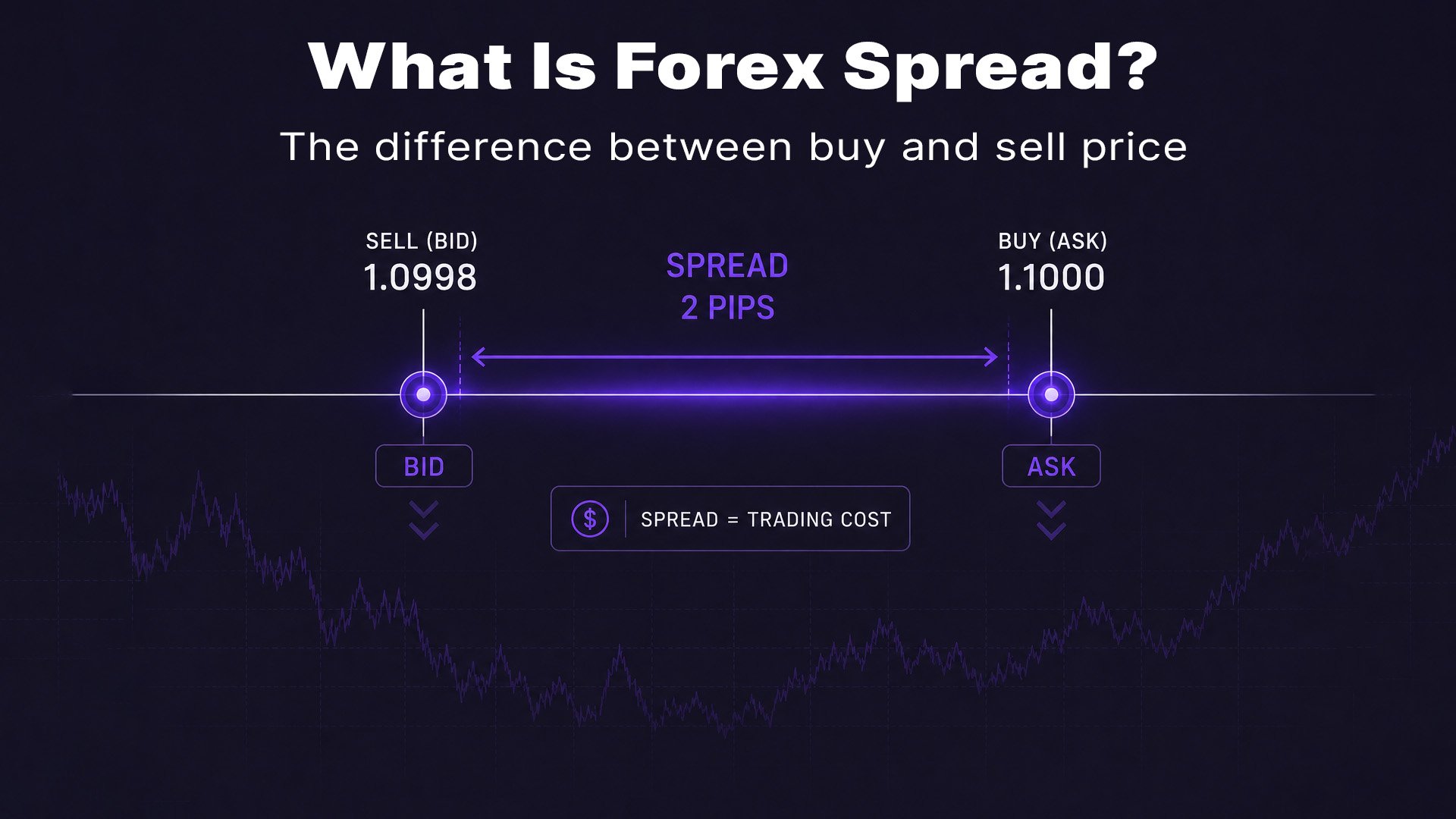
A spread is the difference between the buy price (ask) and the sell price (bid) of a currency pair. This difference is the basic cost of entering a trade.
For example:
- Buy price: 1.1000
- Sell price: 1.0998
The spread is 2 pips. This cost is applied as soon as the trade is opened.
How Spreads Affect Each Trade
Spreads affect every trade in the same way:
- The trade starts with a small loss equal to the spread
- The price must move in your favor to cover that cost
- This applies to both short-term and long-term trades
Even if a trade is held for a short time, the spread has already been paid. That’s why spreads are one of the most consistent parts of forex trading costs.
Fixed vs Variable Spreads
There are two main types of spreads:
- Fixed spreads: Stay the same under normal conditions, but may still change during high volatility
- Variable spreads: Change based on market conditions such as liquidity and volatility
In most cases, brokers use variable spreads. These can be lower during stable market conditions and higher during news events or low trading activity.
Simple Takeaway: Spreads matter because they:
- Apply to every trade
- Affect cost immediately
- Increase with trading frequency
This is why traders often compare spreads first when reviewing pricing, especially in a forex fees comparison.
What Are Forex Rebates (Cashback)?
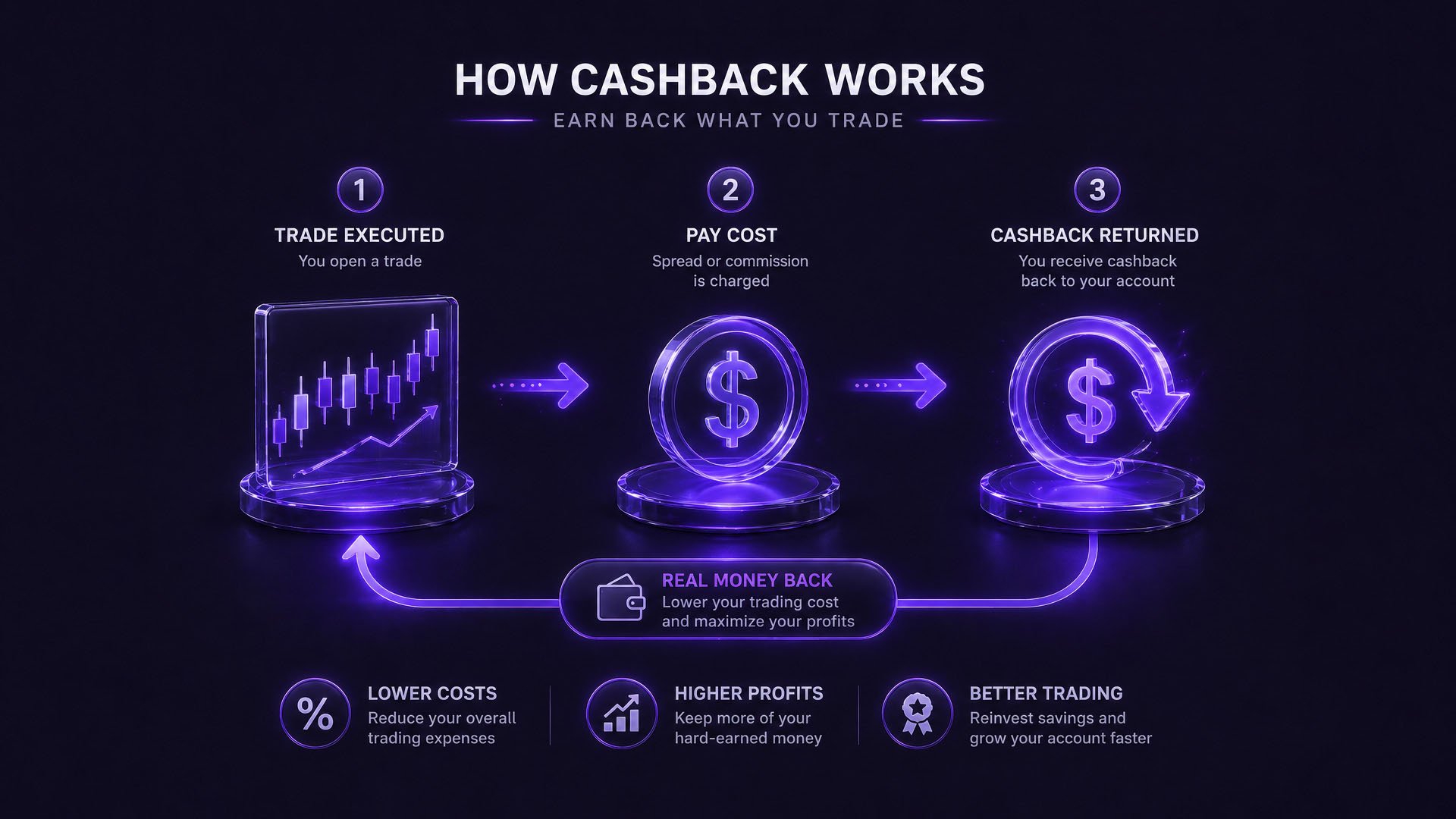
Forex rebates, also called cashback, are a way to return part of the trading cost back to the trader. Instead of reducing the spread directly, they work after the trade is completed.
The idea is simple:
- You trade as usual
- The broker charges the normal spread or commission
- A portion of that cost is returned to you later
This return is usually based on trading volume, often calculated per lot.
1. Paid After the Trade
Unlike spreads, rebates are not applied at the moment of entry. They are:
- Calculated after trades are executed
- Accumulated over time
- Paid separately (daily, weekly, or monthly, depending on setup)
This means you first pay the full trading cost, and then receive part of it back later.
2. Does Not Change Spreads or Execution
Rebates do not affect how trades are processed. They do not:
- Reduce the spread shown on the platform
- Change execution speed
- Affect order pricing
Trading conditions remain exactly the same. The rebate is handled outside the trading platform as a separate transaction.
Simple Takeaway: Rebates:
- Do not reduce costs instantly
- Work by returning part of the cost later
- Become more noticeable over multiple trades
For a detailed explanation of the process, see how forex rebates work.
Forex Rebates vs Low Spreads (Direct Comparison)
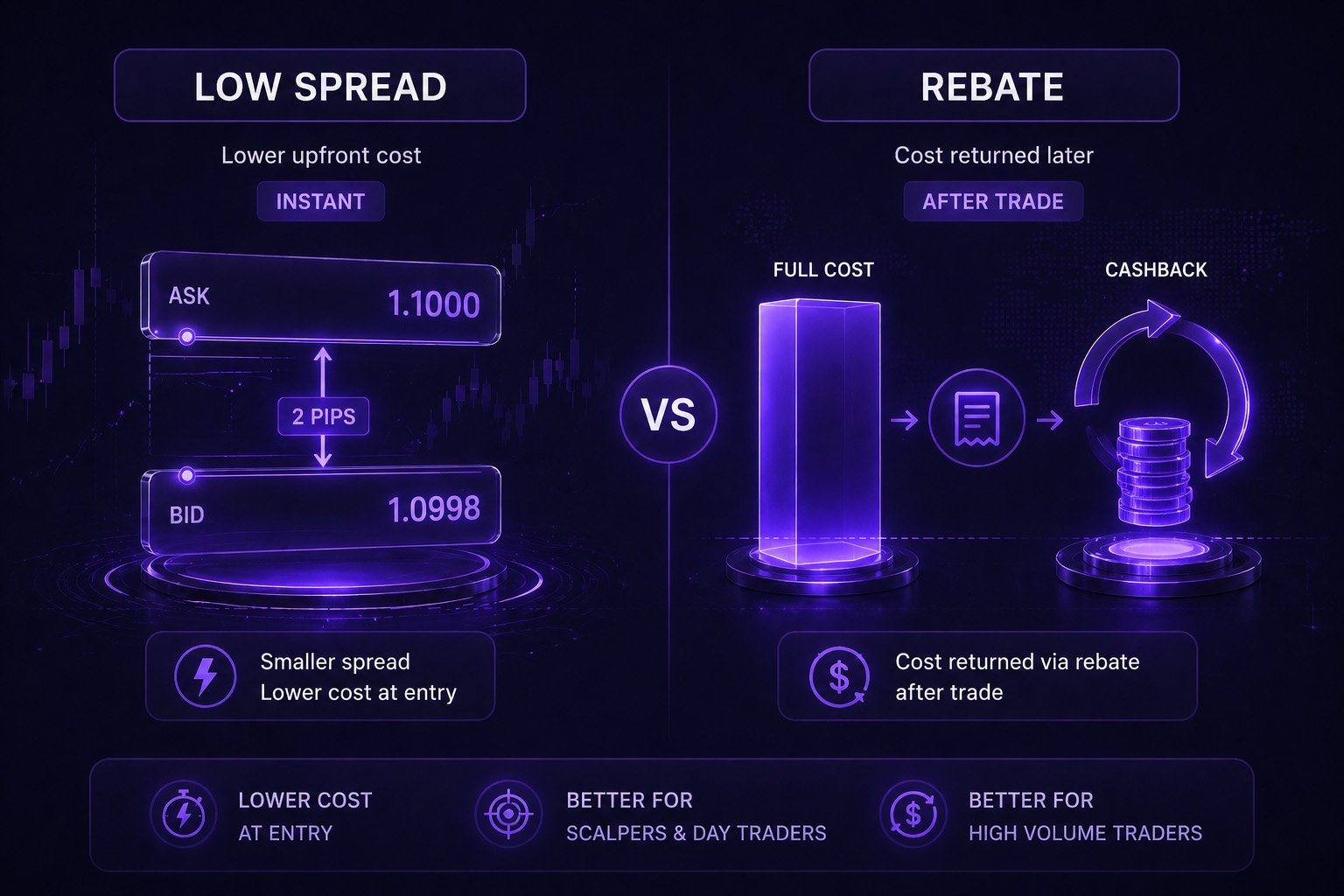
To understand forex rebates vs low spreads, it helps to compare them side by side. Both reduce trading costs, but they do it at different stages and in different ways.
The table below shows the key differences:
| Factor | Low Spreads | Rebates (Cashback) |
|---|---|---|
| When cost applies | Before or at trade entry | After the trade is completed |
| Visibility | Immediate (built into price) | Separate payment |
| Flexibility | Fixed by broker pricing | Varies based on rebate setup |
| Impact | Instant cost reduction | Accumulated cost reduction over time |
Simple Explanation
- Low spreads reduce the cost right away. You pay less when entering a trade.
- Rebates return part of the cost later. The benefit builds over multiple trades.
The main difference is timing:
- With low spreads, you see the benefit immediately
- With rebates, you see the benefit over time
In practice, traders comparing forex rebates vs spreads should not look at a single trade. A more accurate view comes from looking at total costs across many trades.
Both approaches reduce costs, but in different ways. Understanding this difference helps make a clearer and more practical comparison.
Real Trading Cost Example
A simple example makes it easier to compare forex rebates vs low spreads in practice. The goal here is not to estimate profit, but to look only at trading costs.
Let’s use the same trade conditions:
- Currency pair: EUR/USD
- Trade size: 1 standard lot
Scenario A: Broker with Low Spread
- Spread: 0.8 pips
- Commission: none
Cost calculation:
- 0.8 pips ≈ USD 8
Final cost = USD 8
Scenario B: Broker with Higher Spread + Rebate
- Spread: 1.5 pips
- Rebate: USD 5 per lot
Cost calculation:
- Spread cost: 1.5 pips ≈ USD 15
- Rebate returned: USD 5
Final cost = USD 10
| Scenario | Spread Cost | Rebate | Final Cost |
|---|---|---|---|
| Low spread | USD 8 | USD 0 | USD 8 |
| Higher spread + Rebate | USD 15 | - USD 5 | USD 10 |
What This Example Shows
In this case:
- The low spread option results in a lower cost for a single trade
- The rebate reduces cost, but does not fully offset the higher spread
However, results can change depending on:
- The size of the rebate
- The difference in spreads
- Total trading volume over time
This example shows why a forex trading cost comparison should not rely on spreads alone. Rebates can reduce costs, but their impact becomes clearer when looking at multiple trades, not just one.
This type of comparison is often used when reviewing brokers such as HFM review, where both spreads and rebate structures are considered together.
Which Option Is Better for Different Traders
The choice between low spreads and rebates depends on how you trade. Each approach reduces costs in a different way, so the impact varies based on trading style and frequency.
Low Spreads – More Suitable For
Low spreads tend to benefit traders who focus on short-term execution.
- Scalpers: These traders open and close positions quickly. A smaller spread reduces the cost at entry, which matters when trades are held for a short time.
- High-frequency traders: When many trades are placed in a short period, even small spread differences can increase total costs. Lower spreads help keep each trade cheaper.
In these cases, reducing cost at the moment of entry is more important than receiving cashback later.
Rebates – More Suitable For
Rebates are often more relevant for traders who focus on overall cost over time.
- Medium to long-term traders
Traders who stay active over weeks or months can see the effect of accumulated cashback. - High-volume traders
Since rebates are based on traded volume, higher activity leads to larger total cashback.
In these cases, the benefit is not seen on a single trade but becomes more noticeable across many trades.
What This Means in Practice: To simplify:
- Low spreads reduce cost per trade
- Rebates reduce cost over time
This is why comparing low spread vs cashback forex setups requires looking at trading behavior, not just pricing. The better option depends on how often and how much you trade.
Some traders also compare pricing models using the best forex brokers with rebates to see how different cost structures work in practice.
Can You Combine Low Spreads and Rebates?
In some cases, it is possible to use both low spreads and rebates at the same time. However, this depends on the broker’s structure and the type of account being used.
Yes, But It Depends on the Setup
Not all accounts support cashback. Some brokers offer low spreads but do not allow rebate programs on those accounts. Others allow both, but only under specific conditions. Availability usually depends on:
- The broker’s partnership (IB) model
- The account type selected
- The instrument being traded
Because of this, traders need to check whether rebates are supported before assuming both can be combined.
Account Type Matters
Different account types use different pricing models:
- Spread-only accounts
Costs are included in the spread, and rebates may be available depending on the broker - Commission-based accounts
Often offer lower spreads, but charge a commission per trade
In many cases, rebate programs are more commonly linked to commission-based accounts.
ECN + Rebates Scenario
With ECN-style accounts:
- Spreads are usually lower
- A commission is charged separately
- Rebates may be applied to the commission or total volume
Therefore, traders can benefit from:
- Lower upfront spreads
- Cashback returned later
Combining both approaches can change how costs are distributed:
- Lower spreads reduce entry cost
- Rebates reduce the overall cost over time
For traders comparing forex rebates vs low spreads, this setup shows that the two are not always separate choices. In some cases, they can work together, depending on how the account is structured.
How to Choose Based on Real Costs
Choosing between pricing models becomes easier when you look at real costs instead of headline numbers. Many traders focus on the lowest spread shown, but that does not always reflect the total cost of trading.
Look Beyond Advertised Spreads: Minimum spreads are often used in marketing, but actual trading conditions can be different. In practice:
- Spreads can change during volatility
- Average spreads are usually higher than minimum values
- Total cost depends on how trades are executed
For most traders, comparing forex rebates vs spreads requires looking at real conditions, not just advertised figures.
Consider All Cost Components: A complete view should include:
- Spreads: cost at trade entry
- Commissions: charged on some account types
- Rebates: returned after trading
- Execution: how orders are filled in real conditions
Looking at only one part can give an incomplete picture.
Focus on Total Cost Over Time: Instead of asking which option is cheaper per trade, it is more useful to ask:
- What is the total cost after multiple trades?
- How do costs behave over a week or a month?
Rebates may seem small on a single trade, but they can accumulate. At the same time, slightly lower spreads can reduce the cost on every entry.
Practical Decision Approach: A simple way to compare:
- Check average spreads, not minimum
- Include commissions if applicable
- Add expected rebates based on volume
This approach gives a more realistic comparison and helps avoid decisions based only on partial information.
Final Thought: There is no single factor that determines cost. The goal is to understand how all components work together, so you can compare options based on real trading conditions rather than assumptions.
Conclusion
When comparing forex rebates vs low spreads, both approaches reduce trading costs, but in different ways. Low spreads lower the cost at trade entry, while rebates return part of the cost after trades are completed. The better option depends on how you trade. Short-term traders may focus more on spreads, while active or high-volume traders may notice the effect of rebates over time.
The key is to understand how costs are structured, not just how they are presented. You can also explore different platforms in our guide to top forex cashback providers to compare how rebate structures vary. Looking at total trading expenses gives a clearer basis for making a decision.
FAQs
1. Are rebates better than low spreads?
Rebates are not always better than low spreads. They reduce costs differently. Low spreads lower the cost immediately, while rebates return part of the cost later. The better option depends on trading frequency, volume, and how you measure total costs over time.
2. Do rebates affect trade execution?
No. Rebates do not affect spreads, execution speed, or order pricing. Trades are executed under normal broker conditions. Cashback is calculated separately after trades are completed and does not change how orders are processed.
3. Can I get both low spreads and cashback?
In some cases, yes. This depends on the broker and account type. Certain accounts, especially commission-based setups, may offer lower spreads while still allowing rebate programs. However, not all accounts support this combination, so it needs to be checked in advance.
4. Which option is better for beginners?
Beginners often find low spreads easier to understand because the cost is visible on each trade. Rebates can still be useful, but their impact is seen over time. For new traders, focusing on clear and simple cost structures is usually more practical at the start.
5. What is the difference between forex rebates and low spreads?
Forex rebates return part of your trading cost after each trade, while low spreads reduce the cost upfront. HighFxRebates explains that rebates act as cashback on spreads or commissions, helping traders lower overall expenses without changing broker pricing conditions.
6. Which is better, forex rebates or low spreads for trading?
Forex rebates are better for high-volume traders because cashback accumulates over time, while low spreads benefit short-term traders who need lower entry costs. HighFxRebates highlights that combining both can significantly improve profitability depending on trading style and frequency.
7. How do I choose between forex rebates and low spreads?
Choosing between forex rebates and low spreads depends on your trading style. HighFxRebates suggests active traders benefit more from rebates due to volume-based cashback, while occasional traders may prefer low spreads for immediate cost reduction on each trade.
8. Can I use both low spreads and rebates together?
Yes, many traders use both low spread accounts and rebate programs to maximize savings. HighFxRebates allows traders to earn cashback even on competitive spreads, helping reduce effective trading costs further and improve long-term profitability across different trading strategies.
9. Which option is more profitable in the long run, rebates or spreads?
In the long run, forex rebates can be more profitable for active traders because savings accumulate with volume. HighFxRebates explains that while low spreads reduce immediate costs, rebates provide continuous returns that improve overall trading efficiency over time.
 6
6


