




Table of Contents
[ Show/Hide ]- • How to Reduce Forex Trading Fees Without Changing Your Strategy
- • What Counts as a Forex Trading Fee?
- • Compare Average Spreads, Not Only Minimum Spreads
- • Choose the Right Account Type for Your Trading Style
- • Use Forex Rebates to Offset Trading Costs
- • Compare Low Spreads and Rebates Together
- • Watch Swap Fees on Overnight Positions
- • Check Deposit, Withdrawal, and Currency Conversion Costs
- • Compare Brokers by Total Trading Cost
- • Avoid Common Cost-Reduction Mistakes
- • Conclusion
- • FAQs
How to Reduce Forex Trading Fees Without Changing Your Strategy
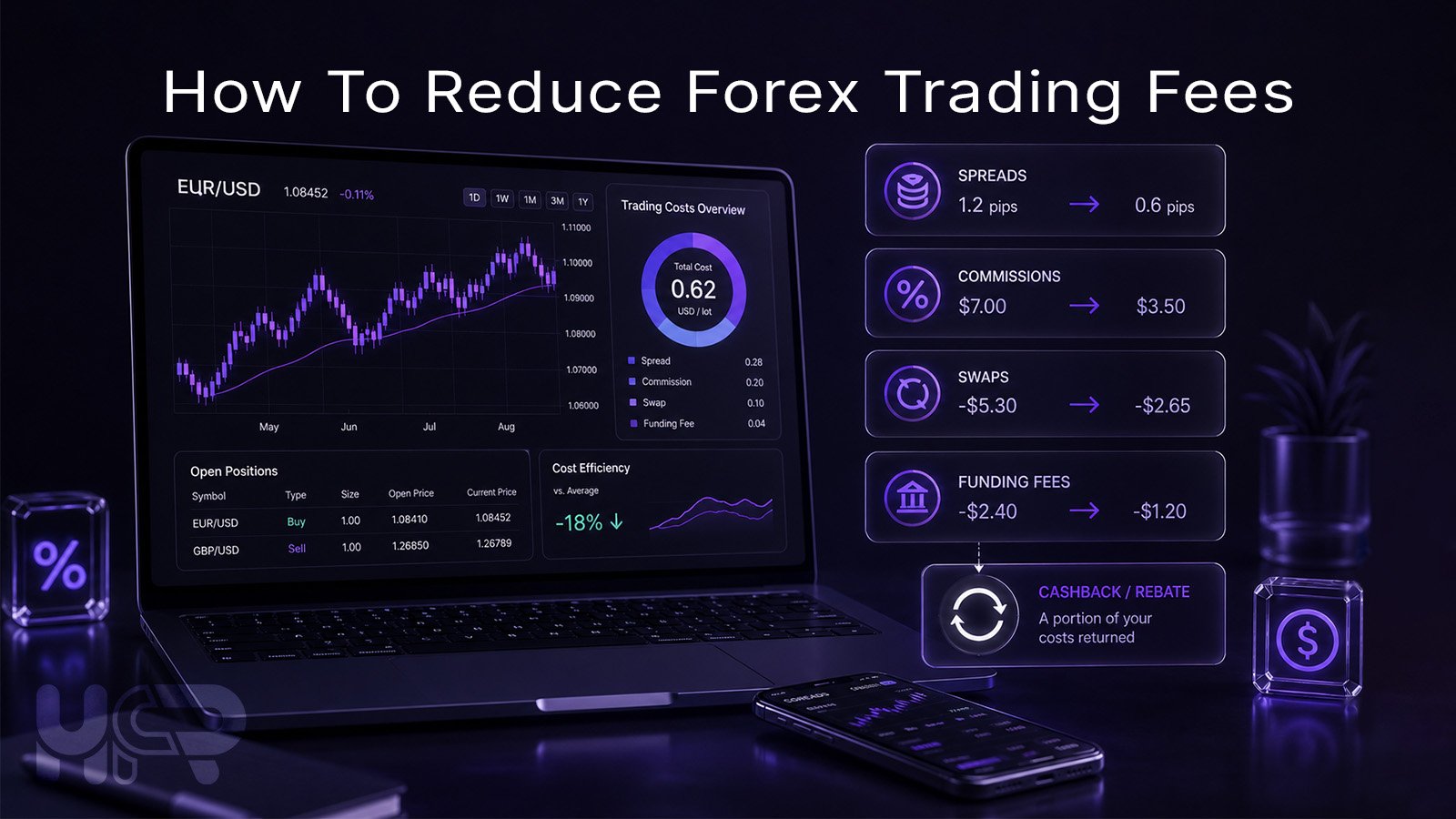
Forex trading fees can seem small when looking at a single trade, but they can build up over time. Spreads, commissions, swaps, and funding costs all play a role in the total expense of trading, especially for traders who open positions frequently.
Traders can often reduce forex trading fees without changing their strategy by understanding how costs are applied and where avoidable expenses appear. In many cases, small adjustments in how you choose accounts, compare pricing, or manage positions can make a noticeable difference over time.
This guide explains practical ways to lower forex fees by looking at the full cost structure. It covers spreads, commissions, swap charges, account types, and how forex rebates or cashback can help offset part of the trading cost.
What Counts as a Forex Trading Fee?
Many traders focus only on spreads, but forex trading fees include several different cost components. To properly reduce trading costs, it is important to understand the full picture.
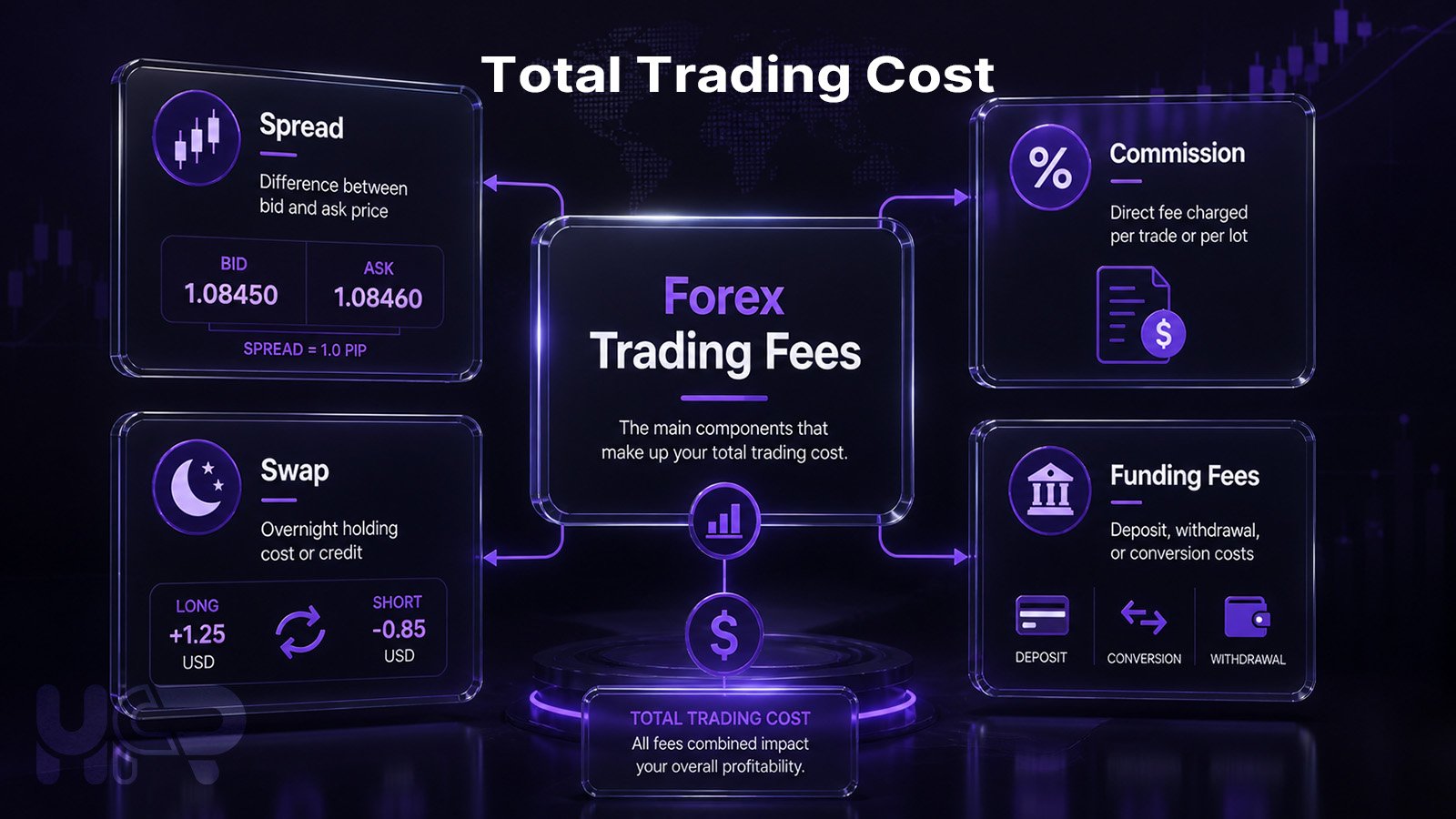
A forex trading fee is any cost connected to opening, holding, funding, or closing a trade. Some fees are visible, such as commissions. Others are built into pricing, such as spreads.
The most common cost is the spread, which is the difference between the buy and sell price. This cost is applied when a trade is opened and is part of every transaction.
Some accounts also charge a commission, usually on each trade. This is common in Raw or ECN accounts, where spreads are lower but a fixed fee is added per lot traded.
For a broader explanation of spreads and commissions, traders can also review neutral financial education sources before comparing broker costs.
Another important cost is the swap fee, also known as an overnight fee. This applies when a position is held overnight. Depending on the currency pair and market conditions, the swap can be either a cost or a credit, but in many cases it becomes a cost over time.
There are also deposit and withdrawal fees to consider. While some brokers do not charge these directly, payment providers or banks may still apply fees during transfers.
In addition, currency conversion fees can occur when your account currency is different from your deposit or withdrawal currency. These costs are often small per transaction but can add up with frequent transfers.
Some brokers may also apply inactivity fees if an account is not used for a certain period. This is not directly related to trading, but it still affects the total cost of maintaining an account.
Understanding these different fees helps traders move beyond just comparing spreads and instead focus on the total cost of trading.
Compare Average Spreads, Not Only Minimum Spreads
When reviewing broker pricing, it is common to see very low “from” spreads advertised. These are often minimum spreads, shown as the best possible conditions. While they can be accurate in ideal market situations, they do not represent the spread traders will see most of the time.
A broker may advertise spreads from 0.0 pips, but this does not mean every trade will be executed at that level. Average spreads usually give a more realistic view of trading cost.
In real market conditions, spreads can change frequently. They may widen during major news events, periods of low liquidity, or around market opening and closing times. This means the actual cost of a trade can be higher than the minimum spread shown in marketing materials.
For this reason, traders should focus on how spreads behave over time, not just the lowest possible number. Looking at average spreads or typical trading conditions provides a clearer picture of what trading will actually cost.
By comparing average spreads instead of only minimum spreads, traders can make more accurate decisions and better understand their potential trading expenses.
Choose the Right Account Type for Your Trading Style
Different account types are designed with different pricing models. Choosing the right one can help reduce forex trading fees without changing how you trade.
The most common option is a spread-only account, often called a standard account. In this setup, the trading cost is included in the spread, and there is no separate commission. This makes pricing simple and easier to understand, especially for beginners.
Another option is a commission-based account, where spreads are lower, but a fixed fee is charged per trade. These accounts are often linked to ECN or Raw pricing models, where traders get access to tighter spreads directly from the market, but pay a commission for each transaction.
There are also Cent or beginner accounts, which allow trading with smaller position sizes. These are useful for testing strategies or learning how trading costs work without taking large risks.
A key point to remember is that a lower spread does not always mean a lower total cost. If a commission is added, the final cost of the trade may be similar or even higher, depending on trading volume and frequency.
Here is a simple comparison:
| Account Type | Cost Structure | Usually Suits |
|---|---|---|
| Standard | Spread included | Simple pricing |
| Raw / ECN | Low spread + commission | Active traders payment |
| Cent | Smaller trade size | Beginners/testing |
If you are still comparing platforms, it may help to first understand what a broker is and how to choose one before reviewing account types.
Choosing an account that fits your trading style can help manage costs more effectively over time.
Use Forex Rebates to Offset Trading Costs
Forex rebates, also known as cashback, are one way traders can reduce overall trading costs without changing their strategy. Instead of lowering the spread directly, rebates return part of the cost after trades are completed.
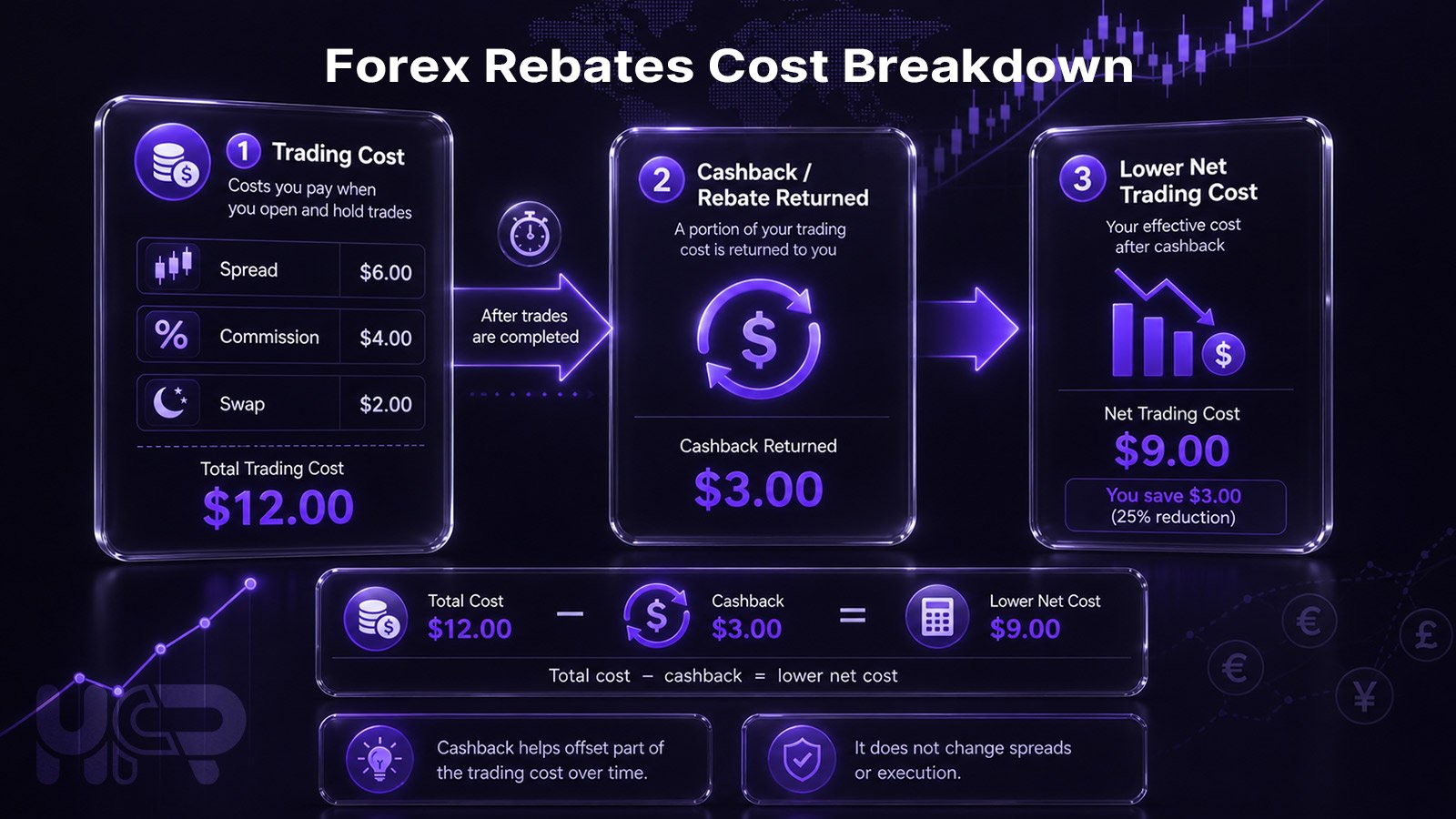
The process is simple. You trade as usual, and the broker charges the normal spread or commission. Then, a portion of that cost is returned to you later. This return is usually calculated based on trading volume, often per lot traded.
It is important to understand that rebates do not change trading conditions. They do not:
- Reduce the spread shown on the platform
- Affect execution speed
- Change order pricing
Trading works exactly the same. The rebate is handled separately as a cost adjustment after the trade.
Over time, this can help reduce the average cost per trade, especially for traders who are active. The effect may seem small on a single trade, but it can become more noticeable across multiple trades.
Forex rebates should be seen as a cost-offset mechanism, not a trading advantage or profit guarantee. They do not improve trade outcomes, but they can help manage overall expenses.
If you are new to this concept, it helps to understand how forex rebates work before comparing rebate rates between brokers.
Compare Low Spreads and Rebates Together
When trying to reduce trading costs, it is important to look at low spreads and rebates together, not as separate choices.
Low spreads reduce cost at the moment a trade is opened. The smaller the spread, the less cost is paid upfront. This can make a difference in every trade, especially for traders who enter and exit positions frequently.
Rebates work differently. They do not reduce the cost at entry. Instead, they return part of the spread or commission after the trade is completed. The benefit is not immediate, but it builds over time as more trades are placed.
Because of this difference, neither option is automatically better. The impact depends on how you trade and how costs accumulate.
For a clearer comparison, traders should focus on the final net cost. This means looking at:
- Spread paid at entry
- Any commission charged
- Cashback returned later
Only by combining these elements can you see the real cost of trading.
For a deeper comparison, see our guide on forex rebates vs low spreads and how each approach affects total trading costs.
Watch Swap Fees on Overnight Positions
Swap fees, also known as overnight fees, apply when a trading position is held beyond the end of the trading day. These fees are based on the interest rate difference between the two currencies in a pair.
Swaps can be either positive or negative. In some cases, a trader may receive a small credit. However, in many situations, especially with certain currency pairs or market conditions, the swap becomes a cost.
For short-term traders, swap fees may not be very noticeable. For traders who hold positions for several days or weeks, swap fees can become more important than the spread paid at entry.
Some brokers offer swap-free accounts, often called Islamic accounts. These accounts remove overnight interest charges, but they may include alternative fees or different conditions. Because of this, it is important to check the details before assuming they are cost-free.
Understanding how swaps work helps traders manage long-term trading costs more effectively, especially when positions are not closed within the same day.
Check Deposit, Withdrawal, and Currency Conversion Costs
Trading costs are not limited to spreads and commissions. Funding your account and moving money in and out can also affect the total cost.
Some brokers do not charge internal fees for deposits or withdrawals. However, banks, payment providers, or e-wallet services may still apply their own charges. These costs are not always visible at first, but they can reduce the amount you receive or increase the amount you pay.
Currency conversion is another area where hidden costs can appear. If your trading account is in a different currency from your deposit or withdrawal method, the funds will be converted. This often includes a small markup in the exchange rate, which becomes an extra cost.
Using the same currency for your trading account and your funding method can help reduce or avoid these conversion fees.
The choice of withdrawal method can also make a difference. Some methods are faster but may have higher fees, while others are slower but more cost-efficient. Checking these details in advance can help avoid unnecessary expenses.
A broker may offer low trading costs, but high funding or conversion charges can still increase the total cost of using the account.
Compare Brokers by Total Trading Cost
When comparing brokers, looking at a single number is not enough. A low spread or a low commission alone does not show the full picture. To make a better comparison, traders should consider the total trading cost.
A simple way to understand this is:
Total trading cost = spread + commission + swap + funding fees − cashback/rebates
Each part plays a role. The spread is paid when opening a trade. Commission may be added depending on the account type. Swap fees apply if positions are held overnight. Funding costs include deposits, withdrawals, and currency conversion. Cashback or rebates can then return part of the cost.
Because of this, two brokers with similar spreads may still have different total costs. One may charge commission, while another may offer rebates. The final difference depends on how all these elements combine.
The key is to compare the full cost structure, not just one feature. This helps avoid choosing a broker based only on headline pricing.
To compare different broker models, you can review our forex broker cashback comparison and see how rebate structures vary.
Avoid Common Cost-Reduction Mistakes
Trying to reduce trading costs is useful, but it is easy to focus on the wrong factors. Many traders make decisions based on incomplete information, which can lead to higher costs over time.
One common mistake is choosing a broker only because of the lowest advertised spread. These are often minimum values and may not reflect real trading conditions.
Another mistake is ignoring commission. Some accounts offer lower spreads but add a fixed fee per trade, which can increase the total cost.
Swap fees are also often overlooked. For traders who hold positions overnight, these charges can become a significant part of trading expenses.
Funding costs are another area that is sometimes missed. Deposit, withdrawal, and currency conversion fees can add extra costs that are not directly visible in trading conditions.
When comparing cashback offers, some traders focus only on the rebate rate without checking the account type. The cost structure of the account can change how useful the rebate actually is.
It is also important to understand that cashback does not change execution. It does not affect spreads, pricing, or order speed.
The biggest mistake is looking at one cost in isolation. A broker with low spreads may charge commission, while a broker with higher spreads may offer cashback. The real comparison should be based on total cost, not one number.
To compare available rebate options, traders can check supported brokers and cashback rates on the HighFxRebates forex rebates list before opening or linking an account.
Conclusion
Reducing forex trading fees does not require changing how you trade. It starts with understanding where costs come from and how they are applied across each trade. By looking beyond headline numbers, traders can make more informed decisions about spreads, commissions, swaps, and funding costs.
To reduce forex trading fees, it is important to compare the full cost structure rather than focusing on one element. Small differences in pricing can add up over time, especially for active traders.
Forex rebates can also play a role by returning part of the trading cost after execution. They do not change spreads or execution, but they can help lower the average cost over time when used correctly.
The key is to combine all these elements and choose an account setup that fits your trading style.
You can also explore our guide to top forex cashback providers to compare different rebate platforms and payout structures.
FAQs
What is the easiest way to reduce forex trading fees?
The easiest way is to understand all cost components before choosing an account. This includes spreads, commissions, swaps, funding fees, and available cashback. Looking at total trading cost is more useful than focusing only on the lowest advertised spread.
Do forex rebates reduce spreads?
No. Forex rebates do not reduce the spread shown on the trading platform. They return part of the trading cost after trades are completed. Trading conditions, spreads, and execution remain the same.
Are low spreads always better?
Not always. Low spreads can reduce entry cost, but some low-spread accounts charge commissions. The final cost depends on spreads, commissions, trade volume, and whether cashback is available.
Can I reduce trading fees without changing my strategy?
Yes. Traders can reduce fees by choosing the right account type, comparing total costs, avoiding unnecessary swaps, checking funding fees, and using rebates where available. None of these requires changing the trading strategy itself.
Why do trading fees matter more for active traders?
Active traders place more trades, so small costs repeat more often. Even a small difference in spread, commission, or cashback can become more noticeable over many trades.
 5
5


