




Table of Contents
[ Show/Hide ]- • What do bid and ask mean in forex?
- • Which price is used when you buy or sell forex?
- • How does the bid-ask spread work?
- • Why can the chart price differ from the execution price?
- • How do bid and ask affect stop-loss and pending orders?
- • A simple bid and ask example
- • What bid and ask can and cannot tell you
- • Bid-ask spread and slippage are not the same thing
- • Common mistakes beginners make with bid and ask
- • A simple checklist for reading bid and ask prices
- • Final takeaway
- • FAQ
- • Risk warning and disclaimer
- • Sources and methodology
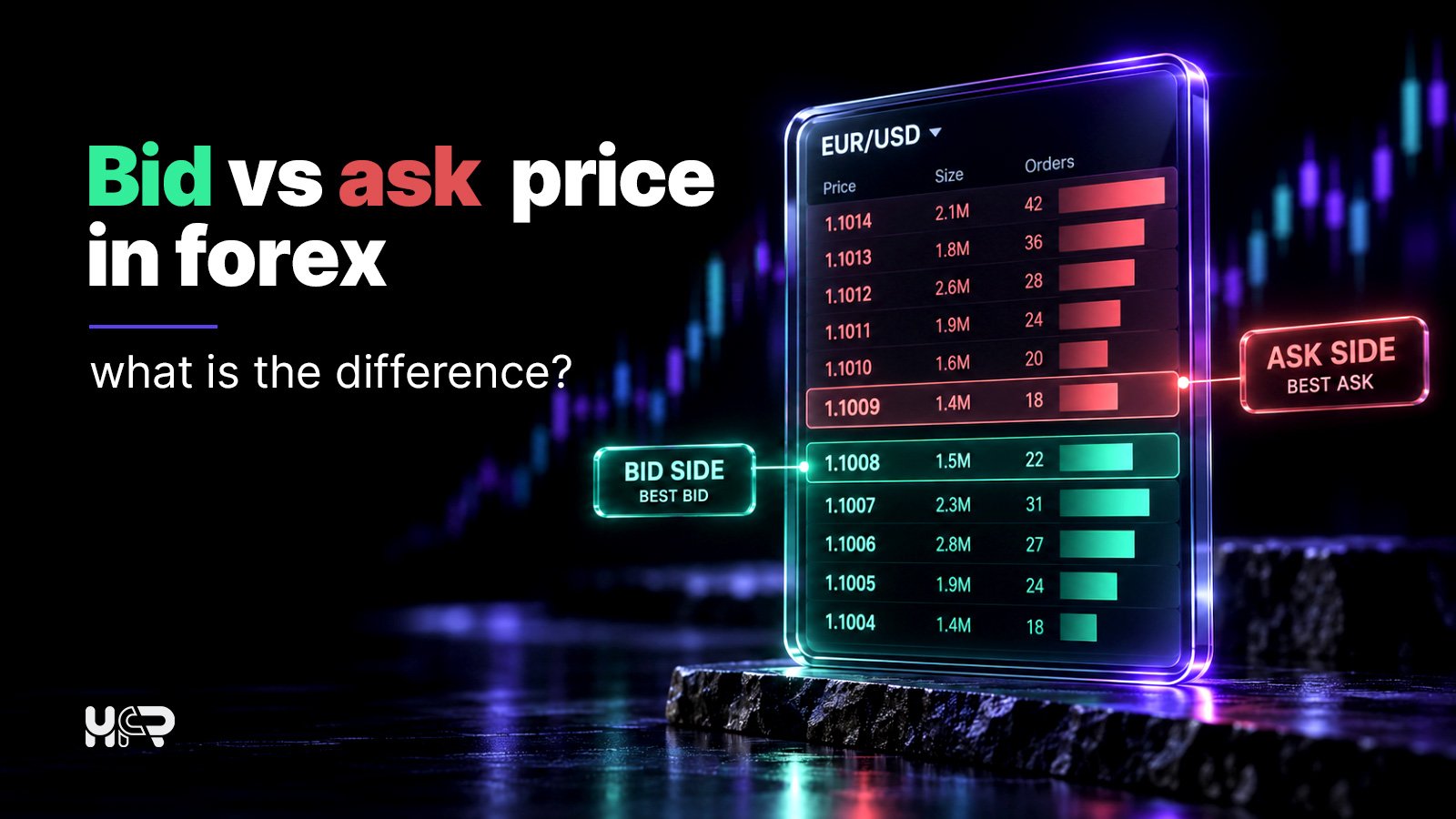
Bid and ask are the two prices in a forex quote. The bid is the price at which you can sell a currency pair, while the ask is the price at which you can buy it. The ask is normally above the bid, and the difference between them is the bid-ask spread.
These prices matter because a position opens and closes on opposite sides of the quote. A long position normally opens at Ask and closes at Bid; a short position normally opens at Bid and closes at Ask. If the quote has not moved, that difference can make a newly opened position show a small negative floating result.
Bid and Ask also help explain why a chart may not appear to touch the price that triggered an order. Chart source, trade direction, spread, and broker rules can all affect the comparison.
What do bid and ask mean in forex?
In the usual OTC forex convention, Bid is the quoted sell side and Ask is the quoted buy side. MetaTrader 5 documents the same Bid/Ask convention for OTC instruments.
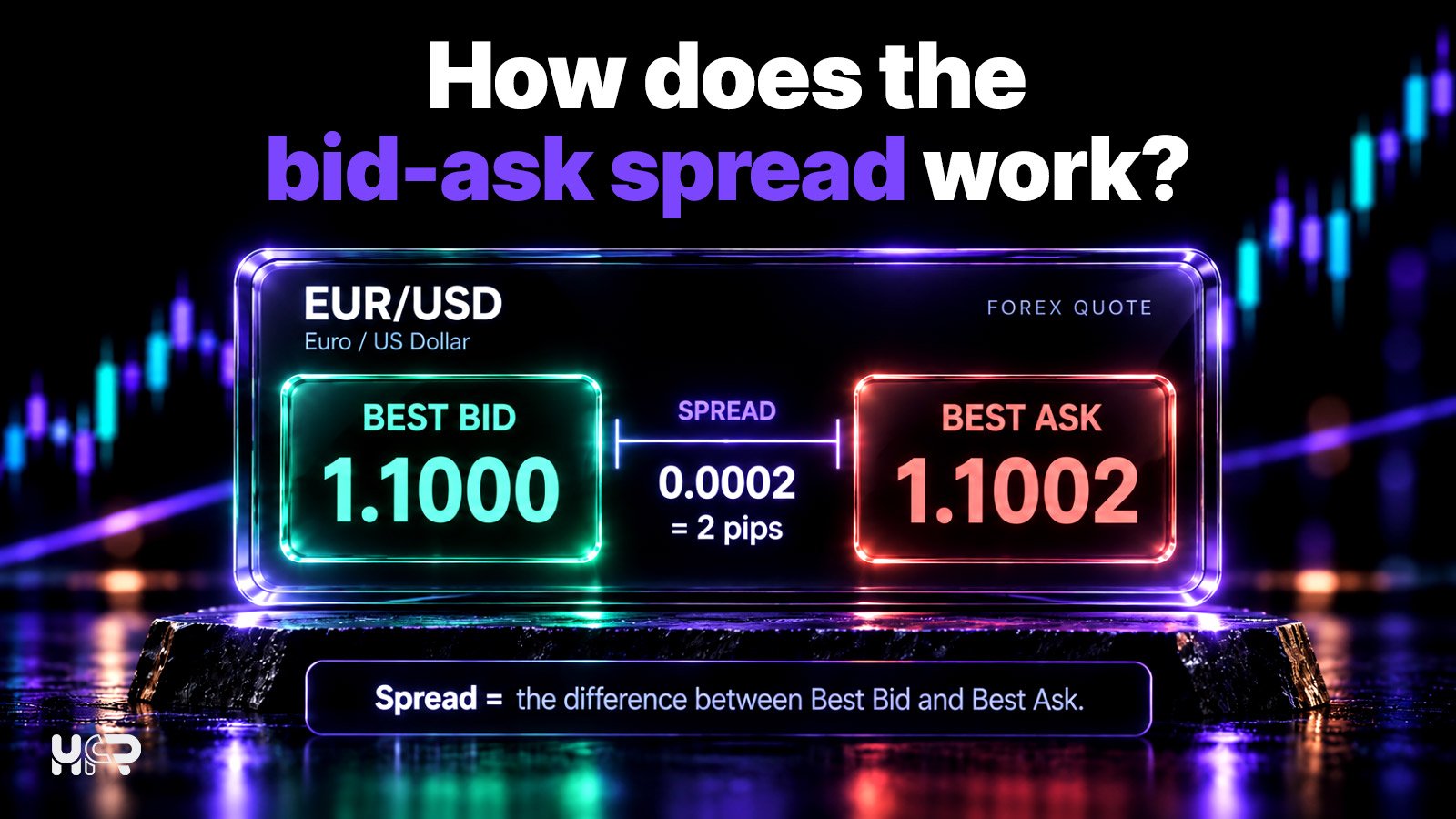
If EUR/USD is quoted at 1.1000 Bid / 1.1002 Ask, a market sell references 1.1000 and a market buy references 1.1002, subject to execution conditions. The 0.0002 gap is the spread.
What is the bid price?
The bid price is the price available when selling the currency pair. For EUR/USD, that means selling the base currency, EUR.
A long position also normally closes at Bid because closing it requires a sell.
What is the ask price?
The ask price, also called the offer, is the price available when buying the currency pair.
A short position normally closes at Ask because closing it requires a buy.
Why is the ask price normally higher than the bid?
The gap between Ask and Bid is the spread. In normal market conditions, Ask is above Bid, and the size of the gap depends on market and broker pricing conditions.
The spread can narrow or widen as market conditions change. For broader pricing context, HFR’s guide to reducing forex trading fees explains why the spread actually seen in the market can differ from a broker’s advertised minimum.
Which price is used when you buy or sell forex?
Opening and closing use opposite sides of the quote because closing requires the opposite transaction.
| Action | Price normally used | Why |
|---|---|---|
| Open a buy (long) | Ask | You are buying the base currency |
| Close a buy (long) | Bid | Closing requires a sell |
| Open a sell (short) | Bid | You are selling the base currency |
| Close a sell (short) | Ask | Closing requires a buy |
These are the usual OTC forex conventions. Broker and instrument rules can differ, and exchange-traded symbols may use separate trigger rules.
How a long position uses Ask and Bid
At 1.1000 Bid / 1.1002 Ask, a market buy normally opens from the Ask side, subject to execution conditions. If the quote is unchanged, closing that long uses Bid. The gap between Ask entry and Bid exit helps explain the initial negative floating result.
How a short position uses Bid and Ask
A market sell normally opens from the Bid side, subject to execution conditions. Closing the short requires a buy, so the relevant side is Ask.
How does the bid-ask spread work?
The bid-ask spread is the difference between the ask and bid prices. In forex, that difference is usually described in pips.
Using the same EUR/USD quote:
Spread = Ask - Bid = 1.1002 - 1.1000 = 0.0002 = 2 pips
The monetary effect depends on position size and pip value; HFR’s What Is a Pip in Forex? guide explains that calculation separately.
Why can a new trade start with a negative floating result?
A new long enters at Ask but would immediately exit at Bid; a short enters at Bid but would exit at Ask. If the quote is unchanged, that gap is the spread.
Price movement can change the floating result immediately after entry. Separate commissions, currency conversion, and other account charges may also affect the account-level result, depending on the broker and platform.
Why can the chart price differ from the execution price?
The chart and the executable quote can use different price sources. That can make a candle appear inconsistent with an order record even when the order followed the platform rules.
- Why forex charts may display only one side of the quote
A platform may chart Bid, Ask, Mid, Last, or another price source. The candle may therefore show only one side of the live spread.
OANDA’s web platform allows Bid, Ask, or Mid chart views. Check the chart-price setting before comparing a candle with an execution or trigger price.
- How Bid-based charts affect what you see in MT5
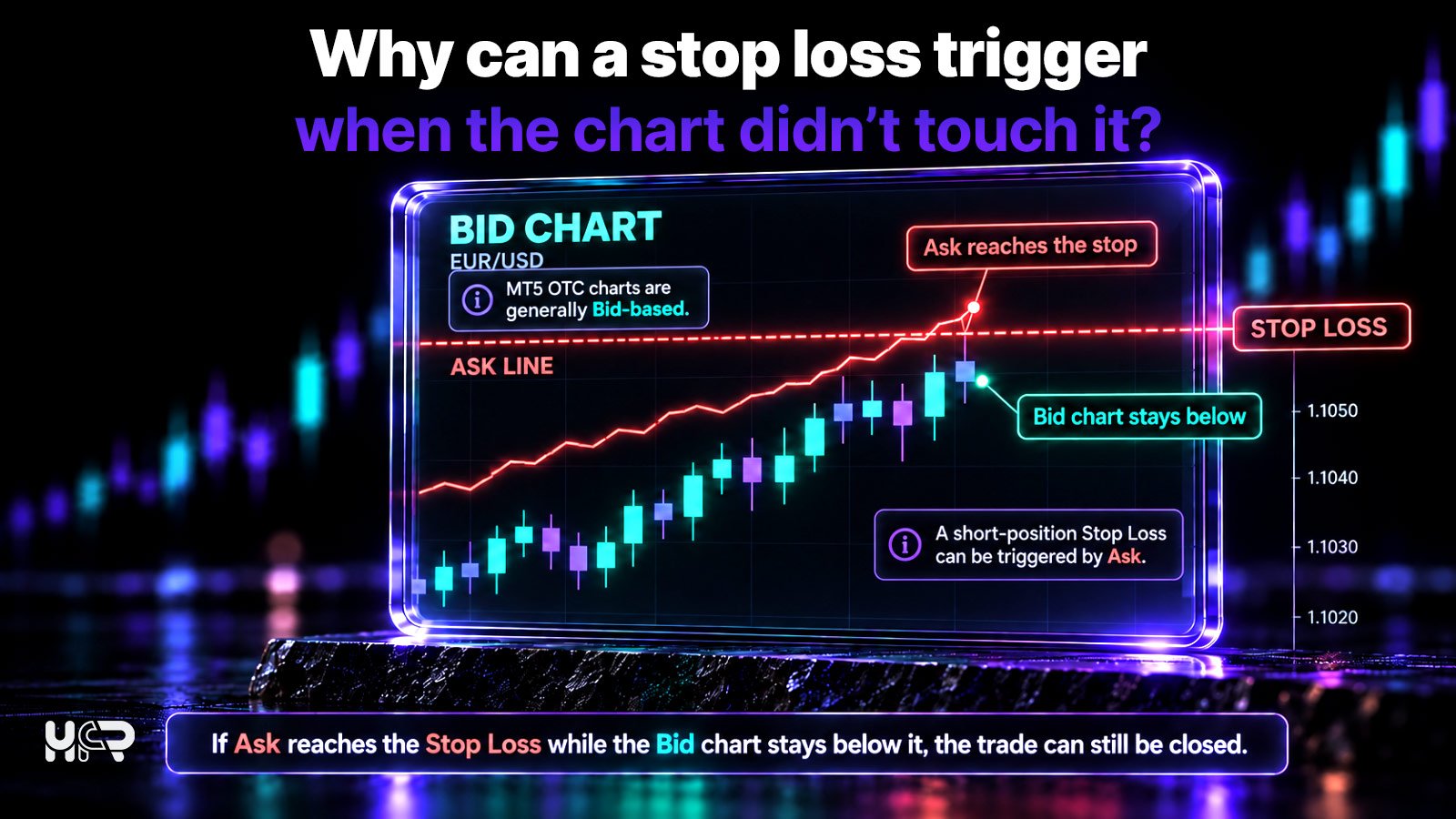
MetaTrader 5 states that OTC charts are based on Bid prices, while Market Watch can display both Bid and Ask. The broker’s symbol setup and data feed still matter when a specific execution is reviewed.
Because buying uses Ask, the executable buy price can sit above a Bid-based candle by the spread.
- When the Ask line becomes important
Ask matters for buy entries, short exits, and Ask-based trigger conditions. On a Bid-only chart, showing the Ask line can clarify the difference.
How do bid and ask affect stop-loss and pending orders?
Order triggers depend on direction and platform rules. For MetaTrader 5 OTC symbols, Buy Limit and Buy Stop conditions use Ask, while Sell Limit and Sell Stop conditions use Bid. Stop Loss and Take Profit conditions for long positions are checked against Bid; for short positions, they are checked against Ask.
A short-position Stop Loss can therefore trigger on Ask even when a Bid-based candle does not appear to touch that level.
Here, the key step is to identify the applicable trigger side before judging whether the visible chart should have reached the order level.
Why the visible candle may not show the price that triggered an order
If the chart and trigger use different quote sides, the trigger can occur outside the visible candle. Check order type, direction, Bid/Ask history, spread, and platform rules.
Why trigger prices depend on trade direction
Buying uses Ask and selling uses Bid under the usual OTC convention, so one universal trigger rule does not fit every order type.
Why broker and platform rules still matter
Execution mode and quote rules can differ by broker and instrument. MetaTrader 5 also documents separate trigger behaviour for exchange-traded symbols, so the OTC examples in this guide should not be applied to every market.
A simple bid and ask example
Suppose EUR/USD is quoted at 1.1000 Bid / 1.1002 Ask. The spread is two pips. The table below shows the basic price-side logic without adding slippage or commission.
| Scenario | Open side | Immediate close side | Price gap if quote is unchanged |
|---|---|---|---|
| Buy EUR/USD | Ask 1.1002 | Bid 1.1000 | 2 pips |
| Sell EUR/USD | Bid 1.1000 | Ask 1.1002 | 2 pips |
Real fills can differ because price, liquidity, and execution conditions can change.
What bid and ask can and cannot tell you
Bid and Ask describe the current quote, not the full future execution outcome.
| Bid and ask can show | Bid and ask cannot guarantee by themselves |
|---|---|
| The current quoted sell and buy sides | The exact future fill price |
| The current bid-ask spread | That the spread will remain unchanged |
| Which side is relevant to a buy or sell action | That an order will avoid slippage |
| A reference for many order-trigger rules | Future market direction or profitability |
Execution can still be affected by liquidity, spread changes, gaps, execution mode, and broker rules.
Bid-ask spread and slippage are not the same thing
Spread is the gap between Bid and Ask. Slippage is the difference between an expected or requested execution price and the actual fill.
A trade can experience spread without meaningful slippage. HFR’s Forex Slippage Explained covers execution-price differences, while Raw Spread vs Standard Account explains how spread and commission pricing can be combined.
Common mistakes beginners make with bid and ask
- Assuming the chart shows both bid and ask
A candle may be based on Bid, Ask, Mid, Last, or another platform-specific price source. Check the chart settings before comparing it with an order trigger.
- Using the same price logic for buy and sell trades
Buy and sell actions use opposite sides of the quote. The side used to open a position is also different from the side used to close it.
- Confusing spread with slippage
Spread is the gap between Bid and Ask. Slippage is the difference between the expected or requested execution price and the actual fill.
- Assuming the spread is always fixed
Forex spreads can change. A spread observed at one moment should not be treated as a permanent quote for the same pair, especially during volatile or lower-liquidity conditions.
- Ignoring broker or platform quote settings
Chart construction and trigger rules can differ by broker, platform, instrument, and execution model. Platform documentation should be checked when behaviour is unclear.
A simple checklist for reading bid and ask prices
Before comparing an order with a chart or quote, check the basic pricing context:
- Which currency pair or instrument am I looking at?
- What are the current Bid and Ask prices?
- Am I opening or closing a position?
- Is the position long or short?
- Which side of the quote applies to this action?
- What is the current spread?
- Does the chart display Bid, Ask, Mid, or another price source?
- Is the order a market order, pending order, Stop Loss, or Take Profit?
- What trigger and execution rules does the broker or platform use?
- Could spread changes, market movement, or slippage explain the difference?
This separates the visible chart from the executable quote before a fill or trigger is interpreted.
Final takeaway
Bid and Ask are the two sides of a forex quote. Under the usual OTC convention, a long opens at Ask and closes at Bid; a short opens at Bid and closes at Ask.
Their difference is the spread. In MetaTrader 5, OTC charts are based on Bid prices, while some order conditions depend on Ask.
If a trigger or fill does not match the visible chart, identify the applicable Bid or Ask side first. Then check the broker’s execution rules, the order type, and any spread or slippage that may have affected the result.
FAQ
What is the difference between bid and ask in forex?
The bid is the price at which you can sell a currency pair, while the ask is the price at which you can buy it. The difference between them is the bid-ask spread.
Do you buy forex at the bid or ask price?
Under the usual OTC forex convention, a buy transaction uses the ask price. A long position then closes using the bid side.
Do you sell forex at the bid or ask price?
A sell transaction normally uses the bid price. A short position is then closed by buying back at the ask side.
Why is the ask price higher than the bid?
The difference between the two prices is the spread. Under normal quoting conditions, the ask is above the bid, and the size of that gap can change with pricing and market conditions.
Why does a forex trade open in a loss?
A new long opens on the ask side but would immediately close on the lower bid side; a short opens on the bid and would close on the higher ask. This spread can create an initial negative floating result before other costs or price movement are considered.
Does MT5 show the bid or ask price on the chart?
MetaTrader 5 documentation states that OTC symbol charts are generally based on Bid prices, while Market Watch can display both Bid and Ask. Broker-specific implementations and data feeds may differ, so check the broker's platform documentation before comparing a chart with an execution or trigger price.
Why can a stop loss trigger when the chart did not reach it?
One reason is that the trigger may use a different side of the quote from the one shown on the chart. In MT5 OTC trading, a short-position Stop Loss is checked against Ask, while OTC charts are Bid-based. Spread changes and execution conditions can also matter.
Is spread the same as slippage?
No. Spread is the difference between Bid and Ask. Slippage is the difference between an expected or requested execution price and the actual fill price.
Can the bid-ask spread change?
Yes. Forex spreads can widen or narrow as liquidity, volatility, and broker pricing conditions change. A quoted spread is therefore a live condition, not a permanent characteristic of the pair.
Risk warning and disclaimer
Forex and CFD trading involve risk of loss, particularly when leverage is used. Bid and Ask prices, spreads, trigger conditions and execution prices can change with market conditions and broker execution rules. Stop-loss and pending-order levels do not guarantee a particular fill price.
This article is for educational and informational purposes only. It should not be treated as financial advice, investment advice, trading advice, or a recommendation to use any broker, exchange, digital asset, or derivative.
Sources and methodology
This article is a desk-based beginner guide to Bid and Ask pricing, forex spreads, chart-price display, and basic order-trigger context. Core pricing mechanics and MetaTrader 5 OTC chart and order rules were rechecked on 24 September 2026 against current MetaTrader 5 and OANDA documentation. HFR internal links were also checked against the live HFR Academy pages. Broker execution modes, chart settings, spread models, and order rules can vary by entity, platform, account, and instrument, so the relevant broker or platform documentation remains the final reference for a specific trade.
Sources checked:
 6
6
Share Posts


Further Reading
- Why Forex Spreads Widen: News, Rollover, Liquidity and Volatility
- What is Proof of Reserves on a crypto exchange? What it shows and what it does not
- ActivTrades Review 2026: Accounts, Fees, Platforms, Regulation and Cashback
- Weekly market recap, 12–18 October 2026: Inflation, yields, gold and crypto