





Table of Contents
[ Show/Hide ]- • What does a lot mean in forex?
- • What are standard, mini and micro lots?
- • How does lot size affect pip value?
- • How does lot size change market exposure?
- • How does lot size relate to leverage and margin?
- • How do broker contract specifications affect lot size?
- • Does lot size also affect trading costs?
- • Common mistakes beginners make with forex lot sizes
- • What to check before comparing lot sizes
- • Final takeaway
- • FAQ
- • Sources and methodology
- • Disclosure, risk warning and disclaimer
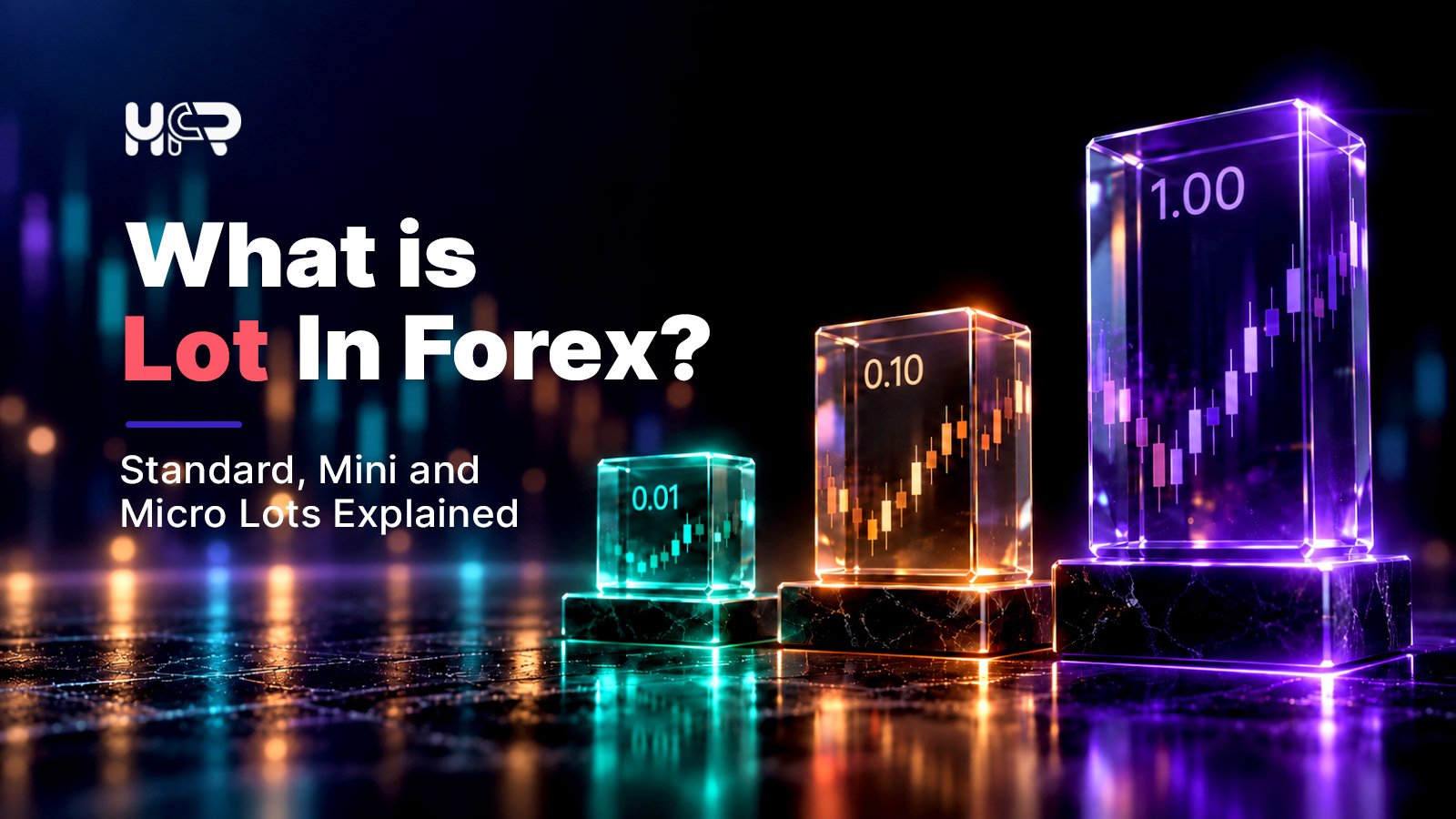
A lot is a standard way to describe position size in forex. Under the common forex convention, one standard lot represents 100,000 units of the base currency, one mini lot represents 10,000 units, and one micro lot represents 1,000 units.
For example, a 1.00-lot EUR/USD position commonly represents 100,000 euros because EUR is the base currency. A 0.10-lot position represents 10,000 euros, while 0.01 lot represents 1,000 euros.
Lot size matters because it changes market exposure, pip value, and usually the amount of margin required, all else equal. It is not the same as leverage, account risk, or trading cost. Those depend on additional factors such as the currency pair, account currency, leverage, margin rules, spreads, commissions, and the broker's contract specifications.
The standard, mini, and micro lot conventions are widely used, but platforms do not all require positions to be entered in the same way. Some use lots, while others may allow direct entry in currency units. The broker or platform specification is the final reference for a specific account.
What does a lot mean in forex?
A forex lot is a unit used to express how much of the base currency a position represents. It turns a trading volume such as 1.00, 0.10, or 0.01 lot into a concrete number of currency units.
In EUR/USD, EUR is the base currency, and USD is the quote currency. Under the common 100,000-unit standard-lot convention, 1.00 lot represents 100,000 EUR. In GBP/USD, 1.00 lot would represent 100,000 GBP.
How lot size relates to position size
Lot size and position size describe closely related ideas, but they are not always written in the same format. Lot size is the trading-volume convention; position size is the underlying quantity represented by that volume.
When one standard lot equals 100,000 base-currency units, the basic conversion is:
Position size in units = lot size x 100,000
For example, 0.30 lot of EUR/USD represents 30,000 EUR: 0.30 x 100,000 = 30,000. This is the notional quantity represented by the position, not the cash deposit or margin required to open it.
How lots translate into currency units
| Lot size | Common forex volume | Base-currency units |
|---|---|---|
| 1.00 lot | Standard lot | 100,000 units |
| 0.10 lot | Mini lot | 10,000 units |
| 0.01 lot | Micro lot | 1,000 units |
| 0.001 lot | Sometimes called a nano lot | 100 units, if the platform permits it |
The last row is not a universal minimum. Minimum volume and volume step are broker- and platform-specific.
What are standard, mini and micro lots?
Standard, mini, and micro lots are common fractions of the traditional 100,000-unit forex contract. OANDA and IG both describe the familiar relationships of 100,000 units for a standard lot, 10,000 for a mini lot, and 1,000 for a micro lot. IG also describes 100 units as a nano lot, but support for 0.001 lot is not universal and should be checked in the broker or platform specification.
What is a standard lot?
A standard forex lot commonly represents 100,000 units of the base currency. On EUR/USD, 1.00 lot therefore represents 100,000 EUR; on USD/JPY, it represents 100,000 USD. The lot defines quantity, not a fixed cash value in the account currency.
What is a mini lot?
A mini lot is one-tenth of a standard lot, or 10,000 base-currency units under the common forex convention. It is often displayed as 0.10 lot on lot-based platforms.
What is a micro lot?
A micro lot is one-hundredth of a standard lot, or 1,000 base-currency units, and is commonly displayed as 0.01 lot. Some platforms also support 0.001 lot, sometimes called a nano lot, but the minimum volume and volume step are broker- and platform-specific.
How does lot size affect pip value?
Lot size directly affects the monetary value of a pip. If position size becomes ten times larger, pip value also becomes ten times larger when the currency pair and conversion conditions are otherwise unchanged.
This is why a pip count alone does not describe the monetary effect of a position. A 20-pip move can have a very different account impact at 0.01 lot than at 1.00 lot.
A simple EUR/USD lot-size example
For EUR/USD in a USD-denominated account, one pip is commonly 0.0001. Under the standard contract-size convention, the approximate relationship is:
| EUR/USD position | Base-currency units | Approx. pip value |
|---|---|---|
| 1.00 lot | 100,000 EUR | $10 per pip |
| 0.10 lot | 10,000 EUR | $1 per pip |
| 0.01 lot | 1,000 EUR | $0.10 per pip |
These are examples for a USD account trading EUR/USD. Pip value can require currency conversion on other pairs or account currencies. For a step-by-step explanation, HFR's What Is a Pip in Forex? Pip Value Explained guide covers the calculation in more detail.
How does lot size change market exposure?
A larger lot size means a larger notional position. As a result, the same market move produces a larger monetary change in position value, both positively and negatively.
Why the same price move has a different monetary effect
Using the EUR/USD examples above, a 20-pip move corresponds to about $2 at 0.01 lot, $20 at 0.10 lot, and $200 at 1.00 lot. These figures do not describe a guaranteed profit or loss; the result depends on trade direction and execution.
Lot size therefore should not be treated as a complete measure of account risk. Entry price, stop distance, leverage, available equity, margin requirements, and execution conditions also matter.
How does lot size relate to leverage and margin?
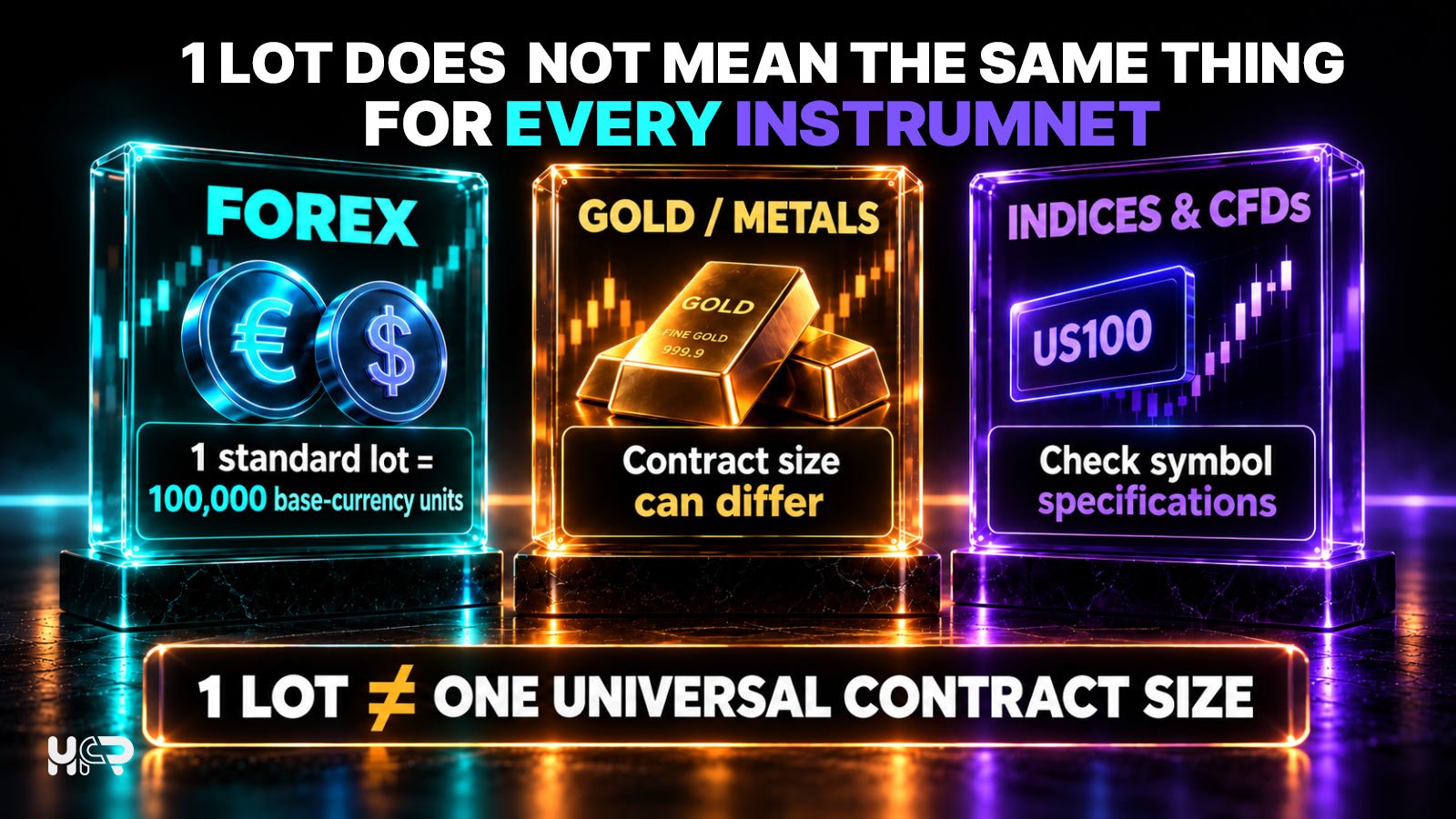
Lot size defines the size of the position. Leverage affects how much margin may be required to support that position. The concepts are connected, but they are not interchangeable.
Why lot size and leverage are different
Opening 1.00 lot does not automatically mean a particular leverage ratio is being used. The same 100,000-unit forex position can exist on accounts with different permitted leverage. Leverage changes the margin relationship; it does not change the contract size represented by the lot.
Why a larger position usually requires more margin
MetaTrader 5 documents a common retail-forex margin calculation as volume in lots x contract size / leverage, unless the symbol specification uses a different margin setting.
For example, with a 100,000-unit EUR/USD contract and 1:100 leverage, the generic calculation for 1.00 lot produces 1,000 EUR of margin before broker-specific adjustments. At 0.10 lot, the same simplified setup produces 100 EUR.
Actual margin can differ because brokers may apply symbol-specific settings, margin tiers, entity rules, or fixed initial-margin values. The broker or platform specification remains the reference for a real account. For the account-level effect of falling equity and used margin, HFR's Margin Call vs Stop Out guide explains margin level and liquidation thresholds separately.
How do broker contract specifications affect lot size?
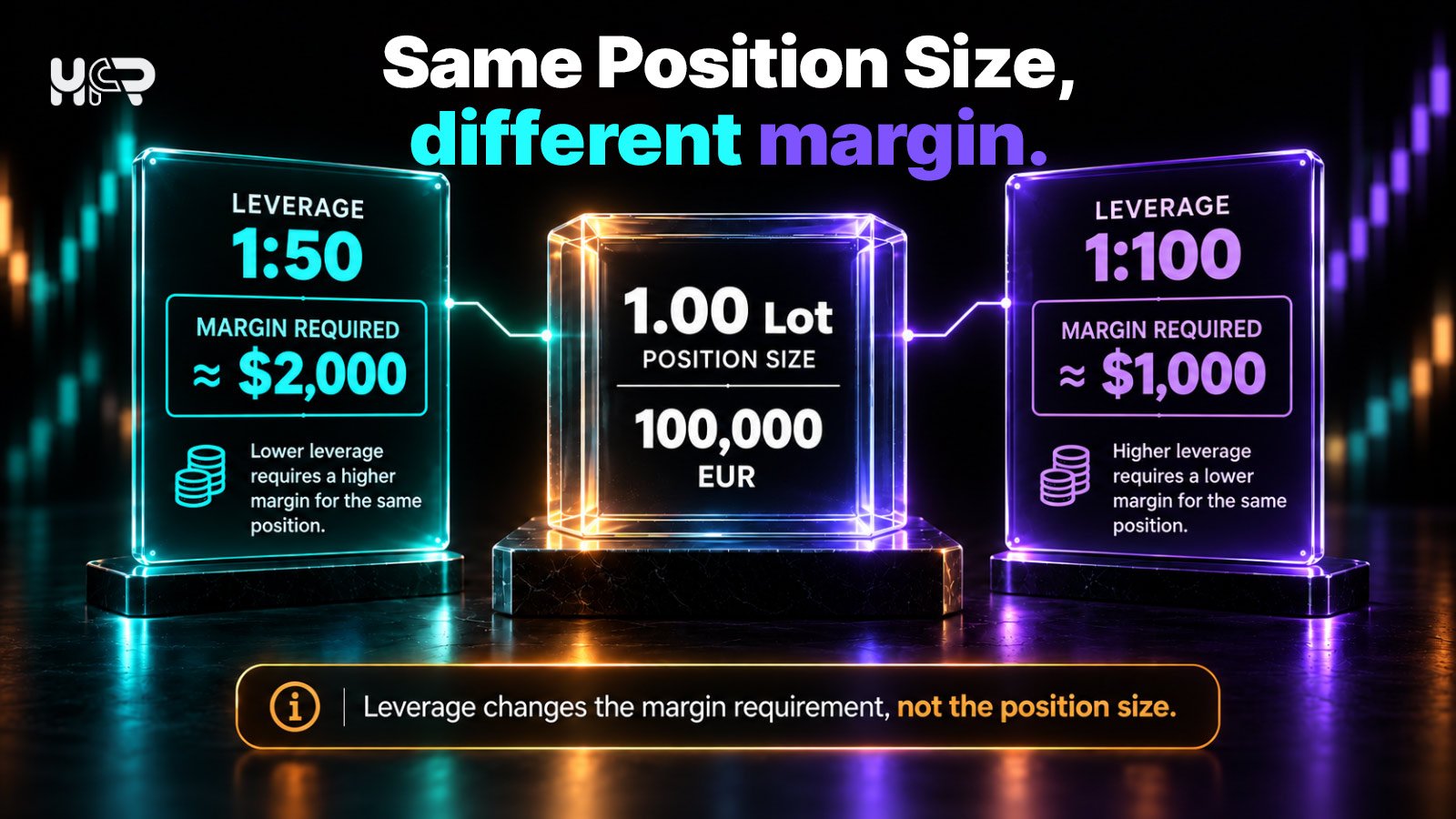
The 100,000-unit standard-lot convention is useful for forex currency pairs, but the word "lot" does not create one universal contract size across every instrument. Platforms store contract size and trading increments at the symbol level.
Why one lot does not mean the same thing for every instrument
A one-lot EUR/USD position and a one-lot gold, index, energy, or crypto CFD position should not be assumed to represent the same quantity or monetary exposure. Contract size, tick size, tick value, minimum volume, and margin method can differ by symbol.
Forex lots versus gold, indices and other CFDs
For a currency pair, the common forex convention expresses a standard lot in base-currency units. Other CFDs may instead be defined around ounces, index points, shares, coins, or another broker-specific unit.
Before applying a lot-size example, check the symbol specification for contract size, minimum volume, volume step, tick size, tick value, margin method, and trading currency. HFR's What Is a Pip in Forex? Pip Value Explained guide also explains why forex pip conventions should not be transferred automatically to gold, indices, or other CFDs.
Does lot size also affect trading costs?
Lot size can affect costs that are charged by volume, but lot size is not itself a trading cost. Depending on the account model, costs may include spread, commission, financing, and execution effects.
Commission-based accounts may quote charges per lot or per side, while spread-based accounts may include more of the cost in the bid-ask spread. HFR's Raw Spread vs Standard Account guide explains that pricing distinction, while How Forex Cashback Is Calculated Per Lot covers eligible volume-based rebate calculations separately.
Cashback may help offset part of eligible trading costs after confirmation, but it does not reduce market risk, leverage risk, margin risk, spread risk, slippage risk, execution risk, or the risk of loss.
Common mistakes beginners make with forex lot sizes
Confusing lot size with leverage
Lot size describes position quantity; leverage describes the relationship between exposure and the margin required to support it. A large lot is not a leverage ratio.
Assuming one lot always has the same value
One standard forex lot commonly means 100,000 units of the base currency, but the account-currency value of those units changes with exchange rates. Non-forex instruments can also use different contract sizes.
Ignoring the monetary effect of position size
Two positions can experience the same 10-pip move but have very different monetary changes because their lot sizes are different. Pip count alone does not show the effect of position size.
Applying forex lot conventions to every CFD
Standard, mini, and micro forex conventions should not be assumed to apply to gold, indices, commodities, shares, or crypto CFDs. Check the contract specification for the actual symbol.
What to check before comparing lot sizes
Before interpreting a lot-size value, confirm the contract details and account context:
- What instrument am I trading?
- What does one lot represent in the broker's contract specification?
- What are the minimum volume and volume step?
- How many base-currency units does this lot size represent?
- What is the approximate pip or tick value at this position size?
- What leverage and margin rules apply to this symbol and account?
- Am I applying a forex convention to an instrument with a different contract definition?
This separates position size from the margin, trading cost, and account risk attached to it.
Final takeaway
A forex lot is a way to express position size. Under the common convention, a standard lot represents 100,000 units of the base currency, a mini lot 10,000 units, and a micro lot 1,000 units.
The practical point is that lot size changes exposure. A larger position creates a larger monetary effect from the same price movement and usually requires more margin, all else equal. But lot size is not a complete measure of account risk because pip value, leverage, equity, stop distance, execution, and broker specifications also matter.
Before interpreting lot size as account risk, combine the position size with the pair's pip value, the broker's leverage and margin rules, available equity, and the relevant contract specification. For trading-cost context, compare the account's spread, commission, and any confirmed rebate separately.
FAQ
How much is 1 lot in forex?
Under the common forex convention, 1.00 standard lot represents 100,000 units of the base currency. For EUR/USD, that means 100,000 EUR; for USD/JPY, it means 100,000 USD. Check the broker specification for the actual symbol.
How much is 0.1 lot in forex?
A 0.10-lot forex position commonly represents 10,000 units of the base currency, usually called one mini lot.
How much is 0.01 lot in forex?
A 0.01-lot forex position commonly represents 1,000 base-currency units, usually called one micro lot.
How much is 0.001 lot in forex?
Under the common 100,000-unit forex convention, 0.001 lot represents 100 units of the base currency. Some educational sources call this a nano lot, but not every broker or platform permits 0.001-lot trading, so the symbol's minimum volume and volume step should be checked.
Is 1 lot always 100,000 units?
Not across every instrument or platform. For traditional forex conventions, one standard lot commonly represents 100,000 base-currency units. Other CFDs can use different contract sizes, and some platforms allow forex positions to be entered directly in units.
Does a larger lot size mean more leverage?
No. Lot size and leverage are different. A larger lot increases position size, while leverage affects the margin relationship used to support that exposure.
Does lot size change pip value?
Yes. When the pair and conversion conditions stay the same, a larger position has a larger pip value. For EUR/USD in a USD account, 1.00 lot is approximately $10 per pip, 0.10 lot about $1, and 0.01 lot about $0.10.
Can lot sizes differ between brokers?
The common forex convention is widely used, but brokers can differ in minimum volume, volume steps, account types, platform entry methods, and symbol specifications. Check the contract details for the account being used.
Are forex lot sizes the same for gold and indices?
No. Do not assume a forex lot has the same contract size as a gold or index CFD lot. Those instruments can use different contract sizes, tick values, price increments, and margin methods.
Sources and methodology
This article is a desk-based beginner guide to forex lot sizes, contract size, pip-value relationships, and margin context. Core lot conventions and platform mechanics were rechecked on 16 September 2026 against current OANDA and IG material, while the MetaTrader 5 help documentation was used for the retail-forex margin formula. HFR internal links were checked against live published articles. Broker contract size, minimum volume, volume step, margin method, leverage limits, and instrument specifications can vary by broker, entity, platform, and symbol, so the relevant broker specification remains the final reference for a specific account.
Sources checked:
- OANDA - Do you offer trading in lots?
- IG - What is a lot in forex and how do you calculate the lot size?
- MetaTrader 5 - Margin Calculation: Retail Forex, Futures
- HighFxRebates - What Is a Pip in Forex? Pip Value Explained
- HighFxRebates - Margin Call vs Stop Out
- HighFxRebates - How Forex Cashback Is Calculated Per Lot
- HighFxRebates - Raw Spread vs Standard Account
Disclosure, risk warning and disclaimer
Disclosure: HighFxRebates may receive remuneration from supported brokers under partner or introducing-broker arrangements. Rebate eligibility, calculation, and payment conditions remain subject to the applicable HFR and broker terms.
Risk warning: Forex and CFD trading involve risk of loss, particularly when leverage is used. Larger position sizes increase the monetary effect of market movements and can increase losses as well as gains. Margin requirements and execution conditions can vary by broker, entity, account, instrument, and market conditions.
Educational disclaimer: This article is for educational and informational purposes only. It should not be treated as financial advice, investment advice, trading advice, or a recommendation to use any broker, account type, trading strategy, or derivative.
 6
6
Share Posts


Further Reading
- Why Did My Stop Loss Trigger When Price Never Reached It?
- Why the Same Forex Broker Can Have Different Legal Entities
- U.S. Jobs Slow, the Dollar Firms & Bitcoin Advances While Rate Expectations Shift — September 28-October 4, 2026
- Bitcoin, Ethereum, Solana, Gold and Silver Technical Outlook: Key Daily Zones After a Mixed Macro Week — October 5, 2026