




Table of Contents
[ Show/Hide ]- • PU Prime Review: Accounts, Spreads, Fees & Cashback Explained
- • Overview of PU Prime
- • Is PU Prime Regulated and Safe?
- • PU Prime Account Types
- • PU Prime Spreads, Fees, and Commissions
- • Trading Platforms
- • Instruments Available on PU Prime
- • Promotions and Bonuses
- • Trading Features and Tools
- • How Cashback Works with PU Prime
- • Deposits and Withdrawals
- • Pros and Limitations
- • Is PU Prime Right for You?
- • Conclusion
- • FAQs
PU Prime Review: Accounts, Spreads, Fees & Cashback Explained

This PU Prime review looks at how the broker is structured, with a focus on trading costs, account types, and overall transparency. Many traders compare brokers based on spreads or promotions, but the full picture usually includes commissions, execution conditions, and available tools.
PU Prime offers access to forex and CFD markets through different account setups. Each account type has its own pricing model, which can affect how costs are applied over time. For cost-focused traders, understanding these differences is more useful than looking at headline numbers alone.
If you are new to trading, it also helps to understand what a broker is and how to choose one before comparing cost structures.
This review explains how PU Prime handles spreads, fees, and trading conditions in a clear and practical way. It also covers how cashback works as a cost-offset mechanism, without affecting execution. Want to understand the difference between real trading costs and marketing claims? The goal of this review is to help traders compare costs objectively and make informed decisions based on actual trading conditions.
Overview of PU Prime
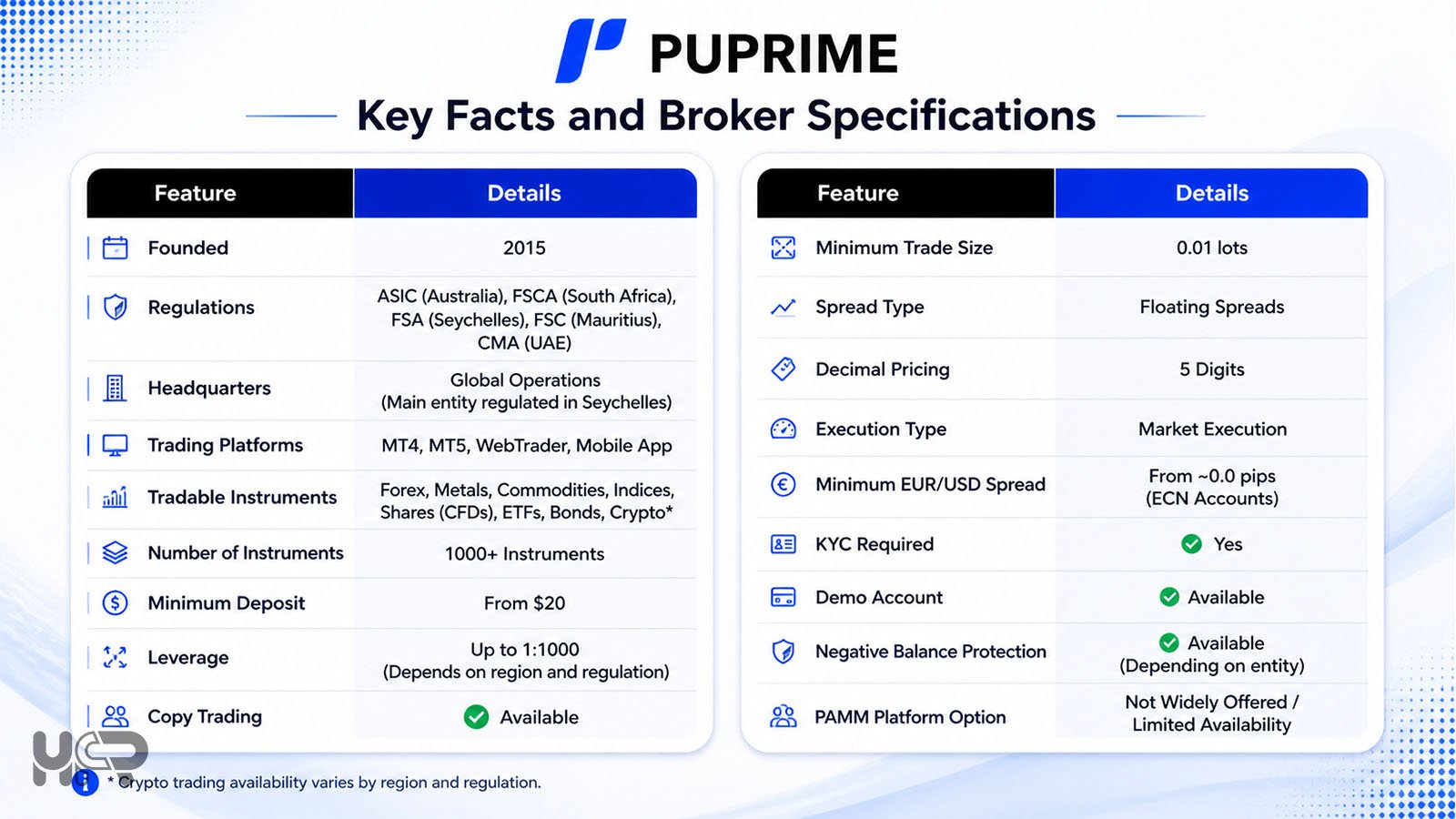
PU Prime is an online broker that provides access to forex and CFD trading. The company operates internationally and offers trading services through multiple entities, which allows it to serve clients in different regions.
Broker Background
PU Prime was established to offer multi-asset trading through standard platforms such as MetaTrader. What account types does PU Prime offer, and how has the broker evolved over time? Rather than relying on a single pricing model, PU Prime provides multiple account structures. Traders can choose between spread-only and commission-based setups depending on their preferences. Over time, the broker has expanded its product range to include:
- Forex pairs
- Commodities
- Indices
- Share CFDs
This structure is typical in a PU Prime review, where the focus is on how trading conditions are organized rather than on individual features.
Regions Served
PU Prime operates in multiple regions, including:
- Asia
- Africa
- Middle East
- Parts of Latin America
However, availability depends on local regulations. Some countries may have restrictions, and trading conditions can vary depending on the entity used to open the account.
Key Features
The broker’s main features are centered around flexibility and access:
- Multiple account types with different cost structures
- Support for MetaTrader 4 and MetaTrader 5
- Access to a range of CFD instruments
- Integration with rebate systems for cost tracking
Overall, the platform is structured to allow traders to compare pricing models and choose based on how trading costs are applied.
Is PU Prime Regulated and Safe?
Regulation is an important part of any PU Prime broker review, as it explains how the broker operates and what level of protection is available to clients.
Regulatory Entities
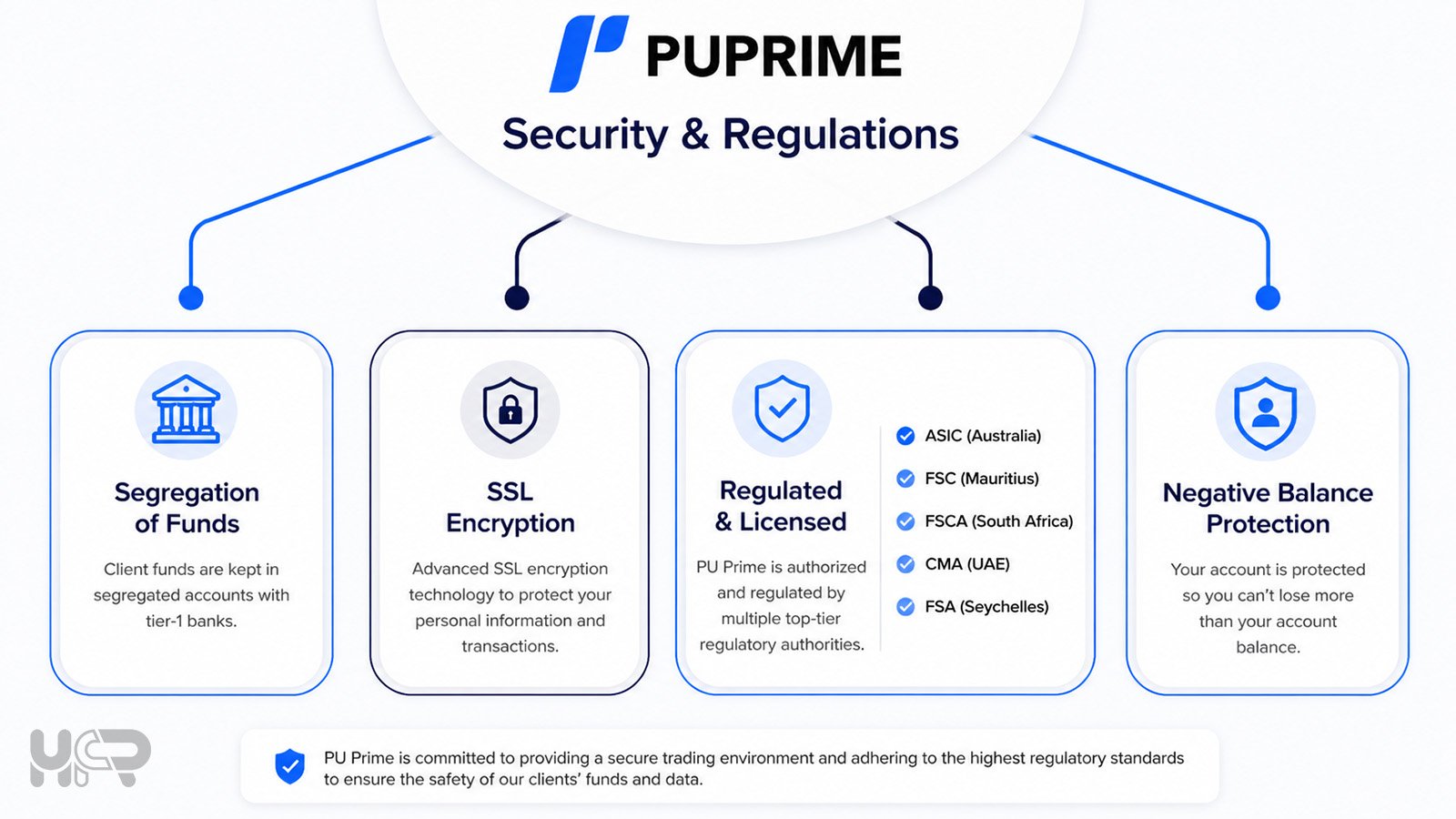
PU Prime operates through different entities, each regulated in its own jurisdiction. Based on publicly available information, the broker is associated with:
- Financial Sector Conduct Authority (FSCA – South Africa)
- Financial Services Authority Seychelles (FSA – Seychelles)
- Australian Securities and Investments Commission (ASIC – Australia)
- Financial Services Commission of Mauritius (FSC)
- Capital Market Authority of the UAE (CMA)
Each regulator applies different rules. For example, ASIC is generally considered a stricter regulator, and Offshore regulators (like Seychelles) offer more flexible trading conditions but lower investor protection. Because of this, the level of protection depends on which entity your account is registered under.
Client Protection Measures
PU Prime applies standard client protection practices, although availability may vary by region.
Segregation of Funds
Client funds are typically kept separate from the company’s operational funds:
- Stored in segregated bank accounts
- Not used for business expenses
- Helps protect funds in case of financial issues
Data Security
The broker uses standard security measures to protect user data:
- Encrypted client area
- Secure login systems
- Protection of personal and financial information
Risk Protection
Some entities may offer additional protections, such as:
- Negative balance protection (depending on jurisdiction)
- Internal risk management systems
What This Means for Safety: PU Prime operates under a multi-entity structure, which is common in the industry. However, safety is not defined only by the brand name. It depends on:
- The regulator is linked to your account
- The rules applied in that jurisdiction
PU Prime Account Types
PU Prime offers several account types designed to match different trading preferences. The main difference between these accounts is how trading costs are structured, especially in terms of spreads and commissions.
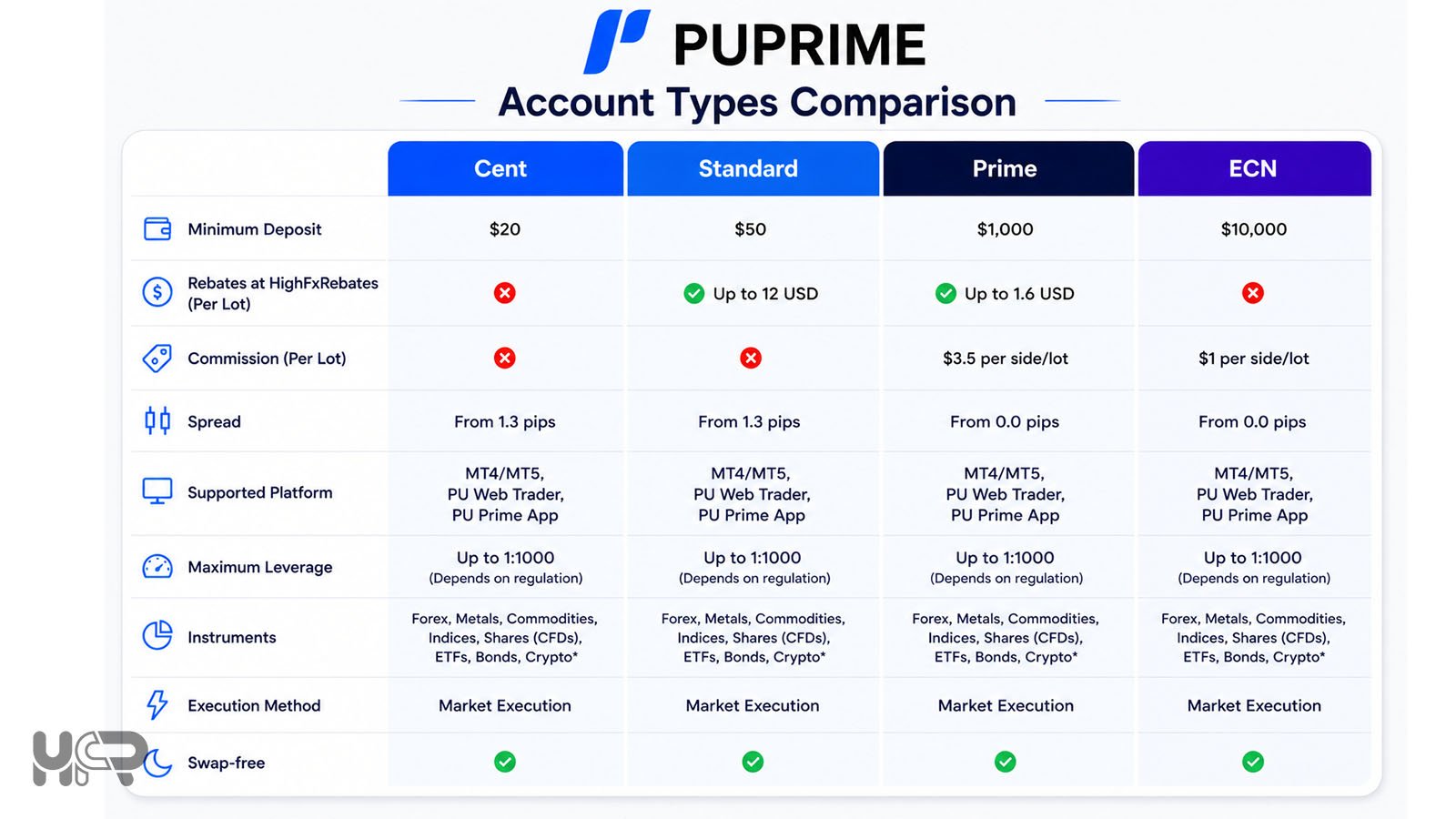
Standard Account: The Standard account uses a spread-only pricing model.
- No separate commission
- Costs are included in the spread
- Typically, higher spreads compared to ECN accounts
- Lower entry requirements in many regions
This type of account is often chosen by traders who prefer a simpler cost structure, where all fees are included in the price.
ECN and Prime Account: The ECN and Prime account separates spreads and commissions.
- Lower spreads (closer to market pricing)
- Commission charged per trade
- More transparent cost breakdown
- Often requires a higher minimum deposit
This structure is commonly used by traders who want to see the exact cost of execution rather than having it included in the spread.
Demo Account: PU Prime also provides a demo account for practice.
- Uses virtual funds
- Simulates real market conditions
- No financial risk
- Useful for testing platforms and strategies
A demo account helps traders understand how spreads and execution work before trading with real funds.
Key Differences
| Feature | Standard Account | ECN & Prime Account | Demo Account |
|---|---|---|---|
| Spread | Higher | Lower | Simulated |
| Commission | No | Yes | No |
| Cost Structure | Spread-only | Spread + commission | Not applicable |
| Minimum Deposit | Lower (varies) | Higher (varies) | None |
| Purpose | Simplicity | Cost transparency | Practice |
Choosing the Right Account Type
The main choice is between:
- Simpler pricing (Standard account)
- More detailed pricing (ECN account)
Understanding this difference is important in any Pu Prime account types comparison, as it directly affects how trading costs are applied over time.
PU Prime Spreads, Fees, and Commissions
Understanding PU Prime spreads and fees requires looking at how costs are structured across different account types. The broker uses both spread-based and commission-based models, depending on the account selected.
Spread-Based vs Commission-Based
PU Prime generally offers two pricing approaches:
- Spread-only model (Standard account)
All trading costs are included in the spread. There is no separate commission, but spreads are usually wider. - Spread + commission model (ECN / Prime account)
Spreads are lower, but a fixed commission is charged per trade. This creates a more transparent cost structure.
The choice between these models affects how costs are applied on each trade.
Realistic Cost Explanation
Instead of focusing on minimum spreads, it is more practical to consider:
- Average spreads during normal market conditions
- Spread changes during volatility or low liquidity
- Commission costs on ECN accounts
To better understand how pricing models compare in real trading conditions, it is useful to look at forex rebates vs low spreads and how each approach affects total cost over time.
In real trading, spreads are not fixed. They can widen during:
- News events
- Market openings and closings
- Low liquidity periods
Because of this, headline numbers may not reflect actual trading conditions.
Other Trading Fees: In addition to spreads and commissions, traders may also encounter:
- Swap fees (for overnight positions)
- Currency conversion fees (if account currency differs)
- Inactivity fees (depending on account activity)
These costs are part of the overall structure and should be considered when comparing brokers.
How to Compare Costs: PU Prime does not rely on a single pricing model. Instead, it provides different structures depending on the account type.
For traders, the key is not just finding low spreads, but understanding:
- How spreads behave over time
- When commissions apply
- How the total cost is calculated per trade
This approach gives a clearer view of PU Prime trading conditions and helps compare real costs rather than advertised figures.
For comparison, you can also read our detailed HFM review to see how pricing structures differ between brokers.
Trading Platforms
PU Prime provides access to trading through widely used platforms rather than a proprietary system. This allows traders to use familiar tools and interfaces.
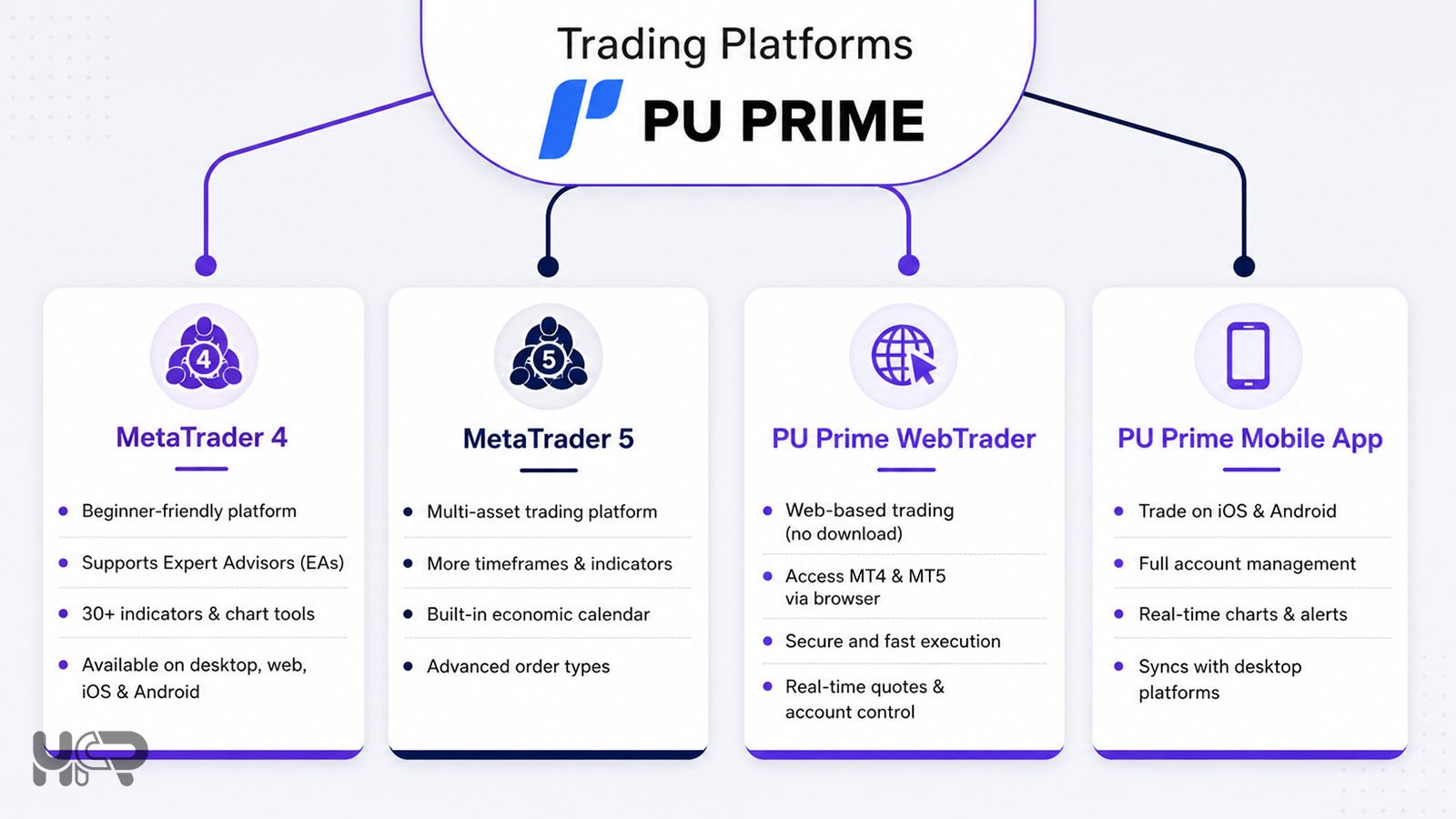
MetaTrader 4: MT4 is focused mainly on forex and basic CFD trading.
- Simple and widely used interface
- Supports Expert Advisors (EAs) for automated trading
- Includes standard charting tools and indicators
- Available on desktop, web, and mobile
This platform is often chosen by traders who prefer a straightforward setup.
MetaTrader 5: MT5 offers a broader set of features compared to MT4.
- Supports more asset classes (including shares and indices)
- More timeframes and technical indicators
- Additional order types
- Improved depth of market tools
MT5 is generally used by traders who need more flexibility and analytical tools.
Mobile and Web Trading: PU Prime also supports trading through mobile and web-based access.
- Mobile apps (iOS & Android)
- Based on MT4 and MT5 applications
- Allow trade execution and position monitoring
- Include basic charting tools
- WebTrader
- Accessible through a browser
- No installation required
- Suitable for quick access to accounts
Copy Trading and Social Trading: PU Prime also offers PU Copy Trading and a social trading platform.
- Allows users to follow and copy other traders’ strategies
- Performance data is typically visible before copying
- Trades are executed automatically based on selected providers
These features are designed for convenience and strategy sharing. However, they do not change spreads, commissions, or execution conditions.
Platform Considerations: The platform does not change PU Prime spreads and fees, but it affects how traders interact with the market.
- MT4: simpler, forex-focused
- MT5: broader tools and instruments
- Mobile/Web: flexibility and access
- Copy/Social trading: an alternative way to participate in markets
Using standard platforms can make it easier for traders to switch between brokers without learning a new system.
Instruments Available on PU Prime
PU Prime provides access to a range of CFD instruments. The available markets allow traders to diversify across different asset classes, although availability can vary depending on the region and account type.
Forex: Forex is one of the main markets offered by PU Prime.
- Major currency pairs (e.g., EUR/USD, GBP/USD)
- Minor and some exotic pairs
- Traded with variable spreads depending on market conditions
Forex trading is typically the core offering in most PU Prime review evaluations.
Commodities: PU Prime offers commodity trading through CFDs.
- Precious metals such as gold and silver
- Energy products like crude oil
- Prices influenced by global supply and demand factors
Commodities are often used by traders looking to diversify beyond currency pairs.
Indices: Index CFDs allow traders to access broader market movements.
- Major global indices (e.g., US, Europe, Asia)
- Based on baskets of stocks
- Traded without owning the underlying asset
Indices can behave differently from forex, especially during market openings and news events.
Shares (Stock CFDs): PU Prime also provides share CFDs.
- Access to selected global companies
- Traded as CFDs (no ownership of the underlying stock)
- Pricing may include spreads and, in some cases, additional fees
This allows traders to gain exposure to equity markets within the same platform.
Crypto (Availability May Vary): Cryptocurrency CFDs may be available depending on the region.
- Access to major cryptocurrencies such as Bitcoin and Ethereum
- Availability depends on the regulation and the account location
Because crypto trading is regulated differently across regions, it may not be offered to all clients.
Market Availability Considerations: The range of instruments supports different trading preferences. However, availability and conditions can vary by region. Traders should check:
- Which instruments are available under their account
- How costs differ between asset classes
This helps create a clearer view of PU Prime trading conditions across markets.
Promotions and Bonuses
PU Prime may offer promotions or bonus programs depending on the region and regulatory entity. These can include deposit bonuses, trading credits, or limited-time campaigns. Availability is not the same for all users, and some regions may not have access to these offers due to regulatory restrictions.
It is important to understand that bonuses usually come with specific conditions. These may include:
- Trading volume requirements before withdrawal
- Time limits on usage
- Restrictions on how profits or credits can be used
Because of these conditions, bonuses should not be treated as a direct reduction in trading costs.
Trading Features and Tools
PU Prime provides a set of tools designed to support trading decisions and account management. These tools do not directly change pricing, but they help traders analyze markets and manage risk more effectively.
Economic Calendar: An economic calendar is available to track market events.
- Lists scheduled economic announcements
- Shows expected and previous data
- Helps traders prepare for potential volatility
This tool is commonly used to understand when spreads may widen due to market activity.
Trading Calculators: PU Prime offers basic calculators to estimate trade-related values.
- Margin calculator
- Pip value calculator
- Profit/loss estimation tools
These tools help traders understand position size and cost before placing a trade.
Indicators and Charting Tools
Through MetaTrader platforms, traders have access to technical analysis tools.
- Built-in indicators (moving averages, RSI, MACD)
- Custom indicators can be added
- Multiple chart types and timeframes
In addition, tools like Autochartist and market heatmaps may be available to support analysis.
- Autochartist helps identify chart patterns and potential trade setups
- Market heatmaps provide a visual overview of market activity and price movement across instruments
These features are used to analyze price behavior rather than affect trading costs directly.
Expert Advisor (EA) Support: Both MT4 and MT5 support automated trading through Expert Advisors.
- Allows rule-based trading automation
- Can execute trades without manual input
- Requires testing and proper setup
EA usage does not change spreads or commissions, but it can affect how often trades are placed, which impacts total cost.
How Tools Support Trading: These tools support trading decisions, but they do not reduce fees directly. Their main role is to help traders improve analysis, timing, and execution, not to change the pricing structure.
How Cashback Works with PU Prime
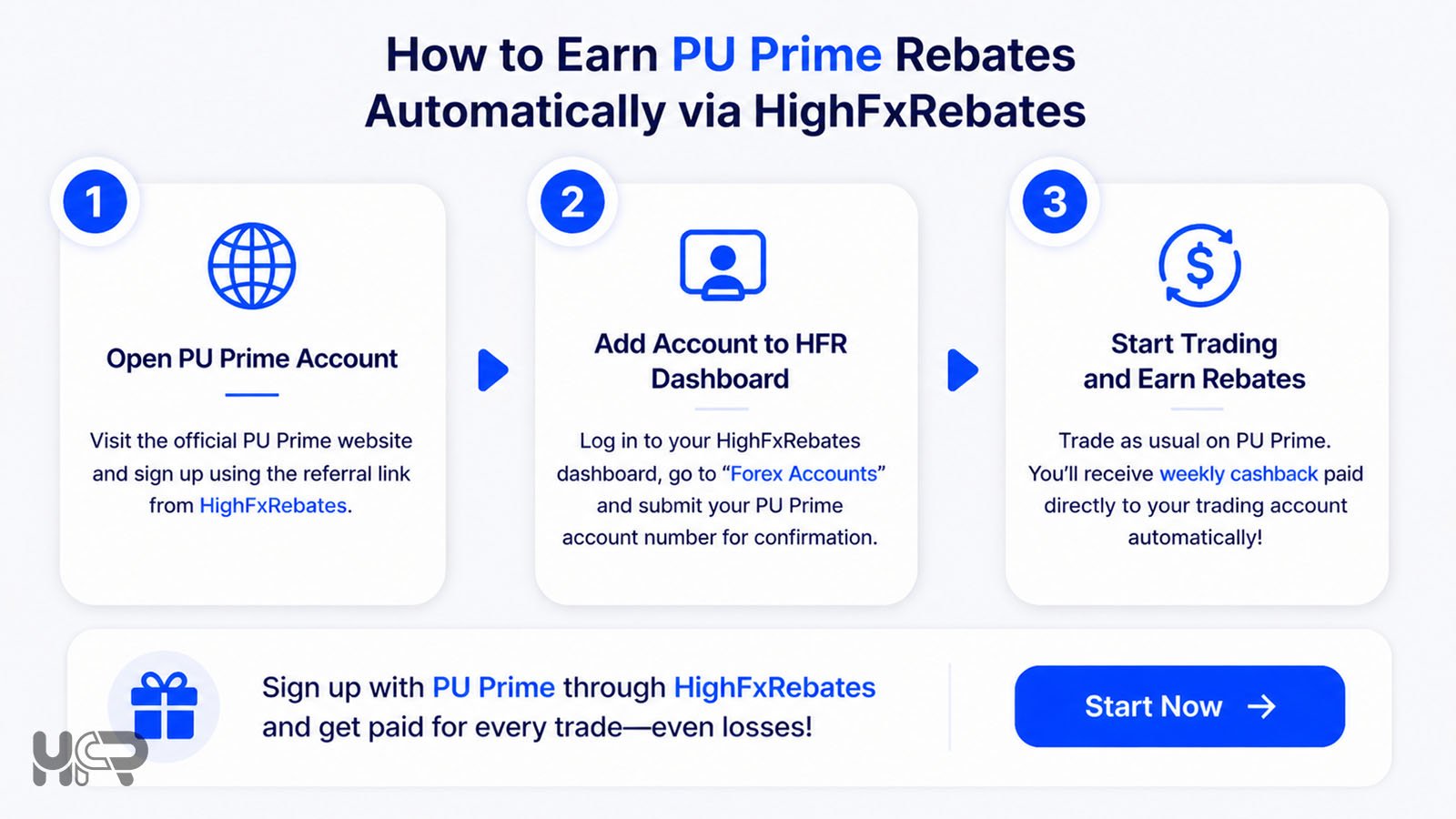
Cashback is a cost-offset mechanism that returns part of the trading cost after trades are completed. In the case of PU Prime, rebates can be accessed through partners such as HighFxRebates.
Cashback Structure
With PU Prime, cashback is:
- Based on trading volume (per lot traded)
- Available up to $12 per lot, depending on the account and instrument
- Calculated automatically from executed trades
For details on rates and conditions, see the Puprime rebate page
How Payments Work
Cashback is handled separately from trading activity.
- Paid after trades are completed
- Credited independently of profit or loss
- Often processed on a regular schedule (depending on the provider)
Therefore, the trader first pays the full trading cost, and then receives part of it back later.
No Impact on Trading Conditions
It is important to clarify that cashback does not change how trading works.
- It does not reduce the spreads shown on the platform
- It does not affect execution speed
- It does not change order pricing
Trading conditions remain exactly the same as the broker provides.
How Cashback Reduces Costs
Cashback does not replace spreads or commissions. Instead, it reduces overall cost over time. The impact becomes more noticeable for traders with higher trading volume.
For a deeper explanation of the mechanism, see how forex rebates work.
Summary
- Up to $12 per lot returned as cashback
- Paid via rebate partner
- Based on trading volume
- Separate from trading execution
This makes cashback a cost-adjustment layer rather than a direct change to pricing. You can track your earnings directly through the HighFxRebates dashboard once your account is linked and approved.
Start earning PU Prime cashback with HighFxRebates: Trade through your linked account and receive up to $12 per lot in rebates without changing spreads or execution. View PU Prime Rebates.
Deposits and Withdrawals
PU Prime provides several funding options to support account deposits and withdrawals. The available methods and conditions may vary depending on the region and the entity under which the account is registered.
Deposit Methods
Common deposit methods include:
- Bank transfer
- Credit and debit cards (Visa, Mastercard)
- Online payment systems (e-wallets)
- Local payment solutions in some regions
Most deposit methods are processed quickly, especially electronic payments. In many cases:
- E-wallets and cards: processed within minutes
- Bank transfers: may take longer, depending on the bank
Withdrawal Methods
Withdrawals are usually processed using the same method as the deposit, following standard compliance rules.
- Requests are submitted through the client portal
- Identity verification (KYC) must be completed
- Processing starts after approval
Typical processing times:
- Internal processing: within 1 business day
- External transfer time: depends on the payment provider
Fees and Considerations: PU Prime generally does not charge deposit fees, but some points should be considered:
- Third-party providers may apply fees
- Currency conversion fees may apply if currencies differ
- Bank transfers may include intermediary charges
Funding Considerations: Deposits are usually faster than withdrawals, which is standard across brokers. The total time depends on:
- Payment method
- Region
- Verification status
For a smoother experience, traders should:
- Use the same method for deposit and withdrawal
- Complete account verification early
- Check any potential third-party fees
This helps avoid delays and provides a clearer understanding of how funds are managed.
Pros and Limitations
A balanced view of PU Prime helps identify where the broker may fit different trading needs. The points below focus on structure, costs, and practical use rather than promotional features.
Pros
- Account flexibility
PU Prime offers both spread-only and commission-based accounts. This allows traders to choose how trading costs are applied. - Platform availability
Support for MetaTrader 4 and MetaTrader 5 provides access to familiar tools and trading environments. - Rebate compatibility
The broker can be linked with cashback programs, which return part of the trading cost based on volume. This can help reduce overall expenses over time.
Limitations
- Regional differences
Trading conditions, available instruments, and protections may vary depending on the regulatory entity. - Commission-based accounts
ECN or Prime accounts include commissions, which need to be considered alongside spreads when calculating total cost. - Conditions vary
Spreads, execution, and features can change depending on market conditions and account setup. Minimum values may not reflect average trading conditions.
Overall Assessment: PU Prime provides flexibility in how trading costs are structured, but this also means traders need to review account details carefully. Comparing total costs and understanding how pricing works is more useful than relying on a single feature or headline number.
Is PU Prime Right for You?
Whether PU Prime is suitable depends on how you trade and how you evaluate costs. The broker offers different account structures, so the fit will vary based on experience level and trading style.
- Beginners
For newer traders, simplicity is usually important.
- Standard accounts offer a clear spread-based cost structure
- Platforms like MetaTrader 4 and MetaTrader 5 are widely used and easy to learn
- Demo accounts allow practice without financial risk
However, beginners still need to understand how trading costs apply on each trade.
- Active Traders
For traders who trade frequently, the cost structure becomes more relevant over time.
- Access to ECN or Prime accounts provides lower spreads
- Commission-based pricing offers more transparency
- Frequent trading means small cost differences can add up
Active traders may focus more on how spreads and commissions behave in real conditions rather than minimum values.
- Cost-Focused Traders
For traders focused on reducing expenses, the total cost is the main factor.
- Different account types allow comparison of pricing models
- Cashback programs can return part of the trading cost
- Cost tracking becomes important over time
Choosing Based on Your Trading Style
PU Prime may suit traders who:
- Want flexibility in account types
- Prefer standard trading platforms
- Are willing to compare costs carefully
The key is to match the account structure with your trading behavior, rather than choosing based on a single feature.
To compare options more broadly, some traders review forex broker cashback comparison and analyze how different pricing structures affect overall costs.
Conclusion
This PU Prime review shows that the broker is built around flexible account structures rather than a single pricing model. Traders can choose between spread-only and commission-based setups, depending on how they prefer to manage costs.
The main point is that trading expenses are not defined by spreads alone. Commissions, execution conditions, and optional cashback all play a role. For cost-focused traders, understanding how these elements work together is more useful than comparing headline numbers.
PU Prime may suit traders who want to evaluate pricing in detail and adjust their setup based on trading activity. A clearer view of total cost over time helps support more informed decisions.
You can also explore different platforms in our guide to top forex cashback providers to see how rebate structures vary between providers.
FAQs
Is PU Prime regulated?
PU Prime operates through multiple regulatory entities, including jurisdictions such as Australia, South Africa, and offshore regions. The level of protection depends on the entity where the account is registered. Traders should always check the regulator linked to their specific account before opening one.
What account types does PU Prime offer?
PU Prime offers Standard (spread-only), ECN and Prime (spread + commission), and Demo accounts. Each type uses a different pricing structure. The main difference is how trading costs are applied, not the instruments available.
How much cashback can I earn with PU Prime?
Cashback can reach up to $12 per lot, depending on the account type and trading conditions. It is calculated based on trading volume and paid through rebate partners. The actual amount may vary depending on the instrument and account setup.
How does the PU Prime rebate work?
Rebates return part of the trading cost after trades are completed. They are calculated per lot and paid separately from trading results. They do not affect spreads, execution, or order pricing.
How often are rebates paid?
Rebate payment frequency depends on the provider. In many cases, cashback is processed weekly and credited directly to the trading account or rebate account.
Is PU Prime safe to use for forex trading?
PU Prime offers multiple trading tools and account options used by global traders. HighFxRebates explains that users can also earn cashback rebates, which reduce trading costs. However, it is important to review regulatory details and test the platform with small deposits before trading larger amounts.
How can I earn cashback rebates with PU Prime trading?
You can earn cashback rebates by signing up through HighFxRebates and linking your PU Prime account. HighFxRebates tracks your trades and provides regular rebate payouts, helping reduce overall trading expenses and improve profitability without changing spreads, commissions, or execution conditions.
Can I trust PU Prime with deposits and withdrawals?
PU Prime provides standard deposit and withdrawal methods used across the forex industry. HighFxRebates recommends testing small transactions first to evaluate reliability. This approach helps traders build confidence while also benefiting from cashback rebates that improve overall trading efficiency.
Which PU Prime account type is best to start with?
PU Prime offers several account types designed for different trading needs. HighFxRebates suggests choosing a simple account structure initially while using cashback rebates to reduce trading costs. This combination helps traders improve performance and manage risk more effectively over time.
Where can I find a trusted and honest PU Prime review online?
You can find a detailed and honest PU Prime review on HighFxRebates. The platform provides insights into trading conditions, account types, and rebate benefits, helping traders understand real costs and make informed decisions based on clear and practical information.
 6
6
Share Posts


Further Reading
- Why Forex Spreads Widen: News, Rollover, Liquidity and Volatility
- What is Proof of Reserves on a crypto exchange? What it shows and what it does not
- ActivTrades Review 2026: Accounts, Fees, Platforms, Regulation and Cashback
- Weekly market recap, 12–18 October 2026: Inflation, yields, gold and crypto