




Table of Contents
[ Show/Hide ]- • Why do crypto exchanges require KYC?
- • How crypto exchange identity verification works
- • Crypto exchange KYC verification levels explained
- • How KYC affects crypto deposits, withdrawals and trading limits
- • Why crypto exchange KYC and product rules differ by country
- • Exchange examples: Binance, Kraken and MEXC
- • What happens if KYC is pending, rejected or an account is restricted?
- • Privacy and security when submitting KYC documents
- • Does KYC affect HFR crypto cashback eligibility?
- • Frequently asked questions
- • Conclusion
- • Risk and privacy note
- • Official sources and methodology
Opening a crypto exchange account does not necessarily give immediate access to deposits, trading or withdrawals. Many platforms restrict some or all account functions until identity checks are completed, and the exact requirements can vary significantly.
This guide explains how crypto exchange KYC works, what different verification levels may change, and why withdrawal or funding limits can differ between users. The applicable rules depend on the exchange, the legal entity providing the service and the user’s country of residence.
Completing KYC also does not guarantee access to every product or remove regional restrictions. A verified account can still face transaction monitoring, further document requests or product limits.
Identity verification does not establish whether an exchange is solvent, secure or able to return customer assets.
Why do crypto exchanges require KYC?
Crypto exchanges use Know Your Customer (KYC) checks to identify customers and support controls against money laundering and terrorist financing. Identity information can also help exchanges screen for sanctions exposure, investigate suspicious activity, reduce account fraud and verify ownership during some account-recovery processes.
The Financial Action Task Force (FATF), an international standard-setting body, sets standards for virtual-asset service providers covering customer due diligence, recordkeeping and suspicious-transaction reporting. FATF does not directly regulate individual exchange users. The exact obligations depend on how each country implements its standards and on the services the exchange provides.
KYC is one part of a wider anti-money-laundering and counter-terrorist-financing (AML/CFT) framework. AML controls can continue after initial verification through transaction monitoring, sanctions checks and requests for further information.
The Travel Rule is related but different. For certain crypto transfers, an exchange may need to collect or transmit information about the sender and recipient. That transfer information is not the same process as initially verifying the identity of an account holder.
The checks required of a customer therefore depend on local rules, exchange policies and the services being used.
How crypto exchange identity verification works
On a centralised crypto exchange, verification usually begins after account registration. The exchange may ask for personal details such as your full name, date of birth, residential address and phone number before requesting supporting documents.
A typical process can include:
- Entering personal information that matches your legal documents.
- Uploading a valid government-issued ID, such as a passport, national identity card or driving licence.
- Completing a selfie, face-photo or liveness check where required.
- Providing proof of address if the exchange cannot verify residence automatically.
- Supplying additional information, such as occupation, source of funds or tax details, where required.
- Waiting for automated or manual review.
Requirements vary by exchange and country. One jurisdiction may accept a particular proof-of-address document while another may require different evidence. Business accounts can involve further checks on the company, directors and beneficial owners.
Verification status can also change during the process. An account may appear as submitted, under review, verified, rejected or restricted. A request for another document or clearer image does not necessarily mean the application has been permanently refused.
Verification can also continue after approval. Exchanges may request updated identification, residence information or source-of-funds evidence when circumstances, account activity or regulatory requirements change. Review times depend on document quality, the exchange and whether manual checks are needed.
Crypto exchange KYC verification levels explained
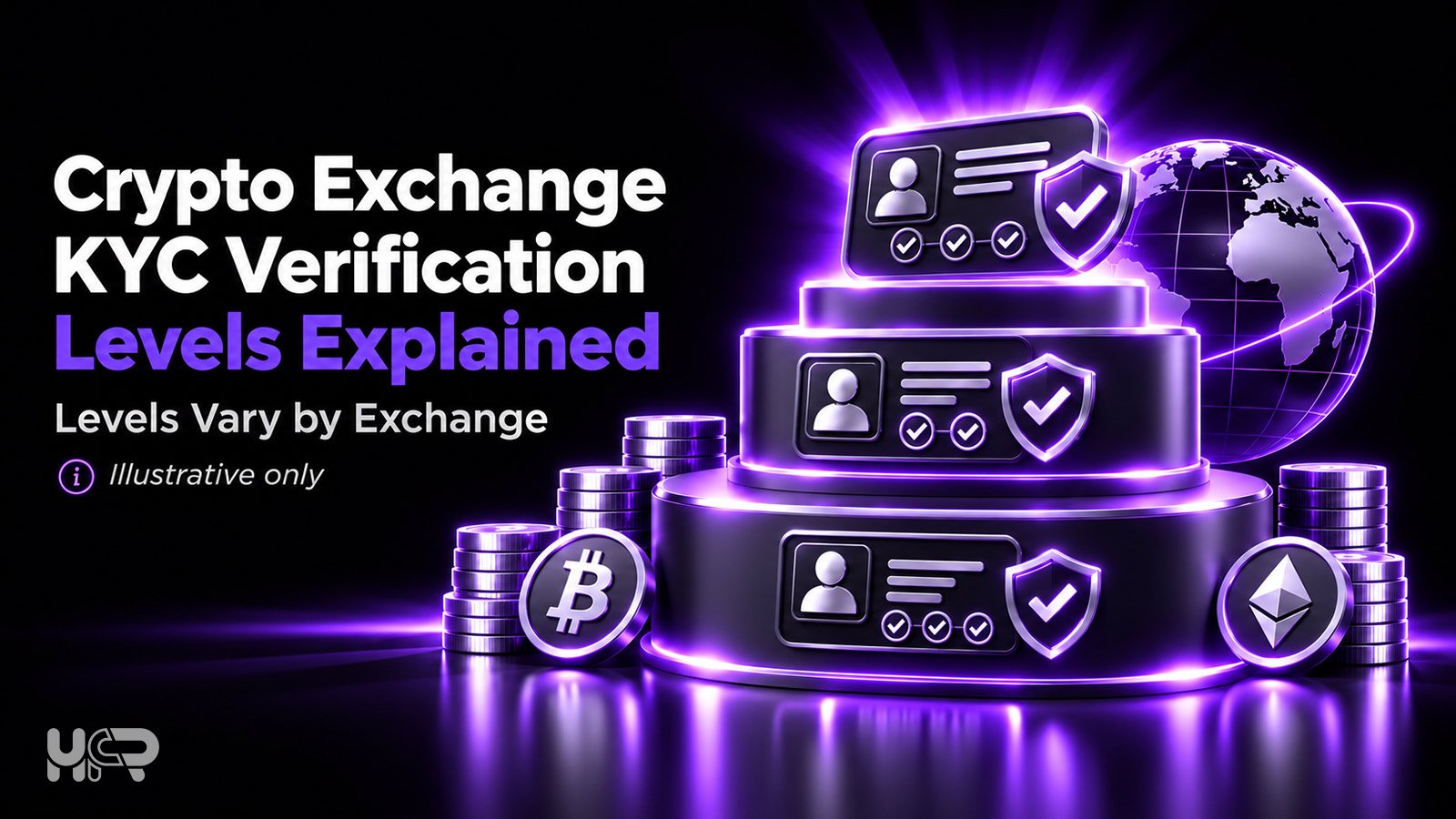
Crypto exchanges do not use one standard set of verification levels. Terms such as “Verified”, “Primary” or “Advanced” belong to individual platforms. The categories below are descriptive rather than universal tier names.
| Verification status | Typical requirements | Possible access | Main caveat |
|---|---|---|---|
| Unverified / restricted | Email or basic registration details | Viewing markets or limited account functions | Trading, deposits or withdrawals may be unavailable |
| Standard personal verification | Personal details, government ID, sometimes address or face verification | Core trading and funding functions | Products and limits still depend on region |
| Higher-limit / enhanced | Additional questionnaire, documents or compliance checks | Higher funding, withdrawal or API limits | Does not override country or product restrictions |
Unverified or restricted accounts
Binance requires new users to reach Verified status before using its main services. MEXC announced in February 2026 that unverified accounts face funding and trading restrictions; its June 2026 FAQ adds that the precise services affected depend on regional requirements and the account’s on-screen notices.
Standard personal verification
This is usually the main individual verification path. Kraken’s Verified status, for example, provides access to core account functions, subject to geographic and product rules.
Higher-limit or enhanced verification
Some platforms offer additional checks for higher limits. Kraken has a Verified with higher limits path, while MEXC distinguishes Primary and Advanced KYC.
Business verification is normally separate and can require company and beneficial-owner documentation. Completing a higher level does not guarantee access to every product or remove later compliance reviews.
How KYC affects crypto deposits, withdrawals and trading limits
KYC status can affect several limits, but exchanges do not apply one universal structure. A verification level may change crypto withdrawals, fiat deposits and withdrawals, card or bank-payment ceilings, trading access or API limits. Temporary transfer holds and separate risk reviews can also apply even after verification.
The time basis matters. Some exchanges measure limits over a rolling 24-hour period, while others describe them simply as daily limits. A rolling limit does not automatically reset at midnight; it depends on when earlier transactions occurred. A monthly limit may likewise be measured over a rolling period rather than a calendar month.
Limits can also be expressed in different units. A crypto withdrawal cap may be stated in BTC, while fiat funding limits may be measured in USD or another currency. The equivalent value can therefore change with market prices or currency conversion.
For example, MEXC’s official KYC FAQ dated 2 June 2026 lists crypto withdrawal limits of 80 BTC/day for Primary KYC and 200 BTC/day for Advanced KYC. The exchange can still apply region-specific requirements, account checks or temporary restrictions.
Kraken uses a different model, with verification status affecting funding and API limits and some funding limits calculated over rolling periods.
Higher verification can increase a published limit without removing regional restrictions, payment-method rules or account-specific compliance checks.
Why crypto exchange KYC and product rules differ by country
Completing KYC does not mean every exchange product becomes available. Access can depend on the user’s country of residence, contracting legal entity, local AML requirements, sanctions rules, product licensing and payment-provider restrictions.
This is why Spot trading, Futures, margin, Earn products, card deposits and local bank transfers can each have different eligibility rules. An exchange may verify a customer successfully while still blocking a particular product because it is not offered or licensed in that jurisdiction.
Nationality and residence can also be assessed separately. A passport may establish identity and nationality, while proof of address helps determine where the user currently resides and which legal entity or regional rules apply.
For example, Kraken’s geographic guidance updated 30 September 2026 states that account features and supported assets can vary according to verified residency. It also lists separate restrictions for funding methods, margin, Earn products and specific assets in certain locations.
These rules should be checked through the exchange’s current legal terms, regional support pages and in-account notices rather than through a general “supported countries” list.
Verification should never be treated as a way to bypass residency restrictions. Submitting a false address or identity details, or misrepresenting residence through a VPN, may breach exchange terms and lead to restrictions.
Exchange examples: Binance, Kraken and MEXC
Binance, Kraken and MEXC illustrate why crypto exchange KYC should be checked platform by platform rather than treated as one standard system.
| Exchange | Published verification path | Access implications |
|---|---|---|
| Binance | Verified identity status | Binance’s FAQ updated 5 June 2026 says new users must complete Verified status to access products and services, including crypto deposits and trading. Higher verification requirements can apply by region or payment method. |
| Kraken | Verified; Verified with higher limits | Kraken’s page updated 6 October 2026 says standard verification provides core account functions, while the higher-limit path increases deposit, withdrawal and API limits. Product access can still depend on country of residence. |
| MEXC | Primary KYC; Advanced KYC | MEXC’s February policy restricts unverified access; its June FAQ qualifies the effects by region. Published crypto withdrawal limits are 80 BTC/day for Primary and 200 BTC/day for Advanced KYC. |
These examples were checked against official platform material on 31 October 2026. They are not a ranking and do not establish that every user can access the stated limits.
Binance’s Verified requirement does not mean every Binance entity offers the same products. Kraken’s higher-limit verification does not override geographic restrictions on services such as derivatives or rewards. MEXC’s 80 BTC and 200 BTC figures are published account limits, but regional rules and account-specific compliance reviews can still affect access.
Verification paths, limits and product availability can change. Users should therefore check the exchange’s current verification screen and regional terms before depositing or relying on a stated withdrawal limit.
What happens if KYC is pending, rejected or an account is restricted?
KYC can remain pending or fail for ordinary reasons such as a blurred or expired ID, mismatched name or address, unsupported document type, residence mismatch, failed selfie or liveness check, repeated submission attempts or a case requiring manual review. Changing legal or regulatory requirements can also trigger further checks.
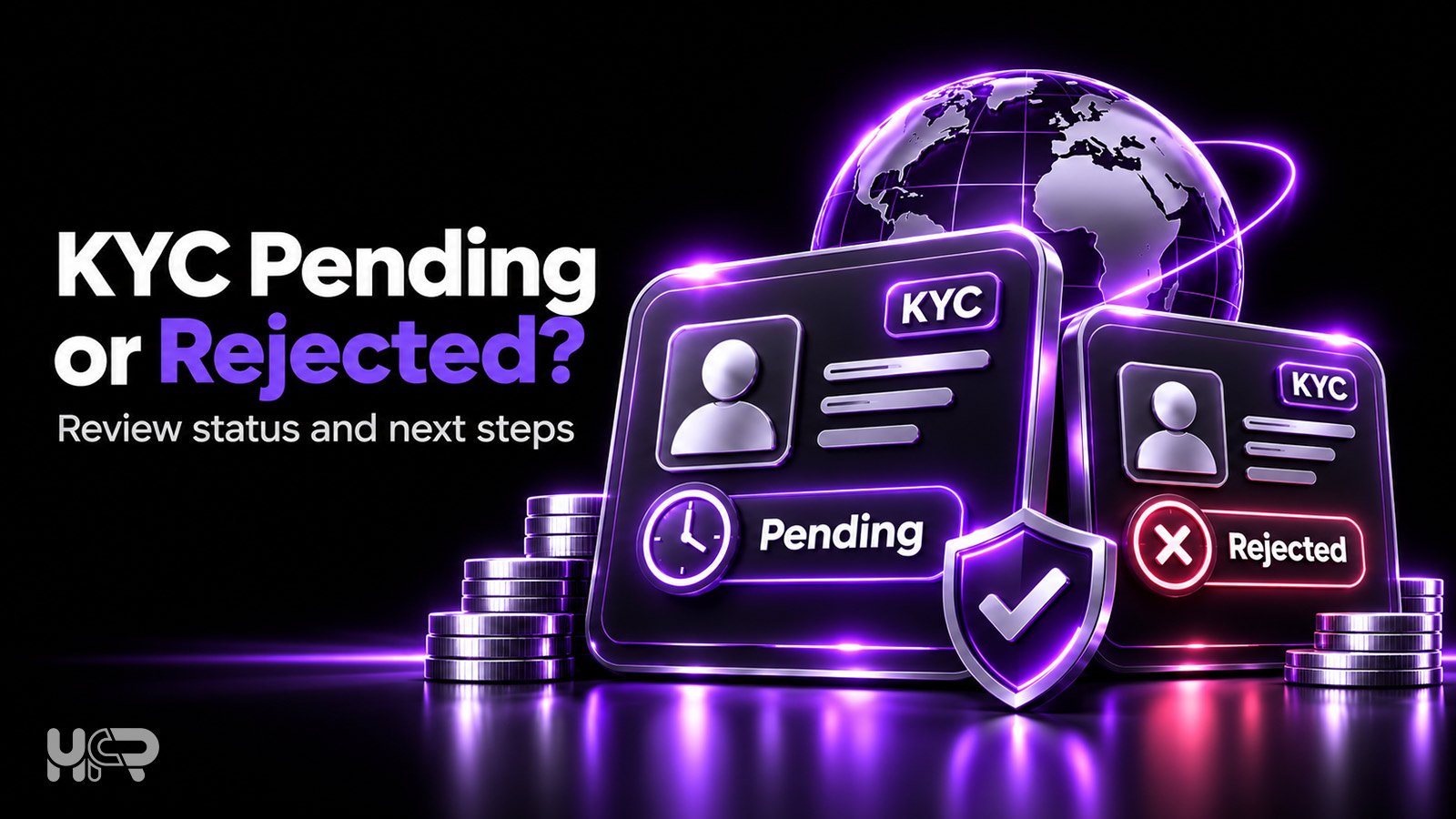
If verification is delayed or rejected:
- Open the exchange’s official app or website and read the specific request or error message.
- Check that your legal name, date of birth, address and document details match.
- Upload clear, current documents through the exchange’s secure verification flow.
- Complete any requested selfie, liveness or additional-information step.
- Contact official support if the issue remains unresolved and keep the case or ticket reference.
A request for additional information does not necessarily mean permanent refusal. The exchange may simply need another document or a manual compliance review.
Restrictions can also appear after an account has already been verified. Kraken, for example, says temporary restrictions may be applied for security, outdated information, payment reversals or legal and regulatory reviews. During such a review, deposits, withdrawals or other account functions can be paused.
Support can explain any required next steps, but not every restriction is necessarily lifted and restoration times cannot be guaranteed.
Privacy and security when submitting KYC documents
KYC documents contain sensitive personal information, so verification should be started inside the exchange’s official website or mobile app. Before uploading anything, check the domain carefully and avoid links received through unexpected emails, messages or social-media accounts.
Phishing sites and impersonators may copy an exchange’s branding and ask for identity documents, passwords or authentication codes. Use the official in-account verification flow and confirm any support request through the exchange’s published support channels.
Exchanges may retain and process KYC information according to their privacy policies, regulatory obligations and the legal entity serving the customer. Retention periods and data-sharing arrangements can vary, so users should review the relevant exchange privacy notice rather than assuming one standard applies everywhere.
Account security should also be strengthened with two-factor authentication and a well-protected email account.
Do not send a passport, national ID, password, private key or one-time authentication code to HighFxRebates or to anyone claiming to provide unofficial exchange support. HFR does not need those credentials to confirm cashback attribution.
Does KYC affect HFR crypto cashback eligibility?
KYC can affect access to exchange services and, in some partner arrangements, may also affect whether an account can be tracked or receive cashback. Regional restrictions can matter too, because a verified account may still be ineligible for certain products or partner programmes.
However, completing exchange KYC does not automatically link the account to HighFxRebates. HFR cashback may also require the correct referral path, UID or account submission, eligible trading products and successful partner attribution or confirmation. The crypto exchange cashback guide explains that separate process.
The required KYC level and HFR linking procedure must be checked for each partner exchange.
Before expecting cashback, check both the exchange’s verification rules and the specific HFR listing. HFR’s guide to common crypto exchange cashback mistakes explains tracking and eligibility issues in more detail.
Frequently asked questions
Why do crypto exchanges ask for KYC?
Crypto exchanges use KYC to identify customers and support anti-money-laundering, counter-terrorist-financing, sanctions and fraud controls. Exact requirements depend on the exchange, legal entity, services offered and the regulatory framework that applies to the user.
Can I use a crypto exchange without KYC in 2026?
It depends on the exchange, product and jurisdiction. Some platforms require verification before trading or funding. For example, MEXC’s February 2026 policy restricts unverified users, while its later FAQ says the specific affected functions can differ by region. Older no-KYC policies should not be assumed to remain current.
What documents are required for crypto KYC?
Requirements commonly include personal details and a government-issued identity document. Some exchanges also request a selfie or liveness check, proof of residence, tax information or source-of-funds evidence. Accepted documents vary by residence and platform.
Do verification levels change withdrawal limits?
Yes, on some exchanges. A higher verification level may raise crypto withdrawal, fiat funding or API limits, but the structure varies. For example, MEXC currently publishes different crypto withdrawal limits for Primary and Advanced KYC. Account-specific compliance reviews can still apply.
Does completing KYC unlock futures and margin everywhere?
No. Identity verification does not override regional product restrictions. Futures, margin, Earn products or local payment services may remain unavailable because of the user’s country, contracting entity, client classification or applicable regulatory rules.
Why is my KYC pending or rejected?
Common reasons include blurred or expired documents, mismatched personal information, unsupported identification, residence discrepancies, failed liveness checks or manual review. Users should check the official in-app request and submit only the information specifically requested.
Can an exchange ask for KYC again after approval?
Yes. Exchanges may request updated documents or additional information when identification expires, residence changes, account activity triggers review, or regulatory requirements change. Initial approval does not prevent later source-of-funds, sanctions or compliance checks.
Does KYC approval guarantee HFR cashback?
No. Exchange verification and HFR attribution are separate. Cashback can also depend on the correct referral route, UID or account linking, supported jurisdiction, eligible products and partner confirmation. Completing KYC alone does not guarantee tracking or payment.
Conclusion
Crypto exchange KYC is only one part of using a centralised platform. Before depositing, identify the legal entity serving your account, check the rules for your country, complete the required verification and confirm the actual funding, withdrawal and product limits that apply.
Verification can establish identity and support compliance checks, but it does not prove that an exchange is financially sound or secure. Proof of Reserves is a separate, limited form of disclosure, not a substitute for a financial-statement audit. Platform security, custody arrangements and trading risk remain separate considerations, and access can still change after verification because of regional rules or further compliance reviews.
Risk and privacy note
Crypto trading and custody involve market, platform, security and counterparty risks. Verification may establish identity and access rights, but it does not protect against asset losses. Cashback may return part of eligible trading fees after confirmation; it does not reduce trading risk. Never share account passwords, private keys or authentication codes with HFR. This guide is general educational information, not investment advice.
Official sources and methodology
Sources checked on 31 October 2026. The exchange figures below describe published verification paths and limits, not confirmed permissions for every country or account. Exchange user terms and in-account verification screens take precedence where eligibility differs.
- FATF - Virtual assets, due diligence and the Travel Rule
- Binance - How to complete identity verification (updated 5 June 2026)
- Kraken - Verification levels explained (updated 6 October 2026)
- Kraken - Where is Kraken licensed or regulated? (updated 30 September 2026)
- Kraken - Why is my account restricted? (updated 21 October 2026)
- MEXC - KYC verification required for platform access (5 February 2026)
- MEXC - MEXC KYC FAQ (2 June 2026)
 5
Share Posts


Further Reading
- Toobit Now Listed on HighFxRebates: 36% Spot and Futures Cashback
- Weekly Market Recap, 26 October–1 November 2026: Rates, Binance and Metals
- Daily technical outlook: Bitcoin and Ether recover as Solana and metals lag — 2 November 2026
- ThinkMarkets Review 2026: Accounts, Fees, Platforms, Regulation and Cashback