




Table of Contents
[ Show/Hide ]- • What is crypto exchange cashback?
- • Where does crypto exchange cashback come from?
- • How does crypto exchange cashback work?
- • What does the cashback percentage actually apply to?
- • Which crypto trading fees and products may qualify?
- • Why maker, taker, VIP and zero-fee rates can change cashback
- • Crypto cashback vs fee discounts, bonuses and card cashback
- • Can new and existing exchange accounts qualify?
- • When and where is crypto exchange cashback paid?
- • Why can crypto cashback be missing or lower than expected?
- • Is crypto exchange cashback legitimate?
- • How should you compare crypto cashback offers?
- • How HighFxRebates crypto cashback fits in
- • Crypto exchange cashback: practical takeaway
- • FAQ
- • Risk note
- • Methodology & Sources
Crypto exchange cashback returns part of an eligible trading fee after qualifying activity is tracked and confirmed. The headline percentage normally applies to a defined fee, commission or partner-calculation basis, not to trading volume, position value or profit.
The details vary by exchange. An account may need to be opened or linked in a particular way, only certain products may qualify, and VIP pricing, fee coupons or zero-fee promotions can change the fee used in the calculation. Payment timing and destination can also differ.
This guide explains where crypto exchange cashback comes from, how it works, what may qualify, and what to check before opening or linking an exchange account.
What is crypto exchange cashback?
Crypto exchange cashback is a rebate connected to eligible trading fees or commissions. Once qualifying activity is tracked and confirmed, part of the eligible fee may be returned under the relevant HFR and exchange conditions.
It is not normally calculated from trade size, account balance or trading profit. If a page shows “10% cashback”, the first question should be: 10% of what? The answer may be the final eligible trading fee, a partner commission, or another published calculation basis.
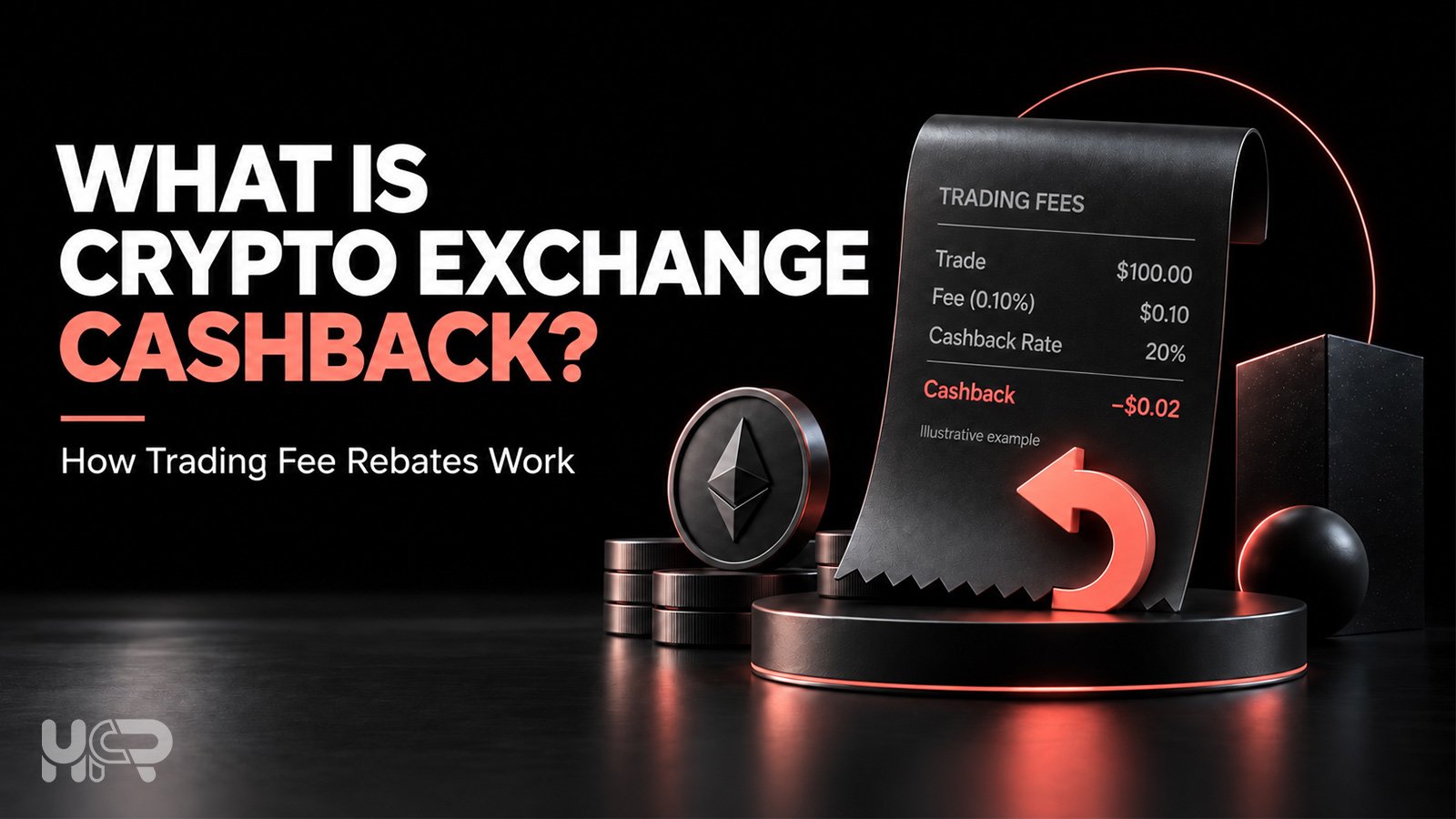
Cashback is separate from the exchange’s own fee schedule. It may offset part of an eligible cost, but it does not change the market outcome of a trade or reduce trading risk.
If you are new to exchange mechanics, HFR’s guide to how a crypto exchange works explains order books, maker/taker fees, wallets and derivatives before cashback is considered.
Where does crypto exchange cashback come from?
Many cashback arrangements use an exchange referral or partner programme. When eligible activity is attributed to a partner account, the exchange may pay partner compensation under its agreement. Under the applicable HFR programme, HFR may then return a published share or amount to the eligible user according to the stated conditions.
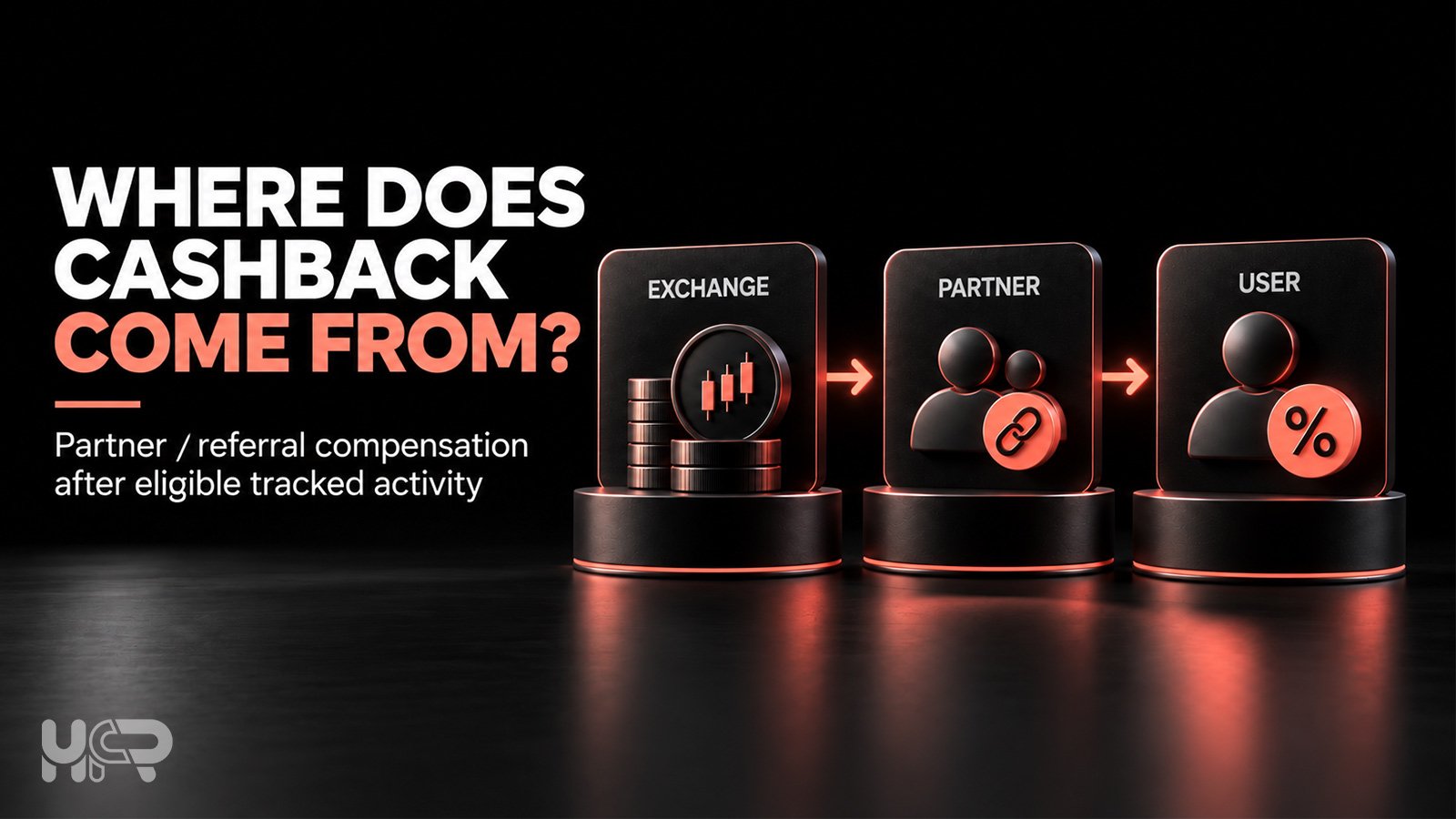
The commercial formula is not universal. One exchange may base the user rebate on the eligible trading commission actually paid, while another may use a different partner-calculation method. Rates from different exchanges therefore should not be compared until their calculation bases are understood.
Cashback should not be described as money generated from trading profit. In many arrangements, the exchange charges the normal trading fee first and the rebate is calculated separately after eligible activity is confirmed.
How does crypto exchange cashback work?
The exact process varies by exchange, but it usually follows these steps.
- Check the supported exchange and account requirements. Confirm the current HFR conditions, eligible products and any regional or account restrictions.
- Register or link the account through the required HFR process. Some programmes require a new account through a specific referral link; others may allow an eligible existing account to be linked.
- Submit the required account identifier. Where applicable, add the exchange UID or other requested account reference and wait for confirmation before expecting rebates.
- Trade eligible products under the exchange’s normal conditions. Unsupported products, excluded account types or zero-fee activity may generate no eligible cashback.
- The exchange or partner system reports qualifying activity. HFR relies on the data made available through the relevant partner arrangement to identify the eligible fee or commission basis.
- Cashback is paid according to the published schedule. Timing and destination can differ by exchange, so the live HFR page remains the reference for the current arrangement.
Before opening or linking an account, review the current HFR crypto exchange cashback list and the exchange-specific instructions.
What does the cashback percentage actually apply to?
A cashback percentage only makes sense when its calculation basis is clear. A rate such as 20% cashback does not automatically mean 20% of trading volume, position value or profit.
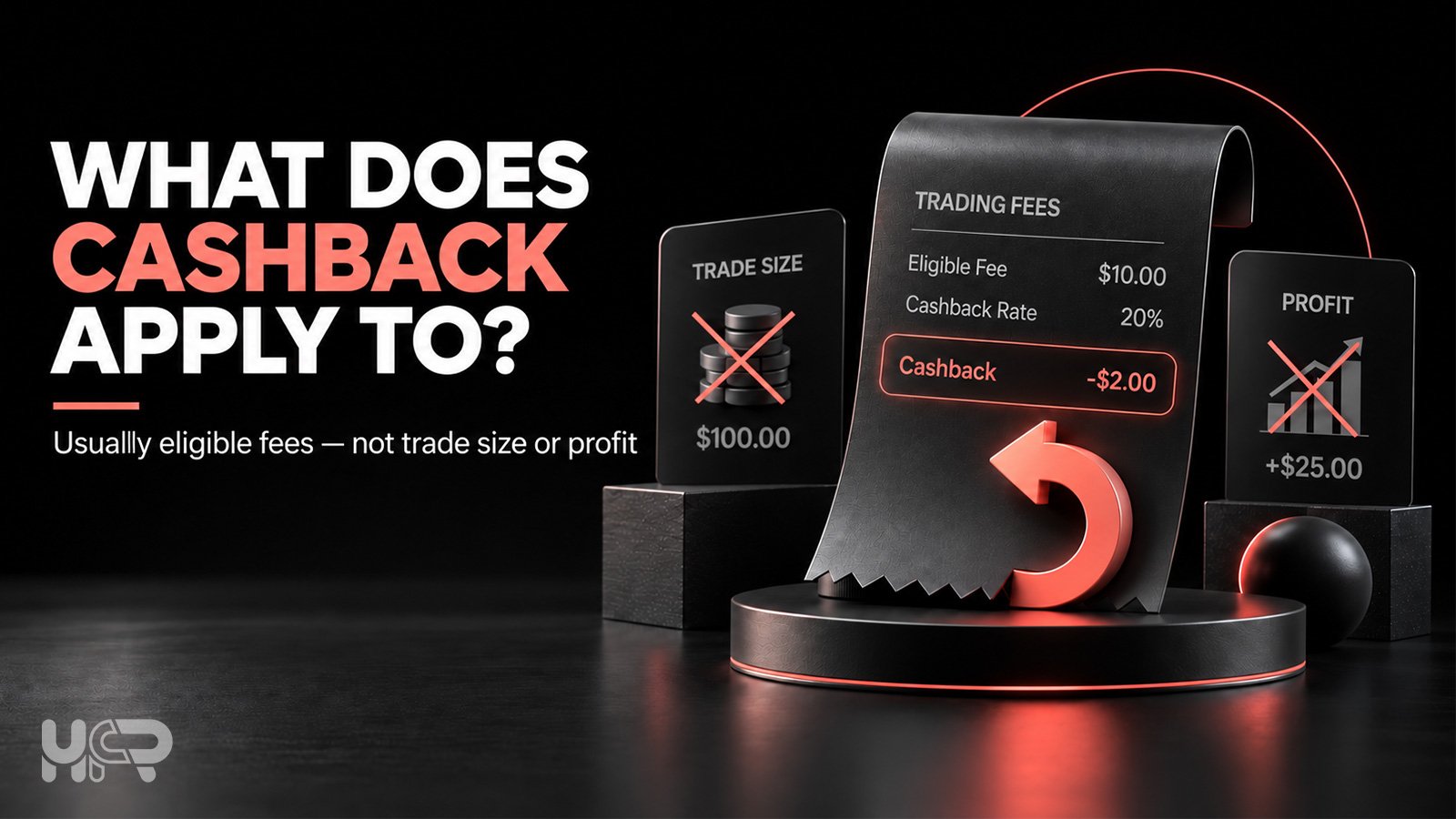
Suppose an HFR exchange page states that cashback equals 20% of eligible trading fees. If the exchange confirms an eligible trading fee of $10, the illustrative cashback is $2: $10 × 20% = $2.
$10 eligible trading fee × 20% cashback = $2
This is a teaching example, not a universal HFR formula. One exchange may calculate cashback from the final eligible fee actually paid, while another may use a different partner or revenue-sharing basis. VIP pricing, fee coupons, zero-fee promotions and product exclusions can also change the amount used in the calculation.
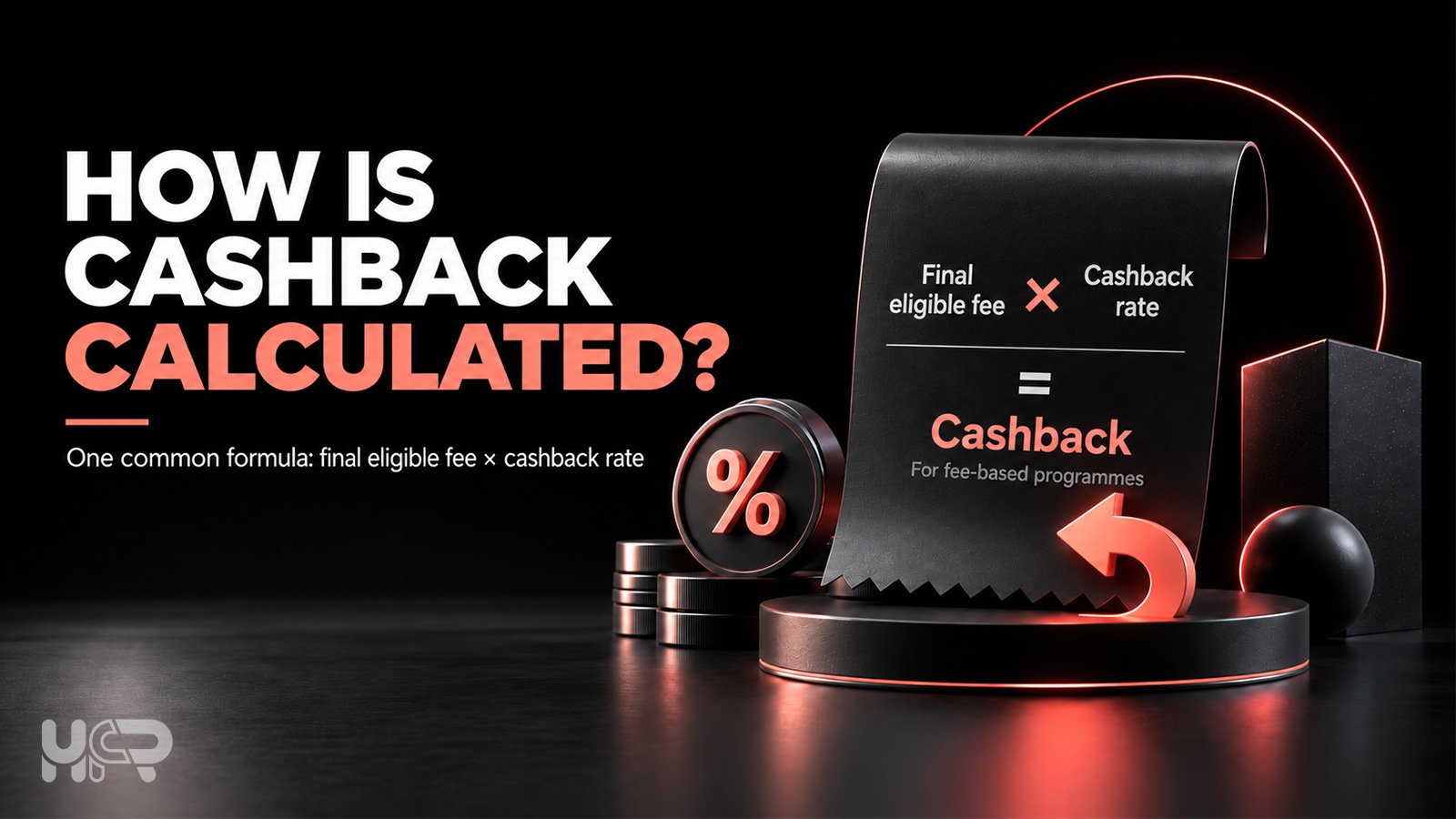
For a deeper breakdown of fee-based formulas and payout rules, see How Crypto Exchange Cashback Is Calculated.
Which crypto trading fees and products may qualify?
Eligibility depends on the specific exchange programme. Spot maker or taker commissions may qualify where spot trading is included. Futures or perpetual trading commissions may qualify where those products are included. The fact that a product is available on the exchange does not mean it is automatically eligible for HFR cashback.
Do not automatically treat these charges as cashback-eligible unless the exchange-specific HFR terms include them:
- Futures funding payments
- Crypto withdrawal or network fees
- Margin borrowing interest
- Market spread, slippage or liquidation-related costs
- Card, fiat or third-party payment-provider fees
Check the live HFR exchange page for the product scope and the exact fee or commission that forms the rebate basis.
HFR’s guide to crypto exchange trading fees explains maker/taker fees, funding, spread and other exchange costs separately.
Why maker, taker, VIP and zero-fee rates can change cashback
When cashback is based on the actual eligible trading fee paid, anything that changes that fee can change the rebate. Maker and taker orders can have different rates, and VIP tiers may reduce fees further.
Exchange-token discounts, fee coupons, credits and promotions can also reduce the final commission. If a trade is genuinely zero-fee, there may be no eligible trading commission from which to calculate cashback unless the HFR programme states another basis.

A smaller cashback amount can therefore reflect a smaller underlying fee rather than a problem with the rebate. Cashback should be assessed as part of total trading cost, not as a reason to choose a particular order type or increase trading activity.
Crypto cashback vs fee discounts, bonuses and card cashback
These benefits can look similar because each may reduce costs or provide a reward, but they are triggered and calculated differently. Trading-fee cashback is linked to eligible trading activity; an exchange fee discount changes the exchange fee itself; a bonus follows campaign terms; and card cashback is normally connected to purchases rather than exchange trading.
| Benefit type | What triggers it | Typical basis |
|---|---|---|
| Trading-fee cashback | Eligible trading activity under the cashback programme | A defined eligible fee, commission or partner-calculation basis |
| Direct exchange fee discount | Meeting the exchange’s discount conditions | A reduction to the exchange’s own fee rate under its rules |
| Exchange bonus or voucher | A promotion, campaign, deposit condition or other requirement | The promotion’s stated reward, credit or qualifying activity |
| Crypto-card cashback | Eligible purchases made with a crypto-linked payment card | Usually qualifying card spending, subject to programme limits and exclusions |
The mechanisms can interact. For example, a VIP discount or fee voucher may reduce the trading fee actually paid, which can also reduce the cashback basis where the rebate is calculated from the final eligible fee. Compare the trigger, calculation basis, restrictions and payout rules instead of comparing percentages alone.
For the detailed promotion distinction, read Crypto Exchange Cashback vs Exchange Bonuses.
Can new and existing exchange accounts qualify?
It depends on the exchange’s attribution rules. Some programmes require a new account opened through the correct HFR referral link before registration is completed. If an account was opened independently, the exchange may not allow it to be reassigned later.
Other programmes may support an existing account if the exchange permits partner linking or another approved attribution process. Where required, the user may need to submit a UID or account identifier so HFR can check whether the account is recognised under the partner structure.
KYC status, country, legal entity, account type and product access can also affect eligibility. Check the live exchange-specific instructions before registering or trading, and wait for any required confirmation before expecting cashback.
When and where is crypto exchange cashback paid?
There is no universal payout schedule or destination. Depending on the exchange arrangement, eligible cashback may be processed daily, weekly, monthly or on another settlement cycle after qualifying activity is reported and confirmed.
Payment may go directly to the user’s exchange account or through the HFR account, depending on the programme. Check the live HFR exchange page for the current frequency, destination, supported payout asset where stated, and any minimum or approval conditions.
Why can crypto cashback be missing or lower than expected?
Common reasons include:
- The account was not registered or linked under the required HFR process.
- The trade used an ineligible product, account type, or fee.
- VIP pricing, exchange-token discounts, coupons, or promotions reduced the eligible fee.
- KYC, regional, sub-account, or other eligibility conditions were not met.
- The exchange has not yet reported the activity, or an applicable payout threshold or settlement cycle has not been reached.
If a rebate is missing or lower than expected, use HFR’s Common Crypto Exchange Cashback Mistakes guide as a troubleshooting checklist before assuming the calculation is wrong.
Is crypto exchange cashback legitimate?
Crypto exchange cashback can be legitimate when it is based on a genuine exchange referral or partner programme and the registration, calculation and payout rules are clearly stated. Check the cashback provider, the exchange, the linking method, the calculation basis and the payout rules before expecting a rebate.
A cashback offer does not prove that an exchange is safe, solvent or suitable for a particular user. Exchange security, custody, legal status, regional availability and trading risk should be assessed separately. Users should never share passwords, private keys or security codes with a cashback provider.
How should you compare crypto cashback offers?
Compare the effective eligible trading cost, not just the headline rebate percentage. A higher cashback rate does not automatically produce a lower net cost if the starting fee is higher or fewer products qualify.
- The maker and taker fee that actually applies to the product you use.
- Any VIP, token, coupon, or promotional reduction to that fee.
- The cashback percentage and the exact amount to which it applies.
- Eligible products, account requirements, regional rules and payout conditions.
- The exchange’s legal structure, security controls, custody model and other material risks.
For example, a 20% rebate on a relatively high eligible fee can still leave a higher net trading cost than a smaller rebate on a lower-fee exchange. Calculate the fee that would actually apply first, then apply the published cashback basis, while keeping exchange quality and risk as separate considerations.
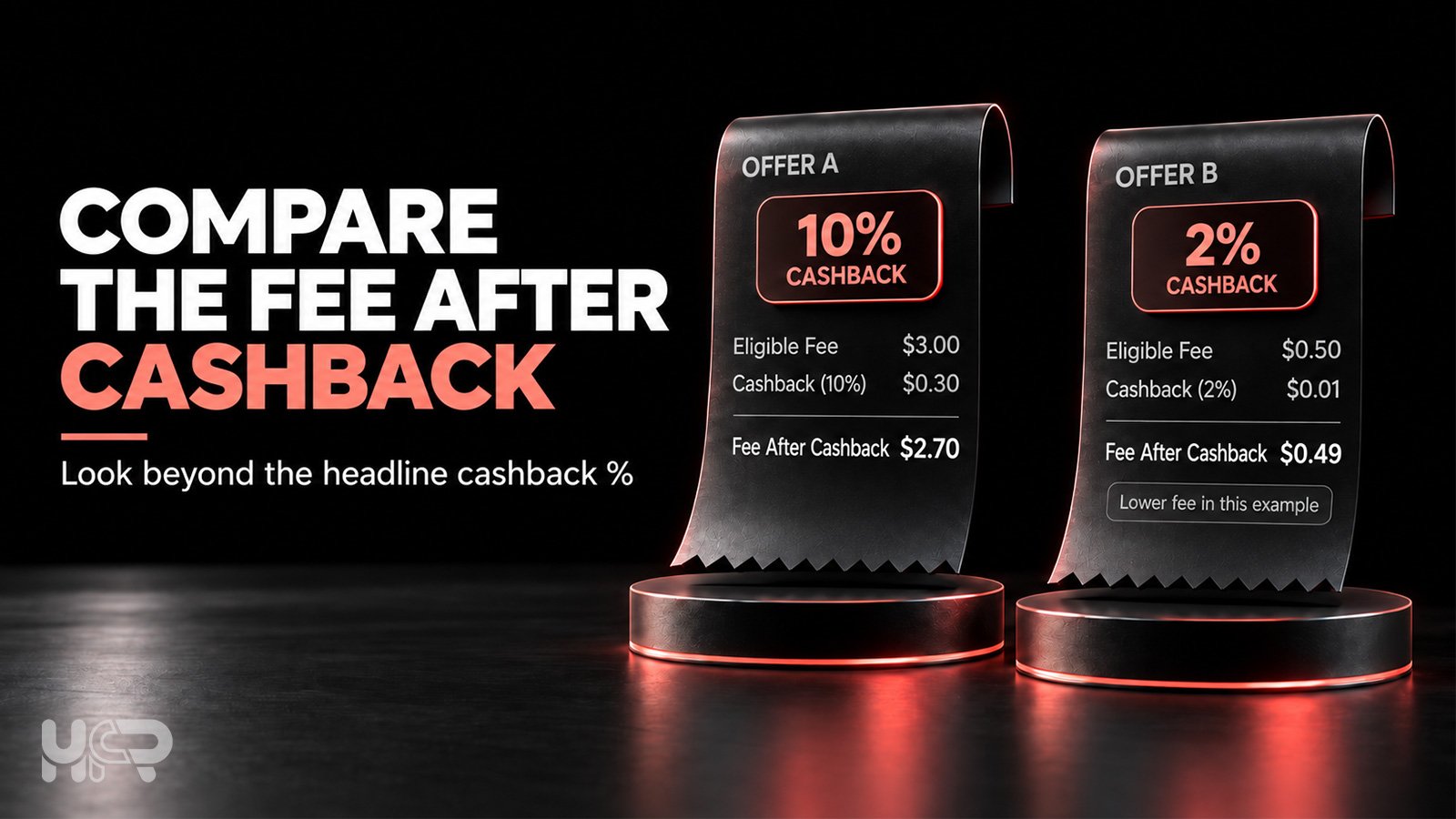
HFR’s crypto exchange comparison tool can be used alongside the cashback list to compare platform features and fee information without treating the rebate percentage as the only criterion.
How HighFxRebates crypto cashback fits in
HighFxRebates lists supported crypto exchanges and publishes the available cashback conditions for each programme. Depending on the exchange, the page may state the rebate rate or basis, eligible products, payment frequency, payment destination and registration or linking requirements.
These HFR conditions are separate from the exchange’s own trading fees, KYC rules, legal terms and product availability. HFR may receive partner or referral compensation from supported exchanges when eligible referred activity is confirmed. Under the applicable programme, part of that compensation may be returned to the user according to the published HFR conditions.
Because rates, eligibility and account-attribution rules can change, users should review the current exchange page before registering or expecting a rebate. Compare currently supported crypto exchange cashback programmes before opening or linking an account.
Crypto exchange cashback: practical takeaway
A crypto cashback percentage is only meaningful after the calculation basis is clear. Before comparing offers, confirm which fee or partner amount the percentage applies to, whether the account and product qualify, and whether VIP pricing or promotions change the eligible fee.
Then check the reporting process, payout timing and destination. Cashback can offset part of an eligible trading cost after confirmation, but it should be considered separately from exchange quality, legal availability, custody arrangements and trading risk.
FAQ
What is crypto exchange cashback?
Crypto exchange cashback is a rebate connected to eligible trading fees or commissions after qualifying activity is tracked and confirmed. The percentage normally applies to a defined fee or partner-calculation basis, not to trade size, account balance or trading profit.
How is crypto exchange cashback calculated?
The formula depends on the exchange and HFR arrangement. Where the programme returns a percentage of the final eligible trading fee, a simple formula is: eligible trading fee × cashback rate = cashback. Other programmes may use a different published partner-calculation basis.
Does a 20% cashback rate mean 20% of my trade size?
No. A 20% rate normally applies to the stated eligible fee, commission or partner basis. A $10,000 position therefore does not automatically produce $2,000 cashback. Always check what the percentage applies to.
Which trading fees can qualify for cashback?
Eligibility varies by exchange. Spot maker/taker commissions or futures trading commissions may qualify where the HFR programme includes them. Funding, borrowing interest, withdrawal fees, spreads, slippage and other charges should not be assumed eligible unless the exchange-specific conditions say so.
Can an existing exchange account receive HFR cashback?
Sometimes, but not always. Some programmes require a new account opened through an HFR referral link, while others may allow eligible existing-account attribution or linking. Check the live HFR exchange page before registering or assuming an existing UID can qualify.
Why can cashback be lower than expected?
The eligible fee may have been reduced by VIP pricing, exchange-token discounts, coupons, credits or zero-fee promotions. A lower amount can also result from product exclusions, account rules, exchange reporting delays or the specific calculation basis used by the programme.
When and where is crypto exchange cashback paid?
There is no universal schedule or destination. Depending on the arrangement, cashback may be processed daily, weekly, monthly or on another cycle, and may be paid directly to the exchange account or through HFR. The live exchange page is the current reference.
Is crypto cashback the same as an exchange fee discount?
No. A fee discount changes the exchange fee itself under the exchange’s rules. Cashback is generally a separate rebate calculated after eligible activity is confirmed. The two can interact because a lower final trading fee may reduce the amount used to calculate cashback.
Does crypto cashback reduce trading risk?
No. Cashback may offset part of eligible trading costs, but it does not reduce market, leverage, liquidation, funding-rate, custody, exchange, security or counterparty risk. It should be treated as a cost-rebate mechanism, not protection against trading losses.
Risk note
Crypto assets and derivatives can be highly volatile. Futures and leverage can magnify losses and may result in liquidation. Cashback may help offset part of eligible trading fees after eligibility and activity are confirmed, but it does not reduce market risk, leverage risk, liquidation risk, funding-rate risk, exchange risk, custody risk, security risk, counterparty risk or the risk of loss.
This article is for educational and informational purposes only. It should not be treated as financial advice, investment advice, trading advice, or a recommendation to use any broker, exchange, digital asset or derivative.
Methodology & Sources
This is a desk-based educational guide based on publicly available information. HFR-specific cashback conditions were checked against current HighFxRebates exchange and Academy pages. Representative official fee pages from Binance, KuCoin and Bitunix were also reviewed to confirm how maker/taker rates, VIP tiers and fee reductions can vary by platform and over time. This article does not reproduce those exchanges' full current fee tables.
No live account testing was used for this general guide. Exchange-specific rates, eligible products, KYC requirements, regional restrictions and payout conditions should be rechecked on the relevant HFR and official exchange pages before registration or relying on a calculation.
HighFxRebates sources:
- HighFxRebates - Crypto Exchange Cashback List
- HighFxRebates - How Crypto Exchange Cashback Is Calculated
- HighFxRebates - Crypto Exchange Trading Fees Explained
- HighFxRebates - Common Crypto Exchange Cashback Mistakes
- HighFxRebates - Crypto Exchange Cashback vs Exchange Bonuses
- HighFxRebates - What Is a Crypto Exchange & How It Works
- HighFxRebates - KuCoin Cashback Conditions
- HighFxRebates - Hyperliquid Cashback Conditions
Official exchange sources used to verify fee-structure mechanics and changing fee tiers:
 9
9
Share Posts


Further Reading
- Why Forex Spreads Widen: News, Rollover, Liquidity and Volatility
- What is Proof of Reserves on a crypto exchange? What it shows and what it does not
- ActivTrades Review 2026: Accounts, Fees, Platforms, Regulation and Cashback
- Weekly market recap, 12–18 October 2026: Inflation, yields, gold and crypto