





Table of Contents
[ Show/Hide ]- • What is an Introducing Broker in forex?
- • How does the forex IB model work?
- • How do Introducing Brokers get paid?
- • How are IB commissions connected to forex rebates?
- • Introducing Broker vs affiliate: what is the difference?
- • What does an Introducing Broker not normally do?
- • Does using an IB change spreads or commissions?
- • What should traders check before opening an account through an IB?
- • How does HFR cashback work with an IB-linked account?
- • What should you remember about the forex IB model?
- • Frequently asked questions
- • Sources and methodology
- • Disclosure
- • Risk and cashback note
If you opened a forex account through a referral link, Partner ID or rebate service, your account may have been connected to an Introducing Broker (IB) arrangement. The IB acts as the referring or relationship partner, while the broker provides the trading account and brokerage services.
The exact role of an IB depends on the broker agreement and jurisdiction. Compensation also varies, and an IB commission is not automatically the same as a trader rebate.
This guide explains what an Introducing Broker is in forex, how the broker-IB-client relationship works, how IB compensation is structured, and where forex cashback can fit into the model.
What is an Introducing Broker in forex?
An Introducing Broker (IB) in forex is a person or business that introduces prospective traders to a forex broker under a partnership arrangement. Depending on the programme, the IB may receive compensation related to referred clients or eligible trading activity, while the broker provides the trading account and brokerage services.
An IB may use a referral link, Partner ID or another tracking method so the broker can identify accounts introduced through the partnership. Depending on the programme, the IB may also provide permitted relationship support or educational information. The broker remains the provider of the brokerage services.
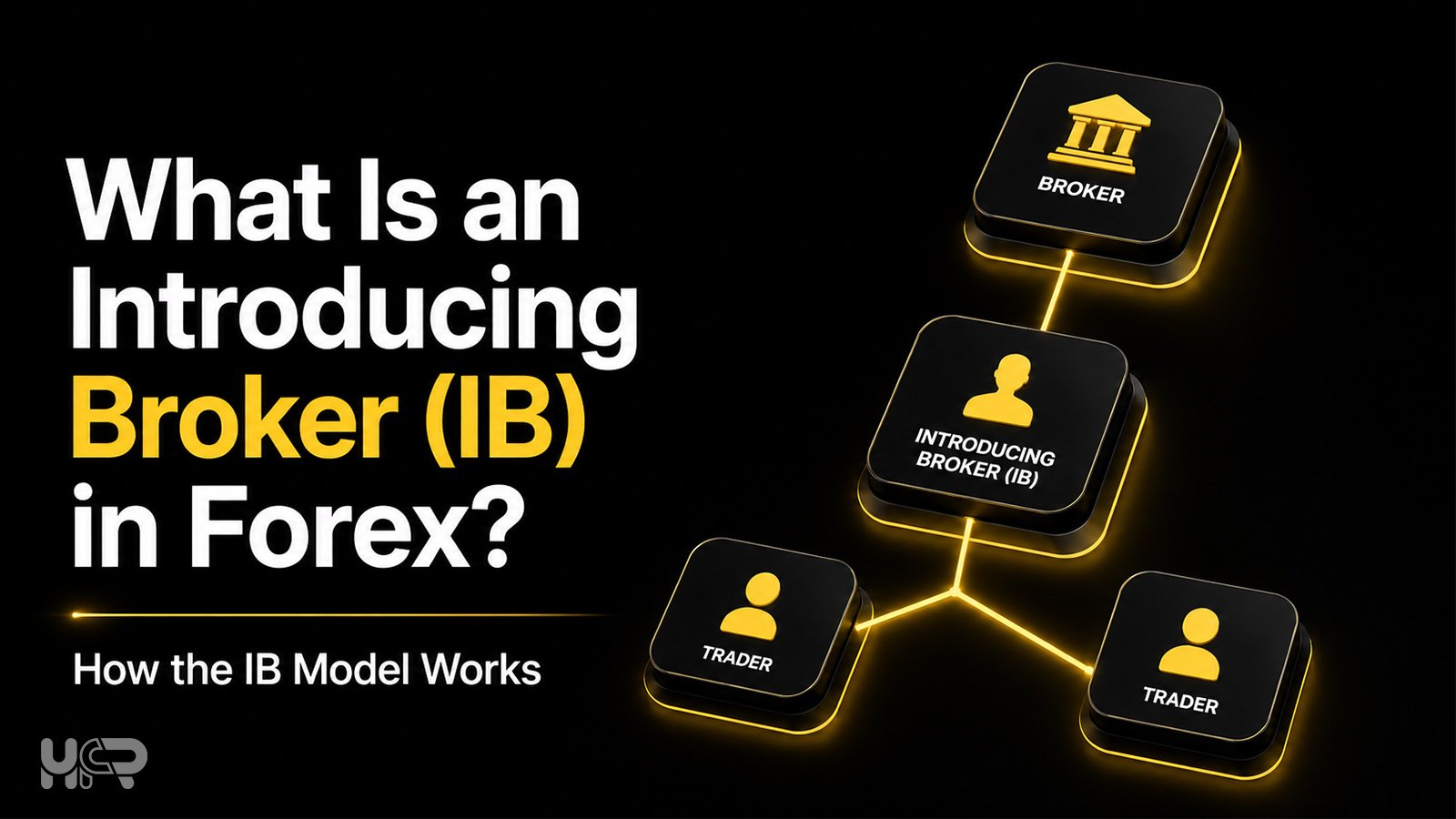
The term does not have an identical legal meaning in every country. In the United States, the National Futures Association (NFA) defines an Introducing Broker as an individual or organisation that solicits or accepts orders for products including forex but does not accept customer money or other assets to support those orders. NFA also states that IBs must carry forex and futures accounts with a futures commission merchant (FCM) or retail foreign exchange dealer (RFED) on a fully disclosed basis.
This US definition should not be applied automatically worldwide. Other jurisdictions and broker programmes may use terms such as IB, introducer or partner under different regulatory and contractual frameworks.
How does the forex IB model work?
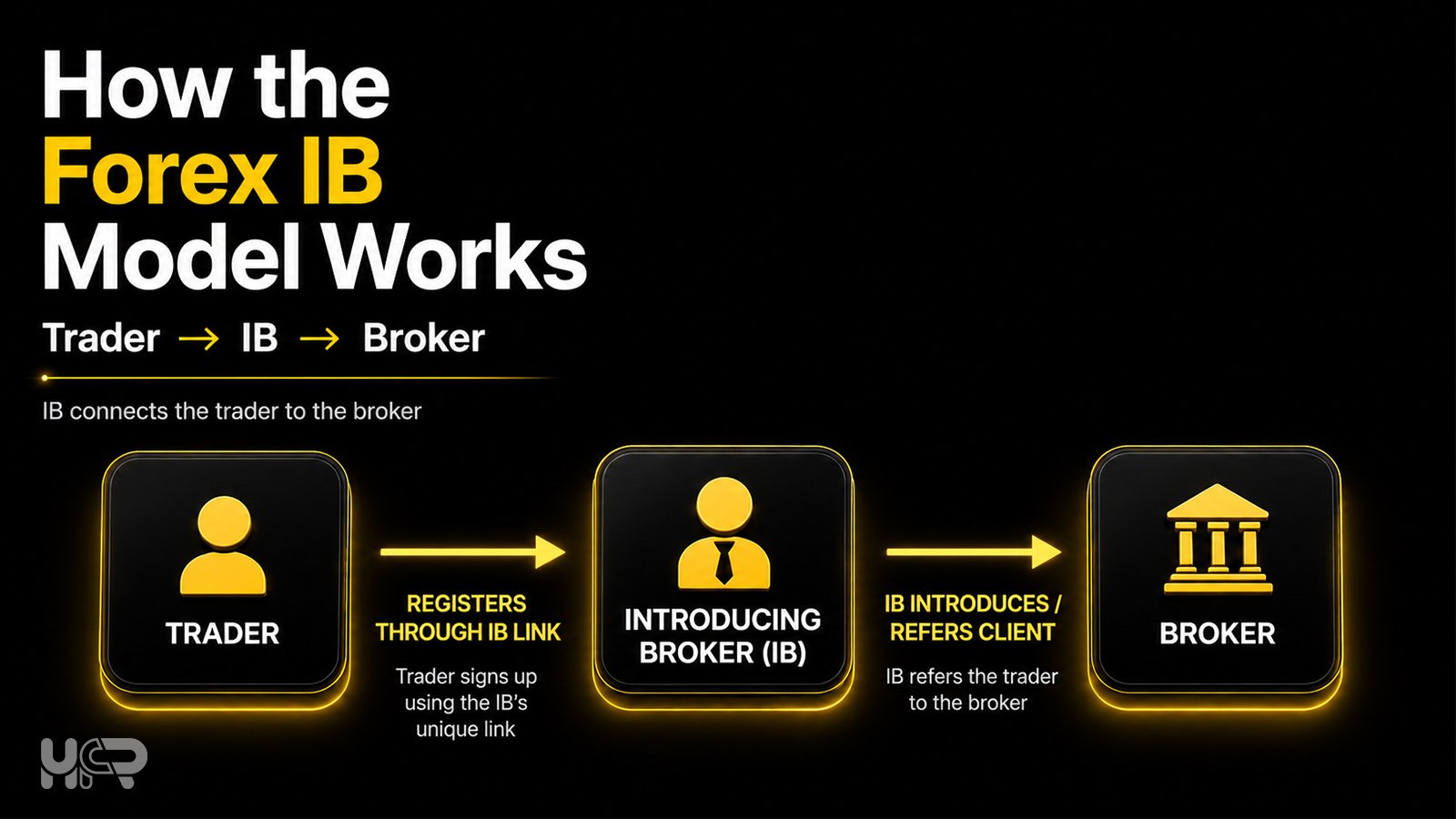
The exact onboarding process varies by broker, but the basic sequence is usually similar:
- The IB joins or contracts with a broker. The broker approves the partnership under its commercial, compliance and regulatory requirements.
- The broker provides a referral method. This may be a referral link, tracking code, Partner ID or another attribution method.
- The prospective client registers through the attributed route. This allows the broker to identify that the account was introduced by the IB.
- The broker verifies and operates the trading account. KYC, account approval, platform access, deposits and trading services remain with the broker.
- Eligible activity is attributed under the partnership agreement. The broker records qualifying client activity under the IB relationship.
- The broker calculates any payable IB compensation. The amount and calculation method depend on the programme and its current terms.
Account attribution matters. Using the wrong link, an untracked account or trading before the relationship is confirmed can affect whether activity is recognised. Existing-account transfers and other attribution rules are broker-specific.
Broker, IB and trader: who is responsible for what?
Broker: opens and maintains the trading account, provides the trading platform and execution, and applies the spreads, commissions, leverage, margin rules and other account conditions. Deposits and withdrawals should normally use the broker’s official funding channels.
Introducing Broker: introduces or refers the client through an agreed attribution method and may provide permitted relationship support or educational information. The broker agreement determines the IB’s permitted role and compensation.
Trader: remains the broker’s account holder, completes the required verification and normally makes their own trading decisions. An IB relationship by itself does not authorise the IB to manage the client’s account or make trading decisions on the client’s behalf.
Separate authorised arrangements, such as discretionary account management or regulated investment advice, can require different permissions and should not be assumed to form part of a normal IB relationship.
How do Introducing Brokers get paid?
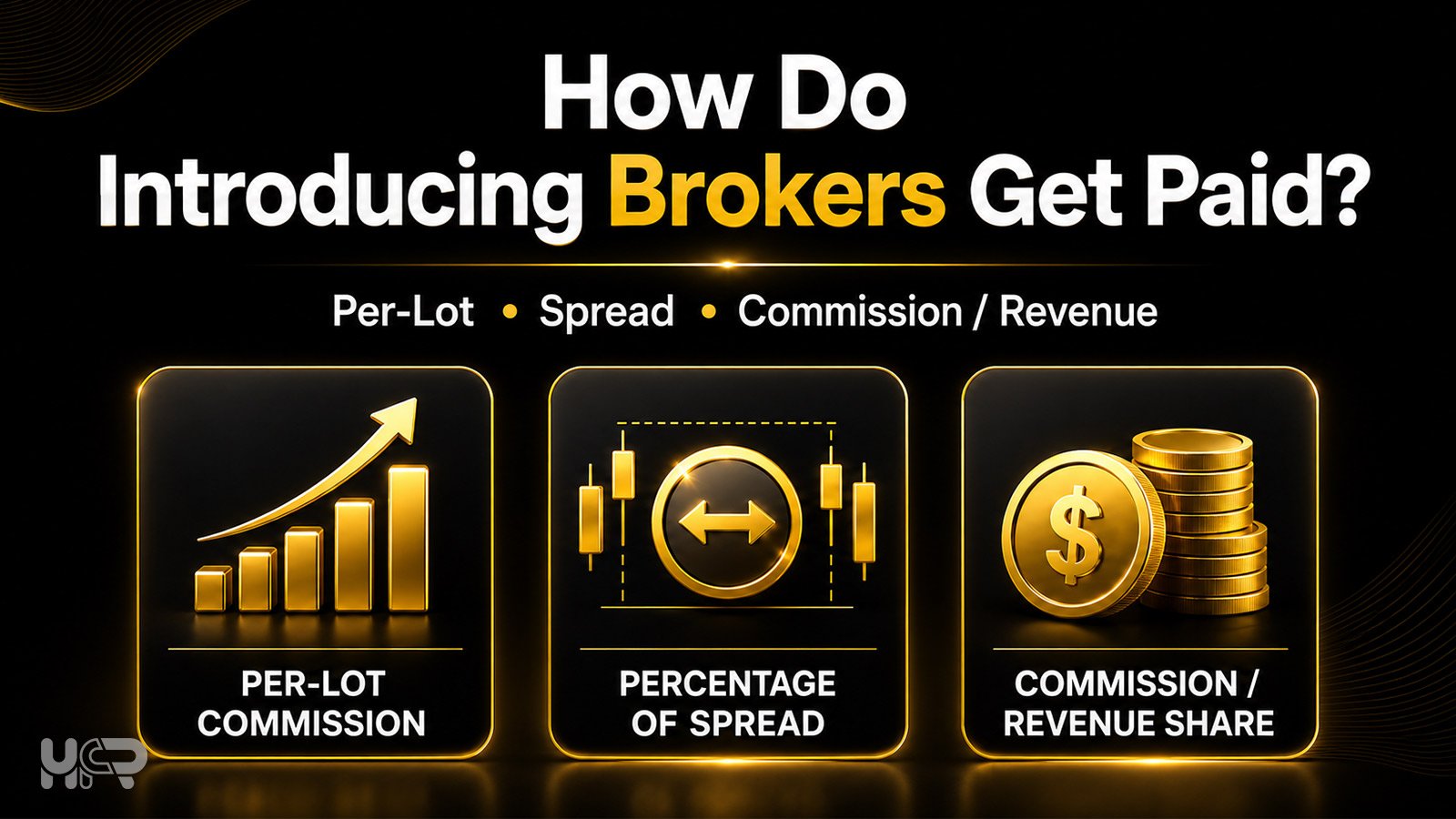
Introducing Broker compensation depends on the broker agreement. There is no single payment model across all forex IB programmes, and rates can vary by broker, account type, instrument, client location and qualifying activity.
- Per-lot commission: the broker pays an agreed amount based on eligible trading volume.
- Percentage of spread: compensation is calculated from part of the spread generated by qualifying trades.
- Percentage of trading commission or broker revenue: the IB receives an agreed share of eligible commission or revenue attributed to referred clients.
- Other partner models: some broader partner or affiliate programmes use CPA or hybrid structures. These should not be assumed to apply to every IB programme.
The amount paid by a broker to an IB is separate from any rebate that may later be returned to a trader. An IB receiving compensation does not automatically mean the referred client receives cashback.
Where a trader-facing rebate is calculated by volume, HFR’s forex cashback per lot guide explains how proportional lot-based calculations can work.
How are IB commissions connected to forex rebates?
A broker may compensate an Introducing Broker or rebate partner under its partnership agreement. A rebate service can then return an agreed portion of eligible partner compensation or trading cost to the trader under separate rebate conditions.
Key distinction: the amount a broker pays an IB is not automatically the same as the cashback paid to the trader.
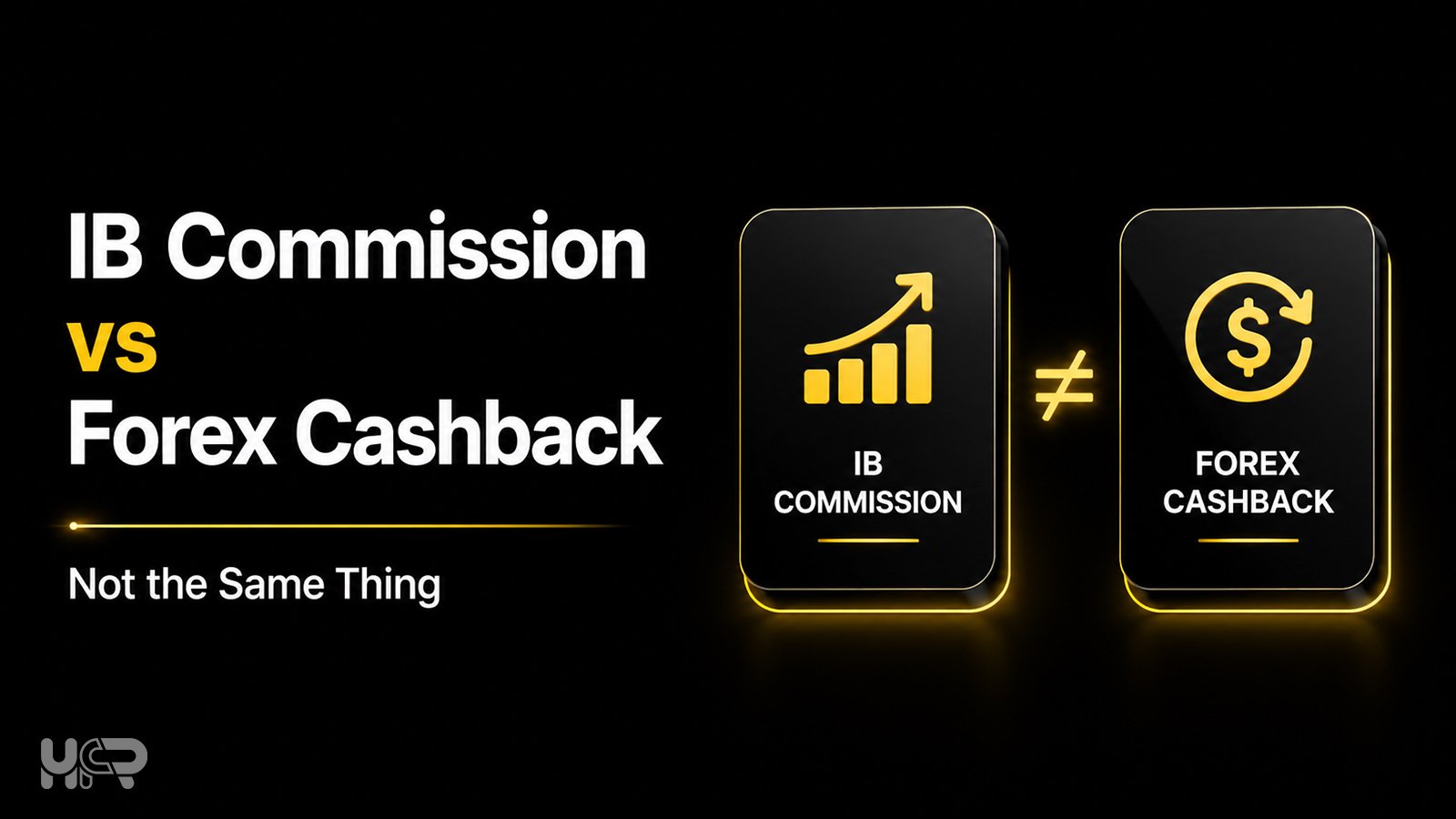
Eligibility, supported accounts, instruments, calculation methods and payout schedules can differ. Trader-facing rebates may be quoted per lot, in pips, as a percentage of spread or commission, or as a share of eligible broker revenue.
For the wider cashback mechanism, read how forex rebates work. The relevant broker page remains the main HFR reference for current account eligibility, calculation and payout conditions.
Introducing Broker vs affiliate: what is the difference?
An Introducing Broker and a forex affiliate can both refer clients to a broker, but the relationship and compensation structure are often different. These are general distinctions, not universal legal definitions.
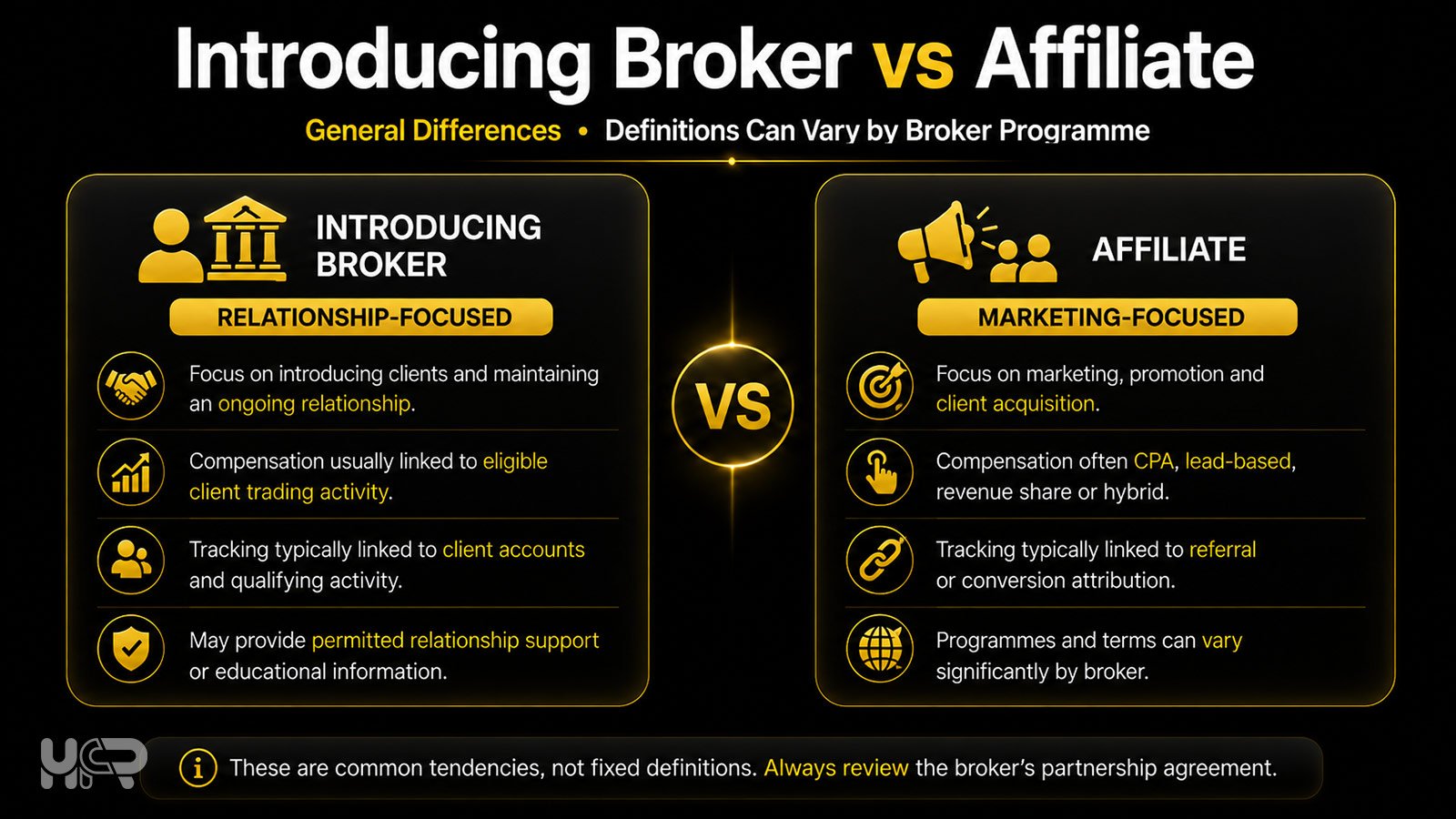
| Comparison point | Introducing Broker | Forex affiliate |
|---|---|---|
| Main role | Usually introduction- or relationship-focused | Usually marketing- or referral-focused |
| Client relationship | May continue after the initial referral | Often more limited after acquisition |
| Compensation | Often linked to eligible client trading activity | Often CPA, lead, revenue share or hybrid |
| Tracking | Commonly linked to referred client accounts and qualifying activity | Commonly linked to referral or conversion attribution |
| Exact definition | Depends on the broker programme and jurisdiction | Depends on the affiliate agreement and jurisdiction |
Broker programmes can use these labels differently. HFM, for example, currently lists Introducing Brokers and Affiliates as separate partnership types. The agreement itself determines attribution, permitted activities and compensation.
What does an Introducing Broker not normally do?
An IB relationship does not automatically authorise the IB to hold client money, manage the trader’s account or make trading decisions for the client. It also does not by itself authorise regulated investment advice, portfolio management or discretionary trading.
The permitted activities depend on the jurisdiction, regulatory status and agreement with the broker. Under the US framework, NFA states that an IB does not accept customer money or assets to support orders and carries forex accounts with an FCM or RFED on a fully disclosed basis. This should not be treated as a worldwide rule.
Does using an IB change spreads or commissions?
Not necessarily. Pricing depends on the broker, account type and partnership arrangement. Compare the broker’s spread, commission and account conditions with those applying to the IB-linked account rather than assuming they are identical.
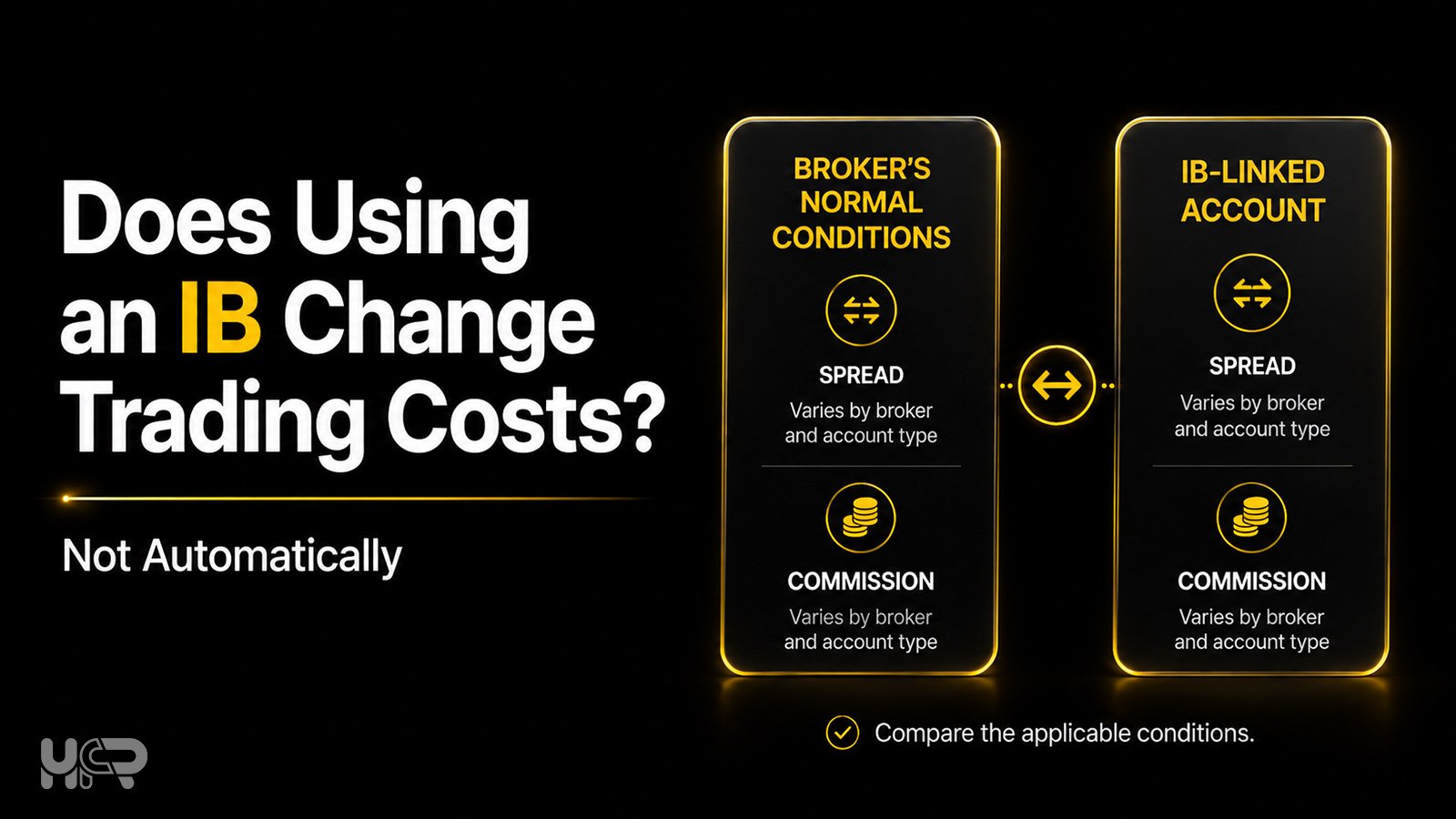
Some arrangements keep the broker’s underlying trading conditions separate from the partner payment, while others may have specific account structures or eligibility rules. The trading cost and rebate calculation should therefore be checked separately.
Before registering, HFR’s guide on how to read a forex rebate page explains which account type, rebate rate, instrument eligibility and payout details should be compared.
What should traders check before opening an account through an IB?
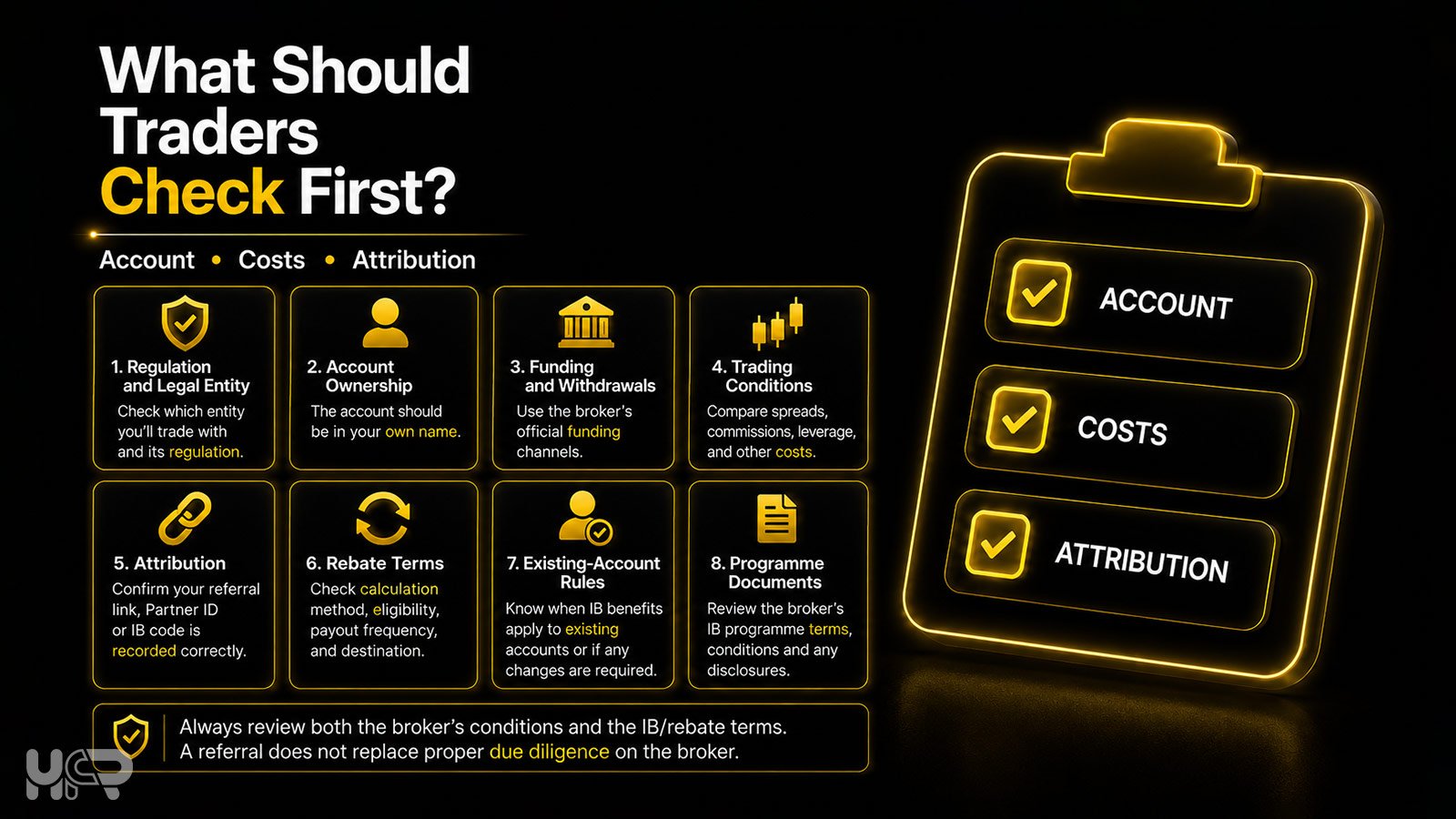
Before opening an account through an IB, check both the broker’s trading conditions and the terms of the IB relationship. A referral does not replace normal due diligence on the broker.
- Legal entity and regulation: confirm which broker entity will hold the account and which regulatory framework applies.
- Account ownership and funding: the account should normally remain in the trader’s own name, with deposits and withdrawals handled through the broker’s official channels.
- Trading conditions: compare the applicable spreads, commissions, leverage, account type and other costs.
- Attribution: confirm that the referral link, Partner ID or IB code has been recorded correctly before expecting partner-related benefits.
- Existing-account rules: some brokers allow reassignment or transfer under certain conditions, while others require a new account.
- Rebate terms: if cashback is offered, check the calculation method, eligible instruments and accounts, payout frequency and payout destination.
For setup issues that can affect tracking, review HFR’s common forex rebate mistakes guide.
How does HFR cashback work with an IB-linked account?
With HFR, cashback can depend on the account being correctly linked under the relevant broker partnership. After confirmation, eligible activity is handled according to the broker arrangement and the conditions shown on the applicable HFR broker page.
An existing broker account is not automatically eligible. Some brokers allow transfers under specific conditions, while others require a new account. Reporting and payout schedules can also affect when cashback is confirmed and credited.
HFR’s guide to how forex rebate payments work explains the tracking-to-payout process in more detail.
HFR does not provide the brokerage service or control the broker’s execution, leverage, spreads, commissions, deposits or withdrawals. Broker trading conditions and HFR cashback conditions should be checked separately.
What should you remember about the forex IB model?
An Introducing Broker connects prospective clients with a broker under a partnership arrangement. The exact role, compensation method and regulatory status depend on the programme and jurisdiction, while the broker remains responsible for the brokerage services it provides.
Where the arrangement includes cashback, do not assume the broker-to-IB payment and trader rebate are the same. Check broker account conditions separately from rebate eligibility, calculation and payout terms.
If you are comparing HFR-supported arrangements, review the current forex rebate conditions for the relevant broker before registering or linking an account.
Frequently asked questions
What does IB mean in forex?
IB stands for Introducing Broker. It generally describes a person or business that introduces prospective clients to a broker under a partnership arrangement. The broker provides the trading account and brokerage services, while the IB may receive compensation under its agreement.
How does a forex Introducing Broker get paid?
An IB may receive broker compensation linked to eligible trading volume, spread, trading commission or broker revenue. The formula varies by broker, account, instrument, location and programme conditions.
Does an Introducing Broker hold my forex account?
Normally, the trading account is opened with the broker. Under the US framework, an IB does not accept customer money or assets to support orders and carries forex accounts with an FCM or RFED. Rules differ elsewhere.
Is an Introducing Broker the same as a forex affiliate?
Not necessarily. An IB is often more closely connected to the client relationship and trading activity, while an affiliate is often more focused on marketing and acquisition. Broker programmes can use the labels differently.
Does using an IB increase forex trading costs?
Not automatically. Spreads, commissions, account types and other conditions can depend on the broker and partnership arrangement. Compare broker trading conditions and any trader rebate separately.
Is forex cashback the same as an IB commission?
No. An IB commission is compensation paid by a broker under its partnership agreement. Forex cashback is the amount returned to an eligible trader under a rebate arrangement. The amounts and eligibility rules can differ.
Are all forex Introducing Brokers regulated?
No single regulatory framework applies worldwide. In the United States, Introducing Broker is a defined regulatory category and registration requirements can apply unless an exemption is available. Other jurisdictions may classify these relationships differently.
Can an existing forex account be moved under an IB?
Sometimes. Some brokers allow existing-account transfers under certain conditions, while others require a new account. Check the broker and HFR instructions before requesting a transfer or expecting cashback.
Sources and methodology
This article uses current official regulatory and programme sources for time-sensitive statements. Regulatory examples are jurisdiction-specific and are not presented as universal rules. HFR-specific rebate mechanics are based on current HighFxRebates guidance and should still be checked against the relevant broker page before registration or account linking.
- National Futures Association (NFA) - Introducing Broker members
- NFA - Introducing Broker registration
- Commodity Futures Trading Commission (CFTC) - Introducing Brokers
- HFM - Partnership types
- HighFxRebates - What are forex rebates?
- HighFxRebates - How forex rebate payments work
Disclosure
HighFxRebates may receive remuneration from supported brokers under partner or introducing-broker arrangements. Trader rebate eligibility, calculation and payment conditions remain subject to the applicable HFR and broker terms.
Risk and cashback note
Forex and CFD trading involve risk. Cashback may help offset part of eligible trading costs after account confirmation, but it does not reduce market risk, leverage risk, execution risk, spread risk, slippage risk, swap cost, broker risk, counterparty risk or the risk of loss.
This article is for educational and informational purposes only. It should not be treated as financial advice, investment advice, trading advice, or a recommendation to use any broker, account type, trading strategy or derivatives.
 5
5
Share Posts


Further Reading
- Weekly Market Recap, 19–25 October 2026: Gold and Silver Fall as Crypto Flows Diverge
- Bitcoin, Ethereum, Solana, Gold and Silver: Daily Technical Outlook After the October Pullback
- Why Forex Spreads Widen: News, Rollover, Liquidity and Volatility
- What is Proof of Reserves on a crypto exchange? What it shows and what it does not