



Table of Contents
[ Show/Hide ]- • Trading Commissions, Funding and Other Charges Make Up Total Cost
- • Maker and Taker Fees Depend on How the Order Executes
- • Spot Fees Are Usually Calculated From Executed Trade Value
- • Futures Fees Are Usually Based on Notional Position Value
- • Perpetual Funding Is Separate From Trading Commissions
- • Spread and Slippage Increase Effective Trading Cost
- • Withdrawal, Convert, Payment and Strategy Costs Need Separate Checks
- • VIP Levels Can Lower Fees and the Cashback Amount
- • Cashback Offsets Part of the Eligible Commission
- • Not Every Exchange Fee Qualifies for Cashback
- • Compare the Same Product, Order Type and Activity
- • Higher Cashback Does Not Always Mean Lower Cost
- • Final Thoughts: Compare Effective Cost, Not Only the Headline Fee
- • FAQ
- • Risk and Cashback Note
A crypto exchange may advertise a low trading fee, but that number rarely shows the full cost of a trade. Spot orders use maker or taker rates, futures positions can include opening and closing commissions, and perpetual contracts may add funding while the position remains open. Spread, slippage, withdrawals, and conversion charges can increase the cost further.
Crypto exchange fees include maker and taker commissions, futures funding, spreads and withdrawals. Eligible cashback may offset part of trading fees, but it does not normally cover every exchange cost.
This guide explains how each cost is calculated and how to compare exchanges after eligible cashback is included.
Data checked: July 2026. Fee schedules, VIP tiers, funding rules, withdrawal charges and cashback conditions can change. Check the live exchange and HighFxRebates pages before registering or trading.
Trading Commissions, Funding and Other Charges Make Up Total Cost
The total cost can include a direct trading commission, market-related costs, and separate account or payment charges. Not every exchange uses every charge, and some costs appear in the execution price rather than as a line item.
| Cost group | Examples |
|---|---|
| Trading commissions | Maker, taker, opening and closing fees |
| Market or position costs | Spread, slippage and perpetual funding |
| Account and payment costs | Withdrawals, Convert, card purchases and payment providers |
Maker and taker fees are the direct commissions most traders see first. Futures positions may add funding, while spread and slippage affect the price received. Withdrawals, conversions, and third-party payment services can create separate costs before or after trading.
Cashback is different from each of these charges. It can return part of a qualifying commission after the account and activity meet the relevant HFR conditions, but it does not normally cover funding, spread, slippage or transfer fees.
Readers unfamiliar with rebates can first learn what crypto exchange cashback is and how it works.
Maker and Taker Fees Depend on How the Order Executes
A maker order adds liquidity to the order book, while a taker order executes against liquidity already available. Exchanges may charge different rates because the two order types affect the market differently.
A market order seeks immediate execution at available prices, while a limit order sets the highest purchase price or lowest sale price the trader will accept.
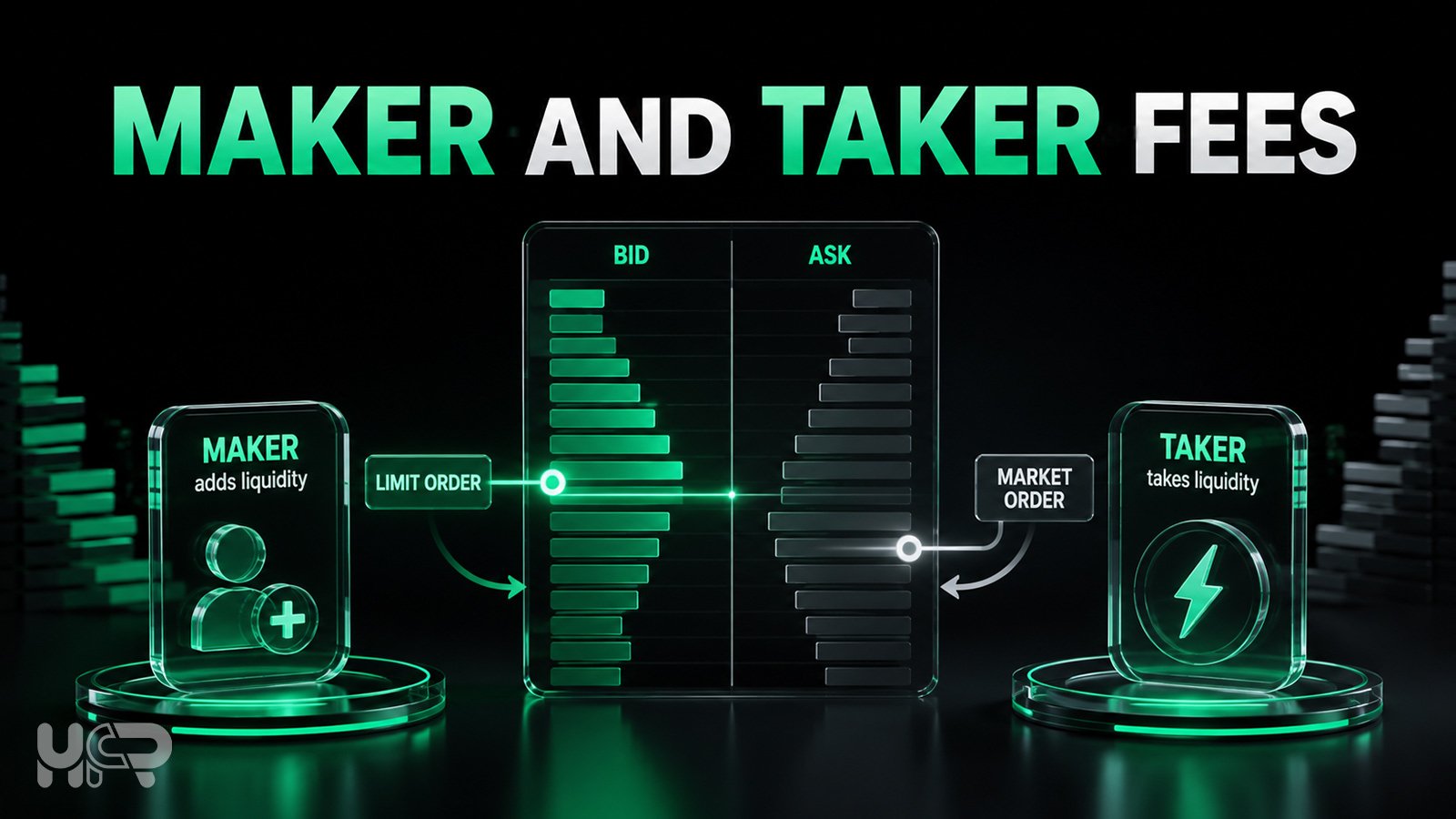
A maker order normally rests on the book before another participant fills it. A taker order matches immediately against existing orders. Market orders are usually taker orders, but the order label alone does not decide the fee.
A limit order is not automatically a maker order. If it executes immediately against an existing order, the exchange can charge the taker rate. Maker fees are often lower, although some exchanges use equal rates or special campaign pricing.
| Order | Execution | Typical classification |
|---|---|---|
| Buy limit below the best ask | Rests on the order book | Usually maker |
| Sell limit above the best bid | Rests on the order book | Usually maker |
| Market order | Executes immediately | Taker |
| Marketable limit order | Executes immediately | Taker |
For a fair fee comparison, use the classification applied after execution. Two orders with the same trade value can produce different commissions when one is maker, and the other is taker.
Spot Fees Are Usually Calculated From Executed Trade Value
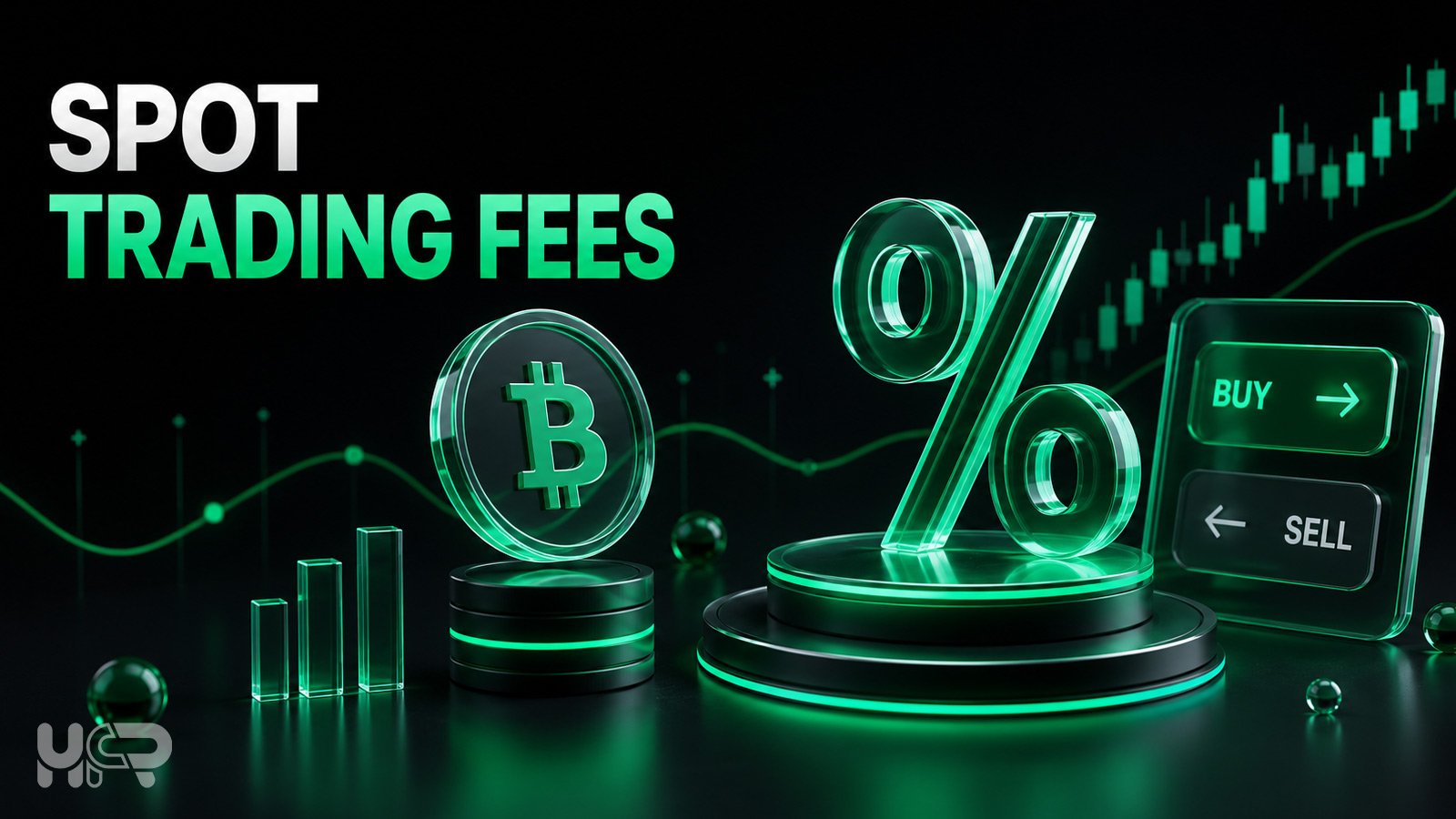
Most spot exchanges calculate the commission as a percentage of the executed trade value.
Spot trading fee = executed trade value × applicable fee rate
For example, a $10,000 purchase charged at a 0.10% taker rate produces a $10 commission:
$10,000 × 0.10% = $10
The example covers the commission only. Spread, slippage, conversion costs, and later withdrawal charges remain separate.
The rate applied can depend on maker or taker status, VIP level, rolling volume, exchange-token discounts, promotions, the trading pair, region and the fee-payment currency. The exchange may deduct the fee from the quote currency (The quote currency is the second asset in a trading pair, such as USDT in BTC/USDT) or from the asset purchased, so the net quantity received can differ from the gross order amount.
Check the live fee schedule for the exact account, pair, and order type. The standard advertised rate may not match a user-specific VIP or campaign rate.
Futures Fees Are Usually Based on Notional Position Value
Crypto futures commissions are commonly calculated from the position’s notional value and can apply when the position opens and closes. Notional value means the total market value of the futures position, not only the margin deposited to open it.
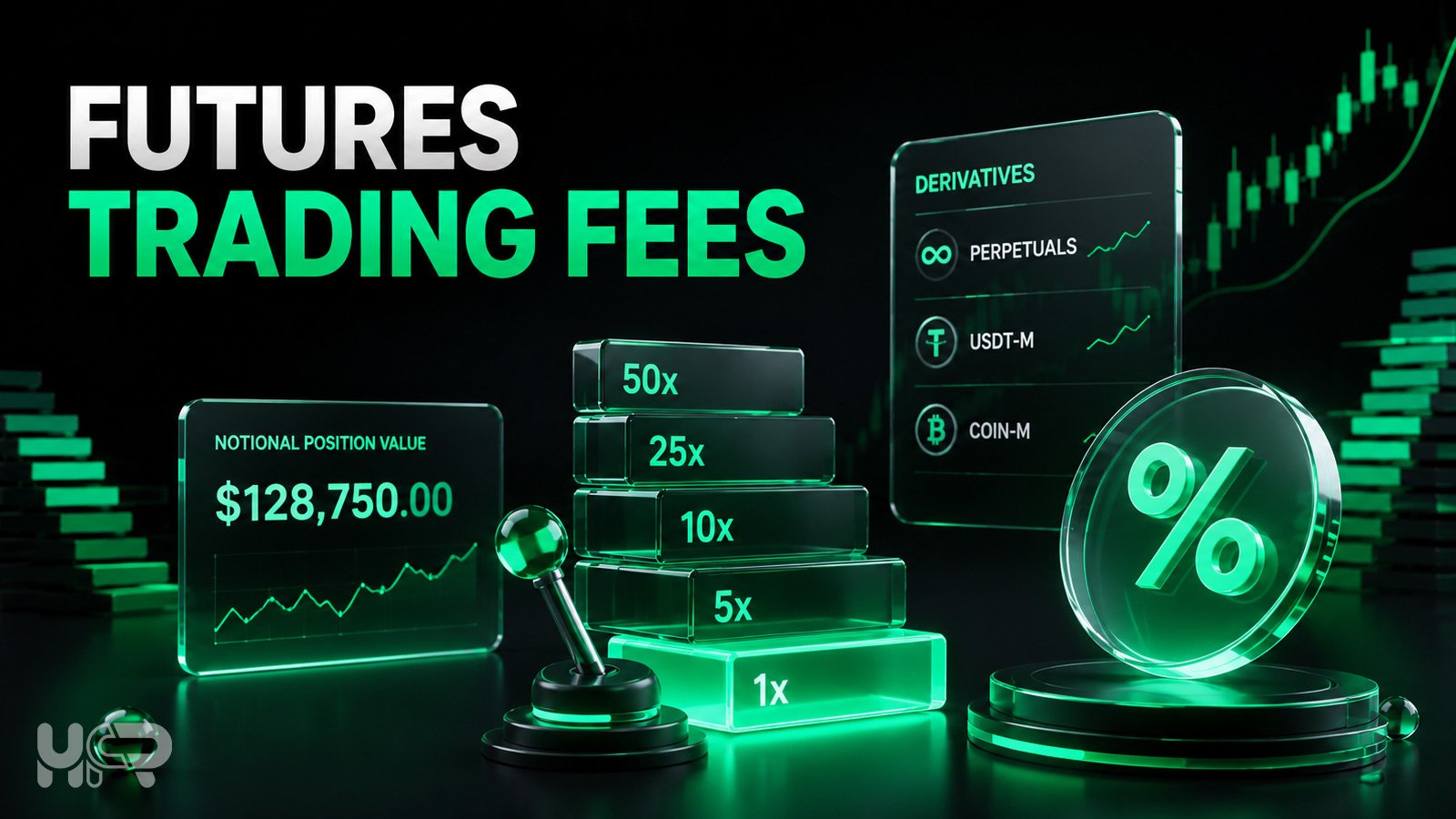
Futures commission = position notional value × applicable maker or taker rate
A $20,000 position charged at a 0.05% taker rate would create a $10 opening commission:
$20,000 × 0.05% = $10
If the closing trade has the same notional value and fee rate, the two commissions total $20. The example excludes funding, spread, slippage, liquidation fees or additional liquidation-related losses, and any change in notional value before closing.
Leverage does not necessarily change the percentage fee rate, but it can increase the position value used in the calculation. A trader may post a smaller margin amount while paying commission on a much larger notional position.
Fee mechanics vary by product. Confirm whether the exchange charges on entry, exit or both, and whether the closing fee uses the final notional value.
Perpetual Funding Is Separate From Trading Commissions
Funding is a periodic payment between long and short holders that helps keep a perpetual contract close to the underlying market price. It is separate from maker and taker commissions and is not necessarily revenue paid to the exchange.
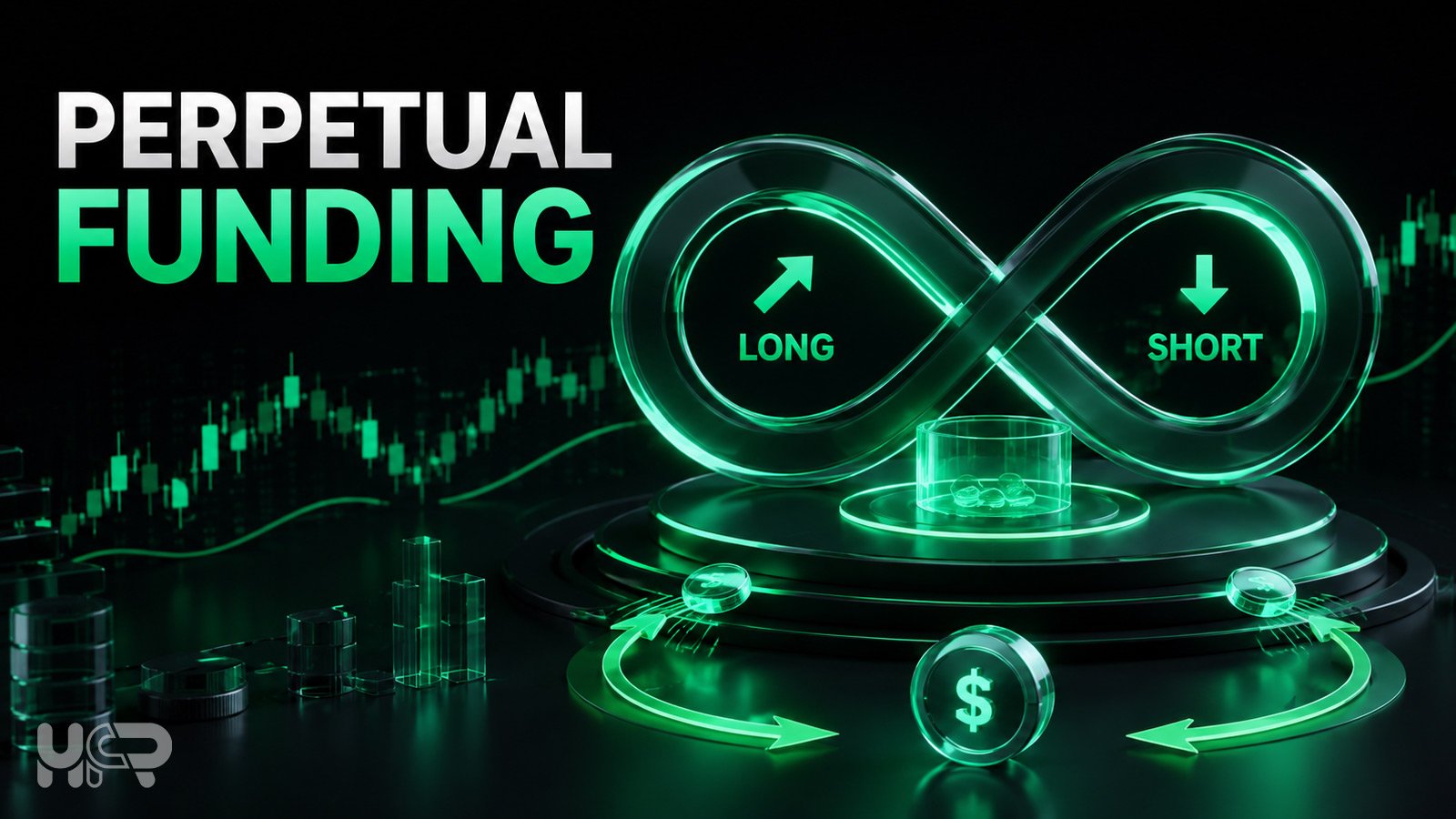
When the rate is positive, long holders usually pay short holders. When it is negative, short holders usually pay long holders. The schedule, calculation, and settlement method differ by exchange and contract.
On exchanges that use scheduled settlements, funding normally applies when the position remains open at the relevant time. A position opened and closed between settlements may avoid that interval, but the contract rules are the final reference.
Funding is generally based on position value, so even a small rate can be meaningful relative to the margin deposited. The rate can also change before the next settlement.
HFR cashback applies only to the fees and products listed as eligible on the relevant exchange page. Do not include funding in a cashback estimate unless the live terms specifically cover it.
Spread and Slippage Increase Effective Trading Cost
Spread and slippage can increase the amount paid even when neither appears as a separate commission entry.
The spread is the difference between the best available bid and ask. If the best bid is $99.90 and the best ask is $100.00, the spread is $0.10. Immediate entry at the ask and exit at the bid would absorb that difference before commissions.
Slippage is the difference between the expected price and the average execution price. A large market order may begin filling at $100.00 but finish at an average of $100.08 because the first price level lacks enough liquidity.
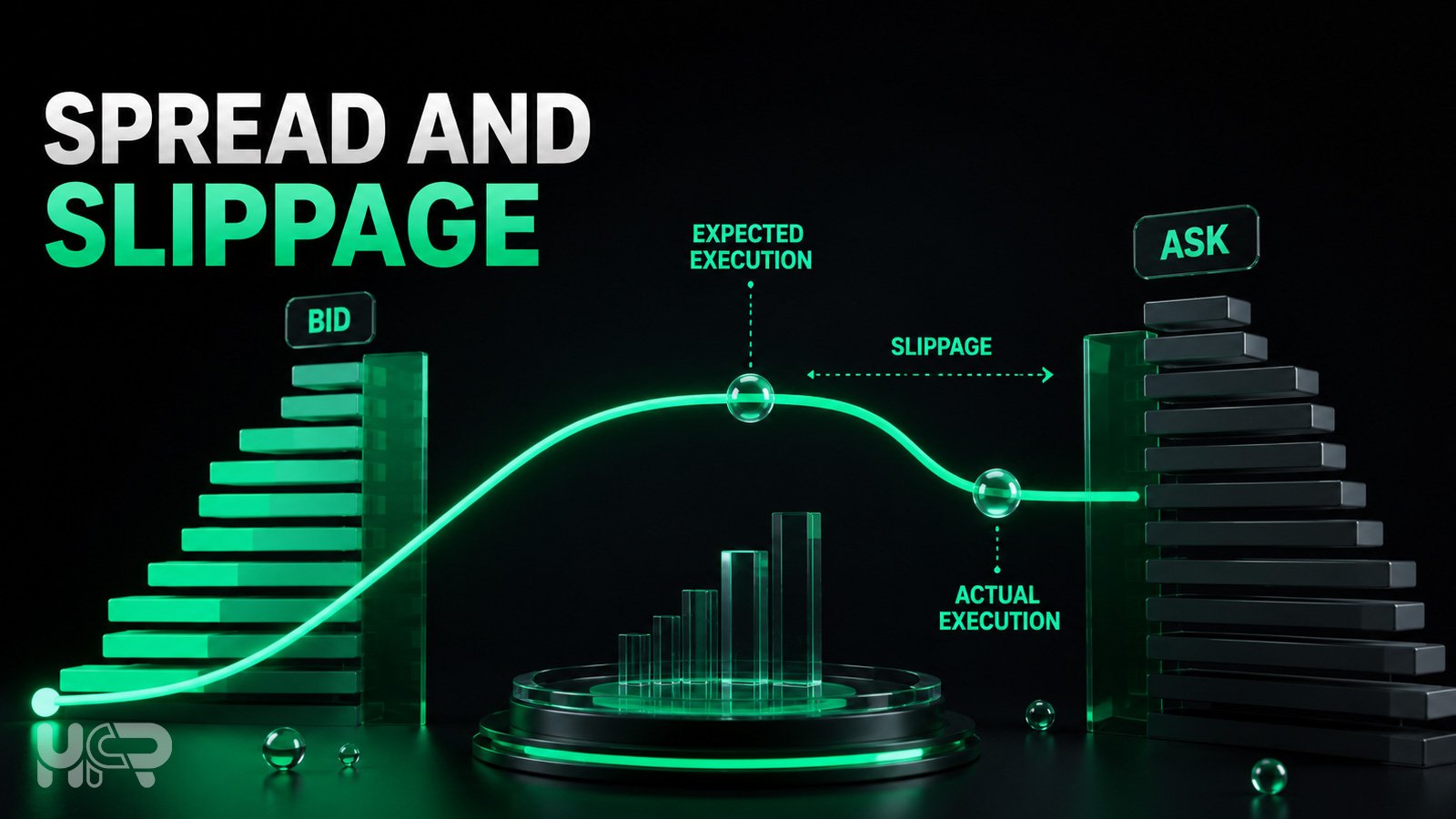
Low liquidity, large orders, thin order books, fast markets, and high volatility can increase slippage. Copy-trading followers and automated strategies can also receive different fills when many orders reach the market together.
A platform with a lower commission can still cost more when spreads are wider, or execution is weaker. Compare the fee rate with order-book depth and likely execution for the order size you expect to use.
Withdrawal, Convert, Payment and Strategy Costs Need Separate Checks
Charges outside the standard maker or taker schedule can materially affect the final cost, especially when funds are moved frequently or purchased through third-party services.
Withdrawal fees vary by asset and blockchain network, and minimum withdrawal amounts can apply. A USDT withdrawal on one network may cost more than the same asset on another. Exchanges can also change these values as network conditions or internal policies change.
Convert services may show an explicit fee or build the cost into the quoted exchange rate. Card and fiat purchases can add provider fees, card-processing charges, currency conversion, and a spread in the purchase quote. P2P transactions may have no platform commission while still carrying price differences or payment-provider costs.
Copy trading can add normal commissions, funding, spread, slippage and trader profit share. Bots generally submit ordinary exchange orders, so the fee depends on whether those orders execute as maker or taker. Using automation does not remove trading fees or create automatic cashback eligibility.
Review each charge under the exact product and payment method you plan to use rather than relying on the exchange’s headline trading rate.
VIP Levels Can Lower Fees and the Cashback Amount
VIP programs can lower maker and taker rates when users meet volume, balance, token-holding, institutional, or campaign requirements. Spot and futures often use different qualification rules and fee tables.
When cashback is calculated as a percentage of the commission paid, a lower VIP commission also produces a smaller cashback amount in dollars. That does not make VIP pricing worse because the user starts with a lower fee.
| Fee setup | Trading commission | 25% cashback | Cost after cashback |
|---|---|---|---|
| Standard fee | $10.00 | $2.50 | $7.50 |
| VIP fee | $6.00 | $1.50 | $4.50 |

The VIP user receives $1 less cashback, but the effective commission falls from $7.50 to $4.50. Compare the fee paid after both the discount and cashback rather than comparing the rebate amount alone.
The effective commission is the trading commission remaining after eligible cashback is deducted.
Before relying on a VIP rate, check the live threshold, applicable product and account tier. A single status may not apply equally to spot, futures, and other services.
Cashback Offsets Part of the Eligible Commission
Crypto exchange cashback returns a percentage of eligible trading commissions after the account and activity satisfy the required conditions. The exchange calculates or reports the qualifying commission, and the rebate is paid according to the HFR schedule for that platform.
Eligible cashback = eligible trading commission × cashback rate
Effective eligible commission = trading commission − cashback received
If a trader pays $20 in eligible commissions and qualifies for 25% cashback, the rebate is $5 and the effective eligible commission is $15:
$20 × 25% = $5 cashback; $20 − $5 = $15
This does not make the full trade cost $15. Funding, spread, slippage, withdrawals, payment-provider charges and other non-eligible costs may still apply.
Eligibility can depend on registration through the correct HFR link, account or UID submission, confirmation status, supported products, exchange reporting, the actual commission charged, regional rules and any fee promotion.
For a more detailed formula and additional examples, read how crypto exchange cashback is calculated.
Not Every Exchange Fee Qualifies for Cashback
Cashback normally applies only to the trading commissions identified as eligible on the relevant HFR exchange page. Other charges should stay outside the estimate unless the current terms specifically include them.
Do not normally assume eligibility for funding payments, withdrawals, deposit charges, card processing, fiat-provider fees, Convert charges, liquidation costs, spread, slippage, copy-trading profit share, interest or borrowing charges.
Zero-fee conditions also change the result. When an eligible commission is reduced to zero, percentage-based cashback for that trade is normally zero because there is no paid commission to use as the calculation base.
Using the wrong registration route, assuming every fee qualifies, or trading before approval are among the common crypto exchange cashback mistakes. Check the live HFR page before estimating a rebate. Cashback and exchange bonuses also use different qualification, calculation, and payout rules.
Compare the Same Product, Order Type and Activity
A fair exchange comparison uses the same product, trade value, order classification and expected activity. Comparing a spot taker fee on one exchange with a futures maker fee on another does not show which platform is cheaper.
| Comparison point | What to check |
|---|---|
| Product and order | Spot or futures; maker or taker |
| Trade value | The same executed or notional amount |
| Futures costs | Opening and closing commission; funding schedule |
| Account rate | Current VIP tier, token discount or campaign |
| Execution | Spread, order-book depth and likely slippage |
| Transfers | Asset, network, withdrawal fee and minimum |
| Cashback | Rate, eligible products, payout timing and destination |
| Registration | Required referral link, UID or account submission |
| Availability | Whether the exchange and product serve the user’s region |
Use the conditions that match how you expect to trade. A low taker rate may be offset by wider spreads or higher withdrawals, while a higher cashback rate may still leave a larger net commission.
To compare current HFR offers, review the full list of crypto exchange rebates, including cashback rates, payout methods and account requirements.
Before choosing an exchange, confirm the maker and taker rates, spot and futures fee tables, funding method, expected liquidity, VIP level, withdrawal route, cashback eligibility and regional access. The best comparison reflects the activity you expect to perform, not one advertised number.
Higher Cashback Does Not Always Mean Lower Cost
The starting commission matters as much as the rebate percentage. A platform with lower headline cashback can still produce the smaller effective fee.
| Detail | Exchange A | Exchange B |
|---|---|---|
| Eligible commission | $10.00 | $8.00 |
| Cashback rate | 30% | 20% |
| Cashback received | $3.00 | $1.60 |
| Commission after cashback | $7.00 | $6.40 |
Exchange A has the higher cashback rate, but Exchange B has the lower effective commission because its starting fee is lower. Spread, slippage, funding, and withdrawal charges would still need to be added before deciding which exchange is cheaper overall.
The exchanges in this example are fictional. Use live fee schedules and current HFR conditions for any real comparison.
Final Thoughts: Compare Effective Cost, Not Only the Headline Fee
Crypto exchange costs are easier to compare when each component is separated. Maker and taker fees show the direct trading commission, funding affects qualifying perpetual positions, and spread or slippage can increase execution cost. Withdrawals, conversion services, and payment providers may add separate charges.
VIP discounts can reduce both the commission and the dollar cashback calculated from it. A smaller cashback amount does not necessarily mean a higher net cost because the starting fee is also lower.
Eligible cashback can offset part of a confirmed commission, but it does not cover every exchange charge. Compare the starting fee, cashback, funding, execution and withdrawal costs together, then use the latest HFR eligibility terms for the final estimate.
FAQ
What fees do crypto exchanges charge?
Crypto exchanges can charge maker and taker commissions, futures opening and closing fees, withdrawal charges, conversion costs and card or fiat-provider fees. Spread, slippage and perpetual funding can also affect the final cost.
What is the difference between maker and taker fees?
A maker order adds liquidity to the order book, while a taker order executes against existing liquidity. The exchange can apply different rates based on how the order fills.
Is a limit order always charged as a maker order?
No. A limit order is usually maker only when it rests on the order book. If it executes immediately against an existing order, it can be charged as taker.
How are crypto spot trading fees calculated?
Spot fees are generally calculated as a percentage of executed trade value. A $10,000 trade at a 0.10% rate creates a $10 commission before eligible discounts or cashback.
How are futures trading fees calculated?
Futures commissions are commonly calculated from notional position value rather than margin alone. A commission can apply when the position opens and closes, depending on the product.
What is a perpetual futures funding fee, and does it qualify for cashback?
Funding is a periodic payment between long and short holders. It is separate from maker and taker commissions and should not be included in cashback unless the relevant HFR page specifically lists it as eligible.
How do VIP discounts affect cashback?
A VIP discount lowers the commission paid. Percentage-based cashback may therefore be smaller in dollars, while the user can still have a lower effective fee overall.
Are withdrawal fees eligible for cashback?
Withdrawal fees are normally separate from trading commissions. Do not treat them as eligible unless the current HFR exchange terms specifically include them.
Does higher cashback always mean lower trading costs?
No. Compare the starting commission, maker or taker rate, VIP discount, spread, slippage, funding, withdrawals and remaining fee after cashback.
Does cashback reduce futures or liquidation risk?
No. Cashback offsets part of eligible fees; it does not change market exposure, leverage, funding, liquidation mechanics, or the possibility of loss.
Risk and Cashback Note
Cashback may help offset part of eligible trading fees after account approval, but it does not reduce market risk, leverage risk, liquidation risk, funding-rate risk, exchange risk, security risk, counterparty risk, or the risk of loss.
This article is for educational and informational purposes only. It should not be treated as financial advice, investment advice, trading advice, or a recommendation to use any crypto exchange or trade any digital asset or derivative.
 6
6
Share Posts


Further Reading
- Why the Same Forex Broker Can Have Different Legal Entities
- U.S. Jobs Slow, the Dollar Firms & Bitcoin Advances While Rate Expectations Shift — September 28-October 4, 2026
- Bitcoin, Ethereum, Solana, Gold and Silver Technical Outlook: Key Daily Zones After a Mixed Macro Week — October 5, 2026
- BloFin × HighFxRebates Promotion 2026: VIP1 + Up to 9,400 USDT in Rewards