




Table of Contents
[ Show/Hide ]- • What is a forex commission?
- • What does “per side” mean?
- • What does “per lot” mean?
- • What does “round turn” mean?
- • How to calculate forex commission
- • Per side vs round turn: why the same commission can look different
- • Commission vs spread: what is the basic transaction cost?
- • Why commission can differ between brokers and accounts
- • How forex cashback relates to commission
- • Common commission-reading mistakes
- • Forex commission explained: practical takeaway
- • FAQ
- • Sources and methodology
- • Disclosure and risk warning
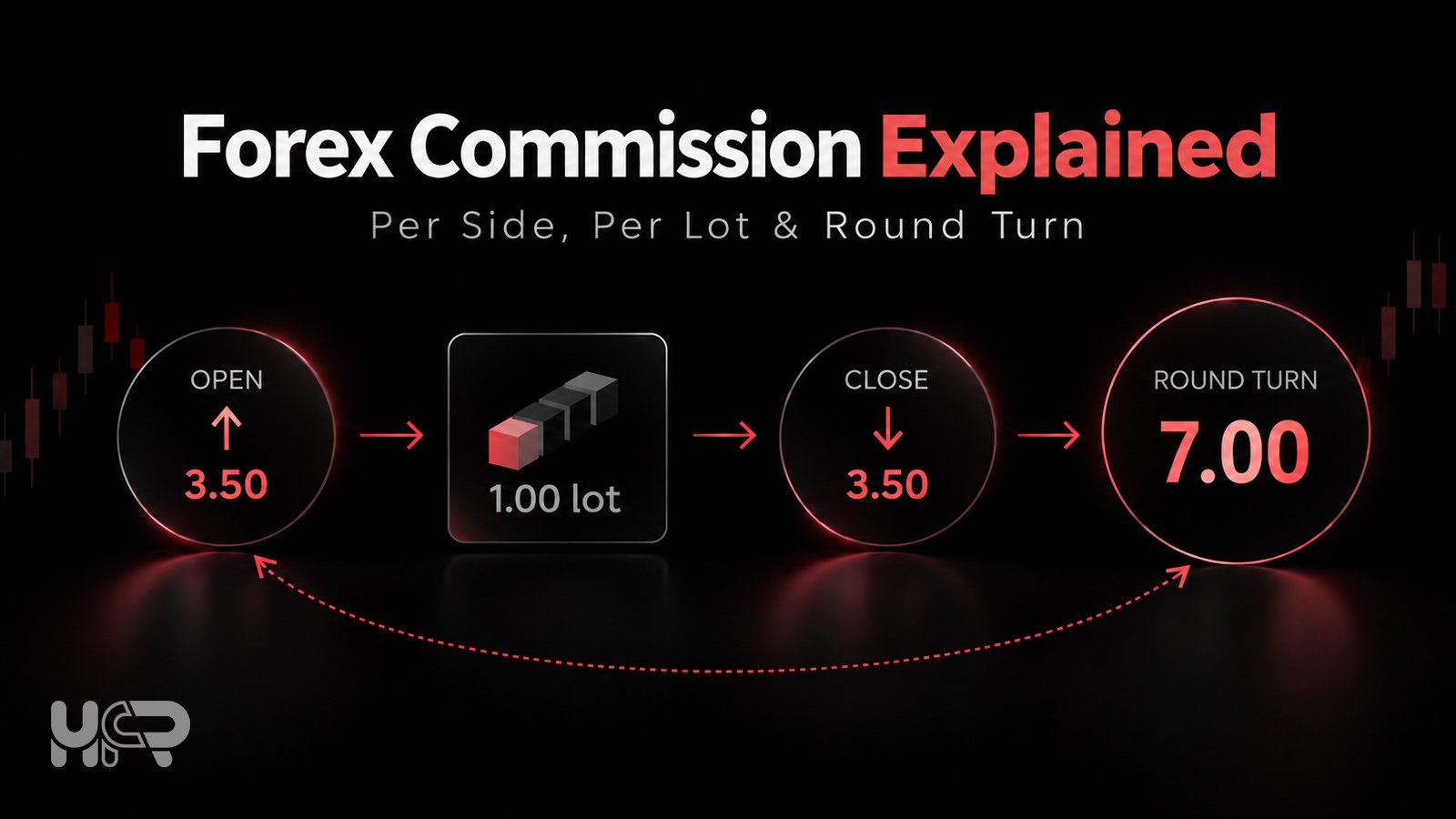
A forex commission quote usually contains two details: the trading volume the rate applies to and whether the charge covers one side or the full trade cycle. A broker may quote USD 3 per standard lot per side or USD 6 per standard lot round turn.
Per lot describes the volume basis. Per side describes one transaction event, usually opening or closing. Round turn describes the combined opening-and-closing commission for the stated volume. Because these labels describe different dimensions, a commission can be both per lot and per side.
| Core formula |
|---|
|
When commission is quoted as a money amount per standard lot per side and scales proportionally with volume: |
Example: at an illustrative rate of USD 3.50 per standard lot per side, a 1.00-lot trade has a calculated commission of USD 7.00 round turn before spread, overnight funding or any eligible rebate. The formula should not be treated as universal where a broker uses minimum charges, per-million pricing, different contract sizes or another calculation method.
What is a forex commission?
A forex commission is a separate trading fee that a broker may charge when a position is opened, closed or both. Whether it applies depends on the broker’s pricing model, account type, platform, instrument and legal entity.
Commission is different from the spread. The spread is the difference between the bid and ask price, while commission is a separate charge under the broker’s pricing schedule. Some accounts use wider spreads with no separate FX commission; others use tighter or raw spreads plus commission. Neither structure is automatically cheaper.
Commission is also separate from swap or overnight funding. Those charges may apply when a position remains open beyond the broker’s rollover time. A fair comparison therefore starts with the spread and commission, then adds any other relevant charges for the way the position is held.
Account labels such as Raw, ECN or Standard are not universal fee definitions. The broker’s current pricing and contract specifications remain the final reference.
What does “per side” mean?
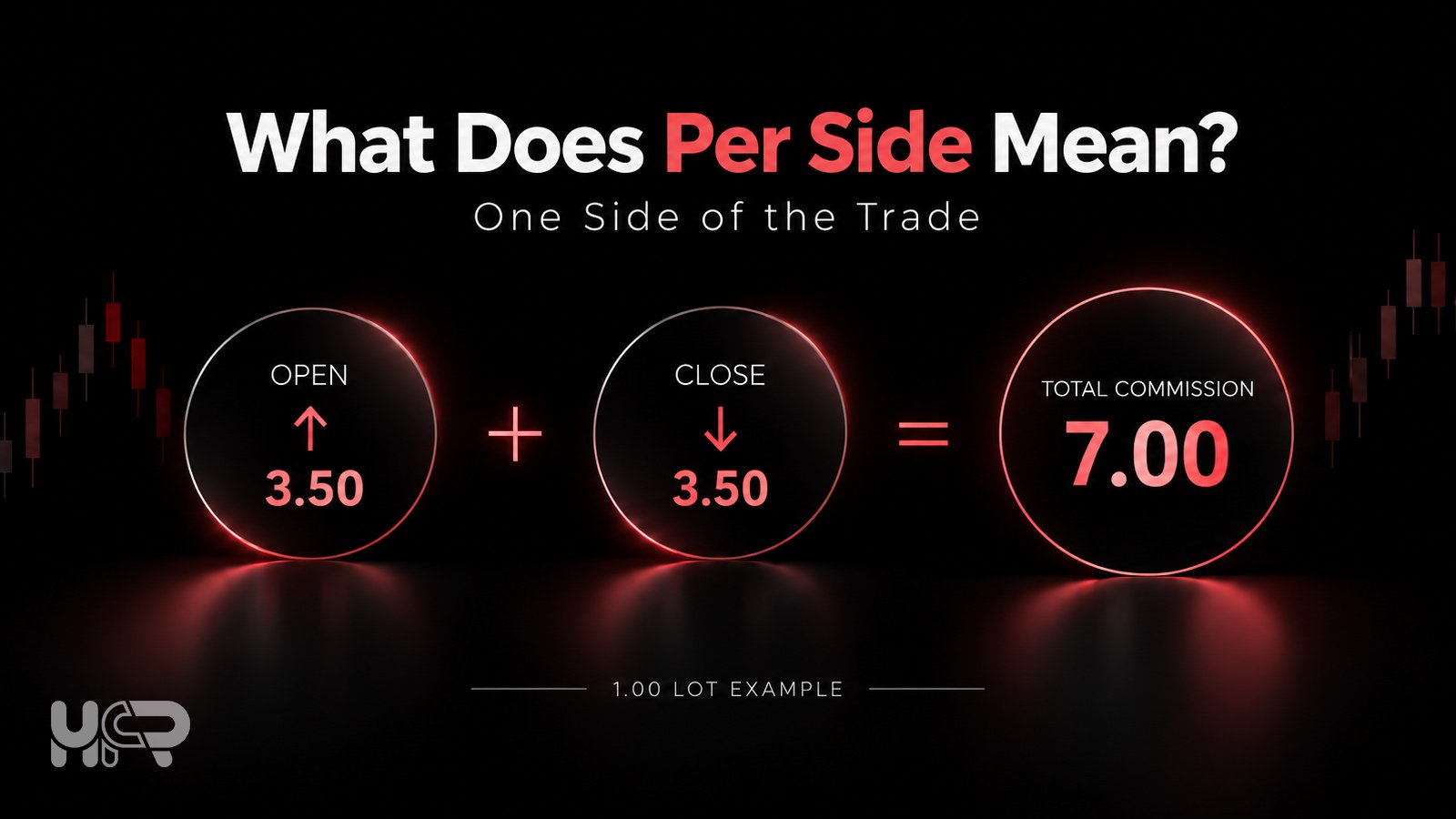
A per-side commission is the fee for one side of a transaction. One side normally means either opening the position or closing it. If both sides are charged, a completed trade has two commission events.
For example, a rate of USD 3.50 per standard lot per side produces USD 3.50 on the opening side and USD 3.50 on the closing side for a 1.00-lot position, giving USD 7.00 for the completed round turn.
The way the platform posts the charge can differ. Some platforms show entry and exit commissions separately, while others may display or reserve the charge differently. For comparison purposes, the important point is whether the published rate covers one side or the full opening-and-closing cycle.
What does “per lot” mean?
A per-lot commission describes the volume basis of the fee; it does not tell you whether the quote covers one side or both sides. In retail forex, one standard lot commonly represents 100,000 units of the base currency, a mini lot 10,000 units and a micro lot 1,000 units. Contract specifications can differ by instrument and broker.
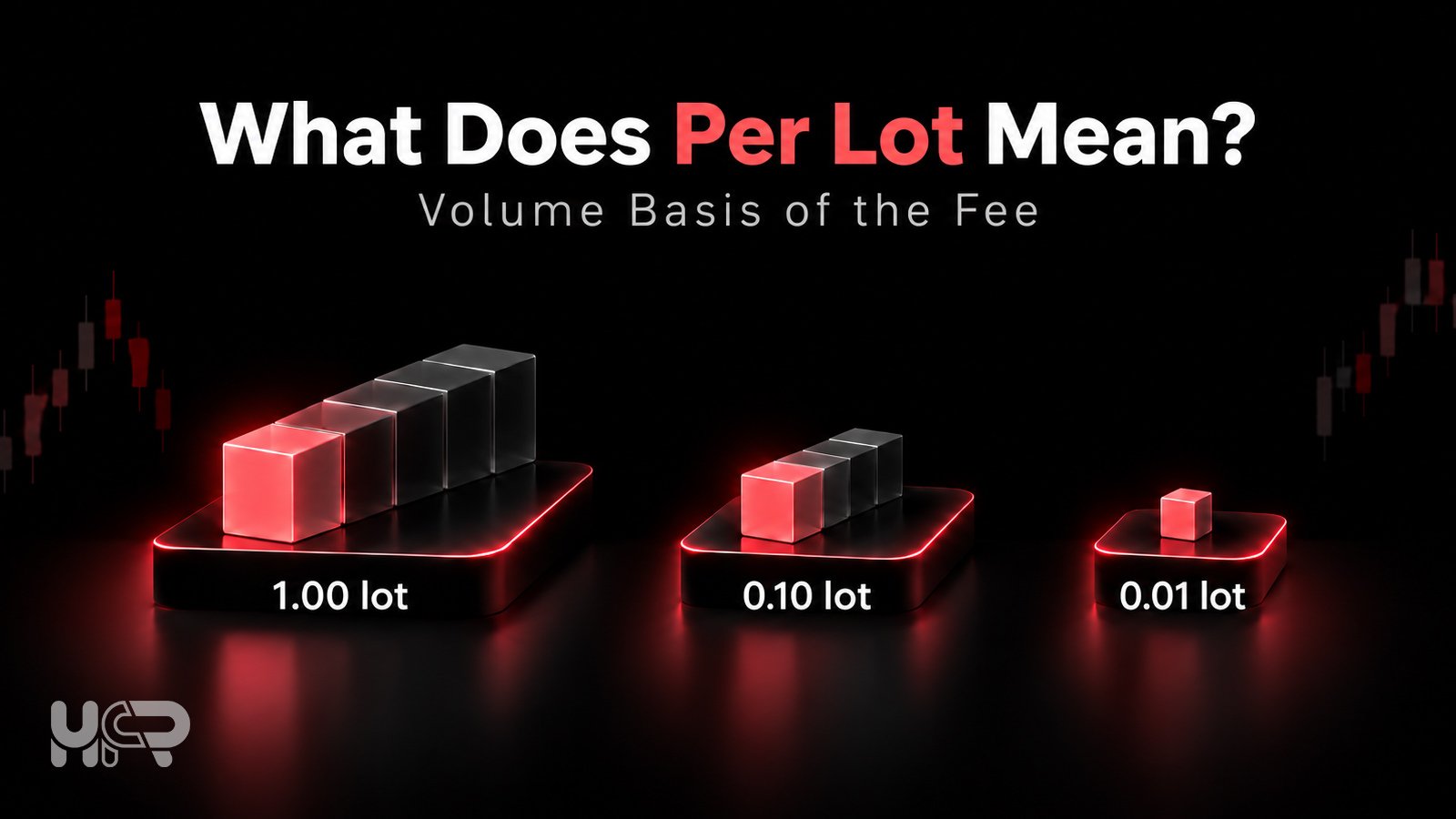
If a broker calculates commission proportionally, a 0.10-lot trade would normally carry one-tenth of the commission for 1.00 lot, while 0.01 lot would carry one-hundredth. Very small positions can still display slightly different amounts because of account-currency conversion, decimal precision, rounding or minimum-charge rules.
Do not assume the same lot convention applies to metals, indices, shares or other CFDs. Check the contract size and commission basis for the specific instrument.
What does “round turn” mean?
A round-turn commission is the commission for the full trading cycle: opening the stated position and later closing it. It is also called a round-trip commission.
A broker can publish the complete round-turn amount directly or show a per-side rate that must be converted. For example, USD 3.50 per lot per side and USD 7.00 per lot round turn describe the same commission for a completed 1.00-lot position when both sides are charged.
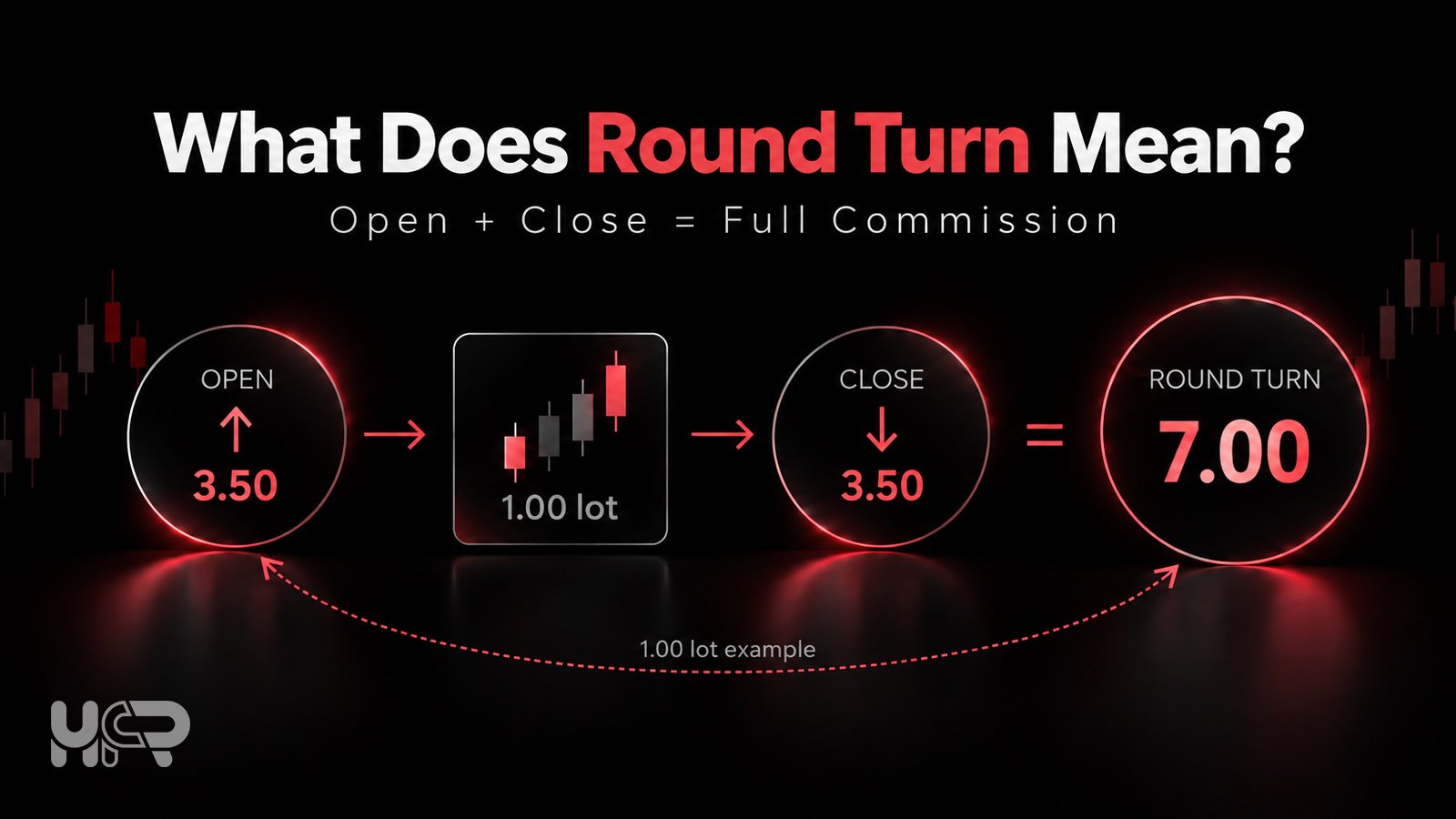
This is why commission quotes should be normalised to the same trade size and round-turn basis before they are compared.
How to calculate forex commission
First identify both parts of the broker’s quote: the volume basis and whether the rate is per side or round turn. If the rate is a fixed money amount per standard lot per side and scales proportionally with volume, use:
| Per-side formula |
|---|
| Round-turn commission = per-side rate × trade volume (standard lots) × 2 |
| Trade size | Open-side commission | Close-side commission | Round-turn commission |
|---|---|---|---|
| 1.00 lot | USD 3.50 | USD 3.50 | USD 7.00 |
| 0.10 lot | USD 0.35 | USD 0.35 | USD 0.70 |
| 0.01 lot | USD 0.035 | USD 0.035 | USD 0.07 before rounding |
These figures assume the commission scales proportionally with trade volume and that no minimum commission, different contract size or alternative rounding rule applies.
If the broker already quotes a round-turn rate, do not multiply by two again. Instead use:
| Round-turn formula |
|---|
| Commission = round-turn rate × trade volume (standard lots) |
For example, if the stated charge is USD 7 per standard lot round turn, a completed 0.10-lot position has a calculated commission of USD 0.70, subject to the broker’s rounding and currency rules.
A current broker example
Tickmill’s current global Raw Account page lists USD 3 per lot per side, or the equivalent amount in the account currency, and gives a one-lot EUR/USD example of USD 3 to open and USD 3 to close, or USD 6 round turn. This is a useful real-world illustration of the quotation convention, not a universal forex commission rate. Source rechecked 7 September 2026.
Per side vs round turn: why the same commission can look different
| Quote shown | Equivalent completed-trade commission |
|---|---|
| USD 3.50 per lot per side | USD 7.00 round turn |
| USD 7.00 per lot round turn | USD 7.00 round turn |
The first quote looks lower only because it covers one side. The per-lot part is the same volume basis in both examples. This is also why USD 3.50 per side should not be compared directly with USD 6 round turn: on the same one-lot completed-trade basis, the first equals USD 7 while the second equals USD 6.
Normalise the commission to the same trade volume and round-turn basis before deciding which quoted rate is lower.
Commission vs spread: what is the basic transaction cost?
Commission is only one part of a basic forex transaction-cost comparison. The spread must also be converted into the same monetary basis before the two figures can be added.
| Basic cost formulas |
|---|
| Spread cost in money = spread (pips) × pip value for the position Basic transaction cost in money = spread cost in money + round-turn commission |
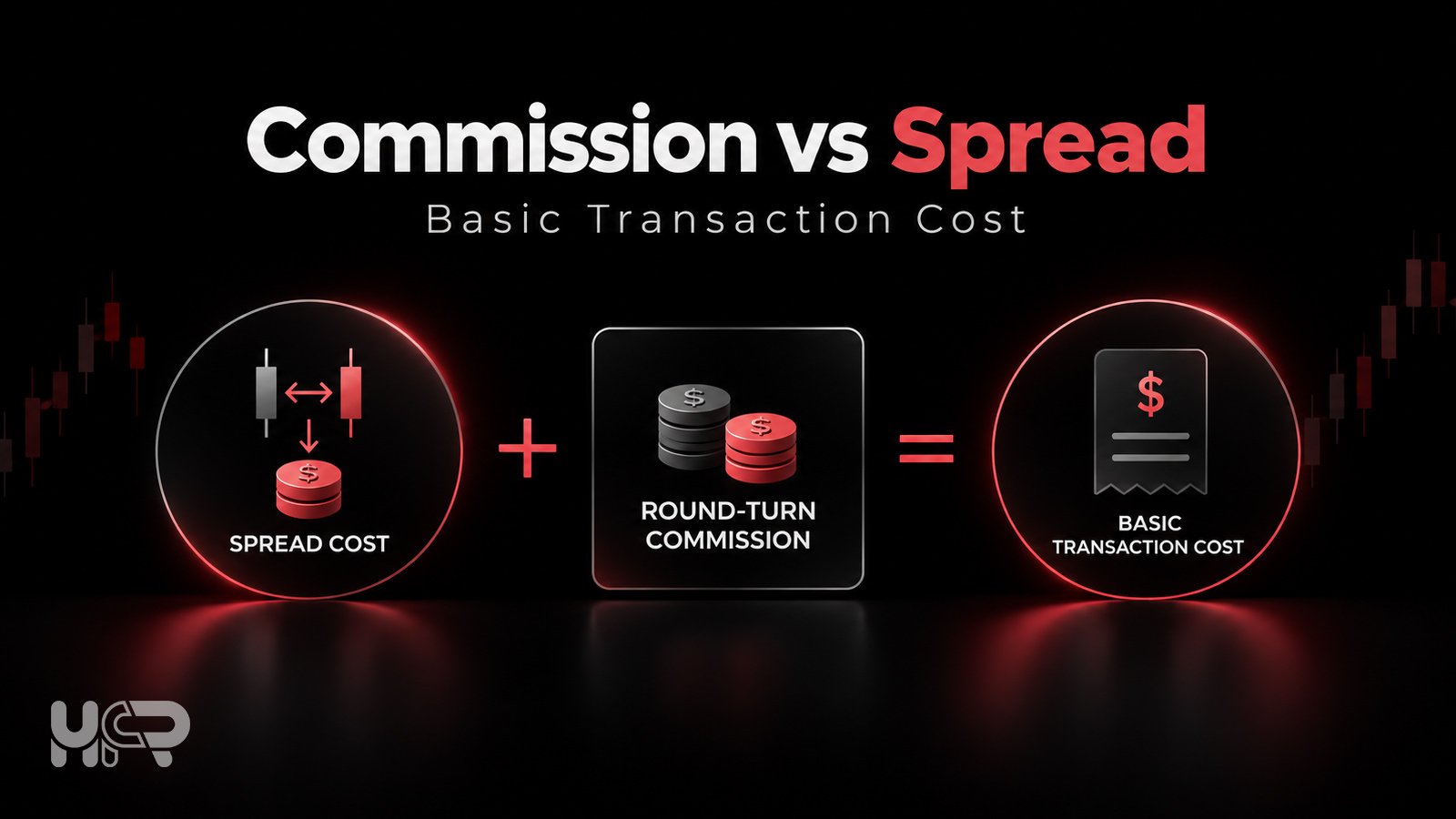
A spread quoted in pips cannot simply be added to a commission quoted in dollars. Multiply the spread by the pip value for the actual position. Pip value depends on the currency pair, trade volume and account currency, so use the value that applies to the position being compared.
An account advertised as zero commission is therefore not cost-free. Its pricing can still include a spread, and overnight funding or other applicable charges may also apply. Likewise, a raw-spread account is not automatically cheaper if the separate commission makes the total cost higher for the trade being compared.
For a broader account-cost comparison, see HFR’s Raw Spread vs Standard Account guide.
Why commission can differ between brokers and accounts
Forex commission can vary by broker, account type, platform, account currency, instrument, legal entity, trade size and pricing tier. A rate published for one account should not automatically be applied to another setup.
Account currency can matter because the broker may convert a USD-, EUR- or other currency-denominated commission into the account’s base currency. Smaller trades may also be affected by rounding or minimum-charge rules.
Some brokers or platforms use a per-million-notional convention instead of a fixed amount per standard lot. That rate must be converted to the same notional size and round-turn basis before it can be compared fairly with a per-lot commission.
Instrument specifications also matter. A forex commission schedule should not automatically be applied to metals, indices or other CFDs, because contract sizes and fee methods can differ.
How forex cashback relates to commission
Forex cashback and direct broker-applied cost reductions are separate from the broker’s normal commission schedule. Under a separate cashback model, eligible activity may generate a rebate after the account and activity are confirmed. Under a direct reduction arrangement, the benefit may already be reflected in the commission or spread charged by the broker.
The benefit does not necessarily equal the broker commission. It may be calculated per lot, in pips per lot, as a percentage of commission or spread, or under another broker-partner model. Eligibility, instruments, rates, payment timing and payout destination can differ.
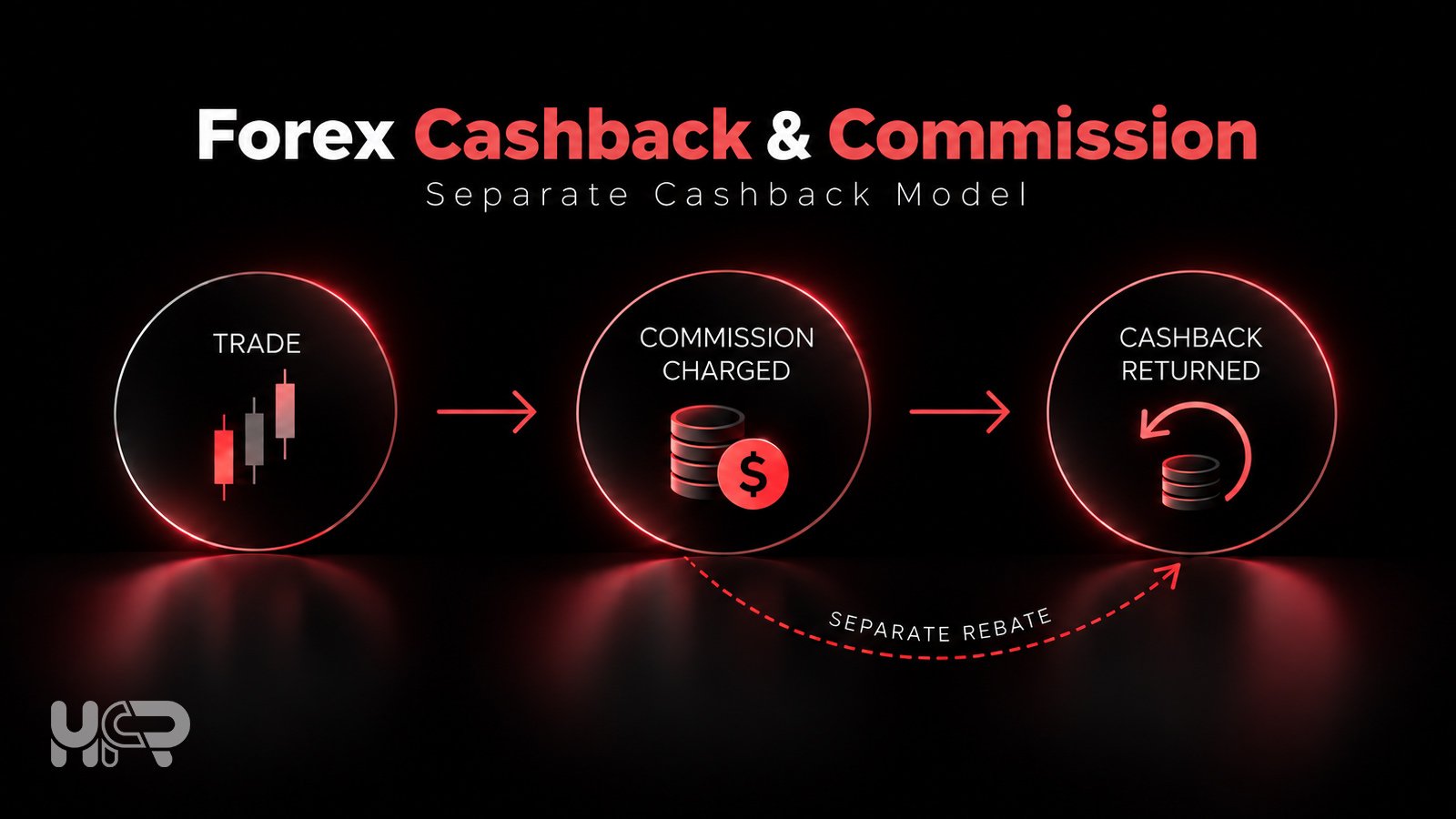
For cost comparison, identify the broker’s normal spread and commission first, then apply the HFR arrangement exactly as stated on the relevant broker page. Deduct a separately paid rebate once; if a direct broker-applied reduction is already included in the trading cost, do not subtract it again. HFR’s Forex Cashback Per Lot guide explains proportional rebate calculations in more detail.
Cashback or a direct cost reduction can offset part of eligible trading costs under the applicable conditions. Neither changes the market outcome of a trade or reduces market, leverage or execution risk.
Common commission-reading mistakes
- Treating per lot, per side and round turn as three alternative quote types. Per lot describes volume and can be combined with either per-side or round-turn pricing.
- Forgetting to convert a per-side rate to round turn. If both entry and exit are charged, include both sides.
- Comparing per-side and round-turn quotes directly. Put both figures on the same trade-volume and completed-trade basis.
- Ignoring account currency, rounding, contract size or minimum charges. The displayed commission may differ from a simple proportional calculation.
- Comparing commission without the spread. A lower commission does not guarantee a lower basic transaction cost.
- Assuming every broker or instrument uses the same convention. Some schedules use per-side, round-turn or per-million-notional pricing, and non-FX CFDs can use different contract sizes.
Forex commission explained: practical takeaway
Read a forex commission quote in two stages. First identify the volume basis, such as per standard lot. Then identify whether the published rate covers one side or the full round turn. Convert competing quotes to the same trade volume and full round-turn basis before comparing them.
Next convert the spread into money using the pip value for the position and add the round-turn commission. Consider overnight funding and other relevant charges separately, then apply any confirmed eligible rebate or direct cost reduction once. This prevents a lower-looking per-side figure from being mistaken for a lower completed-trade cost.
FAQ
What does commission per side mean in forex?
Commission per side means the stated fee applies to one part of the transaction, normally opening or closing the position. If both sides are charged, the completed-trade commission includes the opening and closing amounts.
What is a round-turn commission?
A round-turn commission is the combined commission for opening and later closing the stated position size. A broker can quote this amount directly or publish a per-side rate that must be converted.
If a broker charges USD 3.50 per lot per side, what is the full commission?
For 1.00 lot, the calculated commission is USD 7.00 round turn when the broker charges USD 3.50 on entry and another USD 3.50 on exit: USD 3.50 × 1.00 × 2 = USD 7.00.
How much commission is charged on 0.10 lot?
At an illustrative USD 3.50 per standard lot per side, 0.10 lot calculates to USD 0.35 per side and USD 0.70 round turn. Actual platform amounts can differ because of rounding, currency conversion or minimum-charge rules.
Can a forex commission be both per lot and per side?
Yes. “Per lot” describes the volume basis, while “per side” describes how many transaction sides the quote covers. For example, USD 3 per standard lot per side means USD 3 on opening and another USD 3 on closing for each 1.00 lot, if both sides are charged.
Is the spread included in the commission?
Usually not when commission is listed as a separate fee. The spread is the bid-ask difference, while commission is charged separately. Both should be converted to the same monetary basis for a basic cost comparison.
Does a zero-commission forex account have no trading cost?
No. A zero-commission pricing model can still include a spread, and other charges such as overnight funding may apply. Zero commission should not be described as cost-free.
Can forex cashback reduce the net cost of commission?
Eligible cashback may offset part of the trading cost after qualifying activity is confirmed. The rebate does not necessarily equal the commission charged and remains subject to the applicable HFR and broker conditions.
Sources and methodology
This article was rechecked on 7 September 2026 using current broker and HFR sources. Broker commission schedules can vary by legal entity, platform, account currency and instrument. The illustrative USD 3.50 rate is used only to explain the maths and is not presented as a universal broker commission.
- Tickmill — Raw Account
- Tickmill UK — Trading Costs & Fees
- Pepperstone — Forex lot sizes
- HighFxRebates — Raw Spread vs Standard Account
- HighFxRebates — Forex Cashback Per Lot
Disclosure and risk warning
Disclosure: HighFxRebates may receive remuneration from supported brokers under partner or introducing-broker arrangements. Rebate and direct cost-reduction eligibility, calculation and payment conditions remain subject to the applicable HFR and broker terms.
Risk warning: Forex and CFD trading involve risk. Cashback or cost reductions may offset part of eligible trading costs, but they do not reduce market risk, leverage risk, margin or liquidation risk, execution risk, spread risk, slippage risk, swap or overnight-funding costs, broker or counterparty risk, or the risk of loss.
Educational disclaimer: This article is for educational and informational purposes only. It should not be treated as financial advice, investment advice, trading advice or a recommendation to use any broker, account type, trading strategy or derivative.
 5
5
Share Posts


Further Reading
- Weekly Market Recap, 19–25 October 2026: Gold and Silver Fall as Crypto Flows Diverge
- Bitcoin, Ethereum, Solana, Gold and Silver: Daily Technical Outlook After the October Pullback
- Why Forex Spreads Widen: News, Rollover, Liquidity and Volatility
- What is Proof of Reserves on a crypto exchange? What it shows and what it does not