



Table of Contents
[ Show/Hide ]- • Binance review 2026: the short answer
- • Binance at a glance
- • Who operates Binance and how is it regulated in 2026?
- • Where is Binance available?
- • Binance fees in 2026
- • Deposits, withdrawals and other costs
- • Binance products and trading markets
- • Binance security and transparency
- • KYC and account verification
- • How Binance cashback works through HighFxRebates
- • Binance advantages and limitations
- • Binance review 2026: practical takeaway
- • FAQ
- • Sources and methodology
- • Risk warning
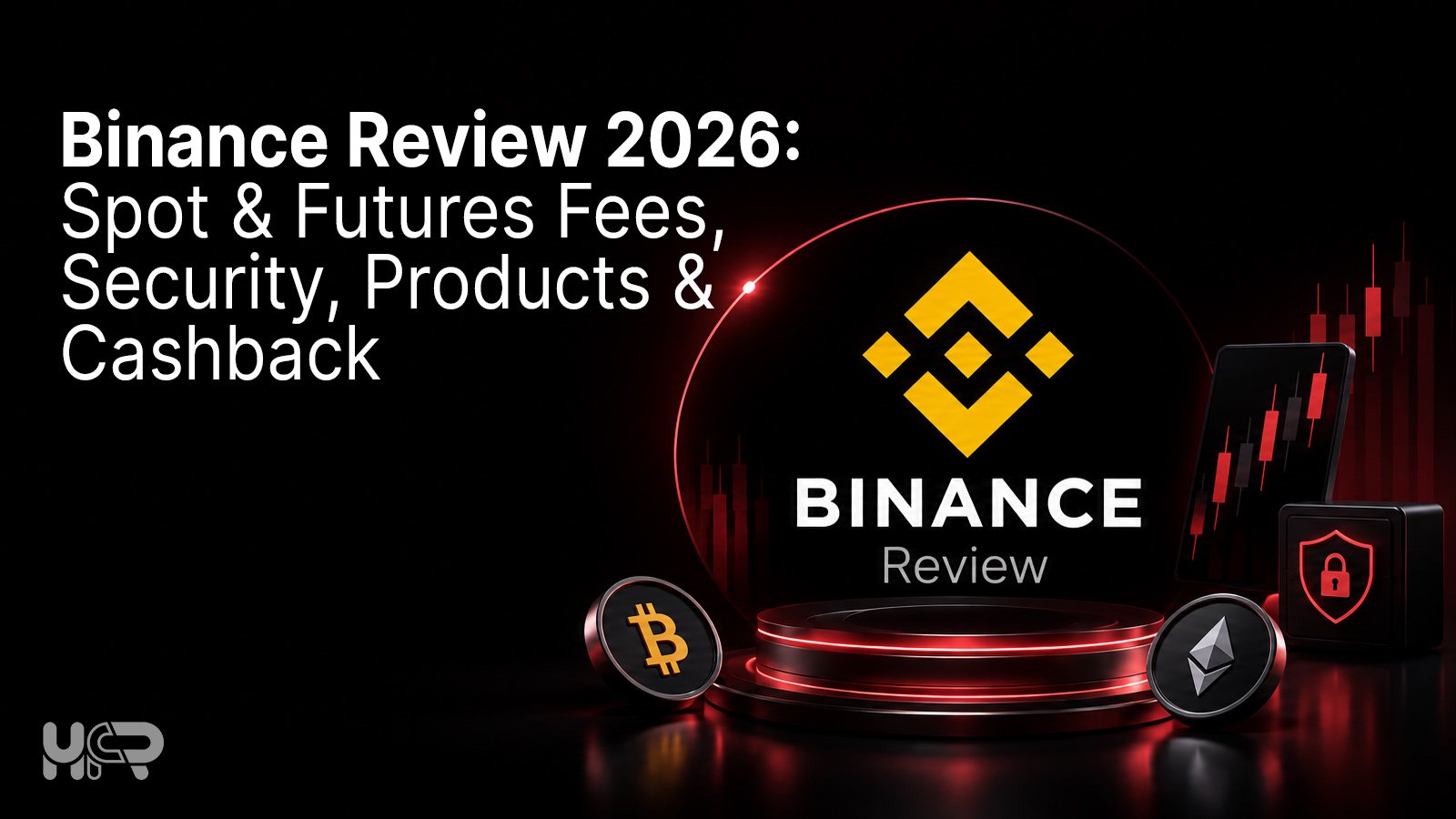
Binance is a centralised cryptocurrency platform with a broad product range, combining Spot, Convert, Margin, derivatives, P2P, Earn, staking, Copy Trading, bots and API access. That breadth makes a Binance review more complex than a simple fee comparison: trading costs, available products, legal entities, and client protections can differ by jurisdiction and account.
For regular Spot users, Binance currently shows a baseline fee of 0.100% maker and 0.100% taker, with an eligible BNB fee-payment rate of 0.075% maker and 0.075% taker on the live Spot schedule. Futures use separate USDⓈ-M and COIN-M fee schedules, and funding payments are separate from trading commissions.
For HFR-linked users, the confirmed HighFxRebates condition is 10% of eligible commissions paid, credited Daily & Direct. The exact eligible Binance product list should be confirmed with HFR rather than assumed across every service, fee or promotion.
Binance review 2026: the short answer
Binance offers a broad range of crypto services and currently lists a 0.100% maker / 0.100% taker regular-user Spot baseline. Its 2026 global regulatory structure includes ADGM entities regulated by the Financial Services Regulatory Authority (FSRA), while Binance also operates through jurisdiction-specific licences and entities. The entity, product set and legal protections available to a user can therefore differ by country.
Security and transparency measures include account controls such as 2FA, passkeys and anti-phishing codes, a Proof of Reserves system using Merkle-tree and zk-SNARK methods, and the SAFU emergency reserve. These mechanisms can add transparency or resilience, but they do not make exchange custody risk-free or guarantee reimbursement after every loss.
HFR cashback is separate from Binance's own VIP pricing, BNB fee discounts, pair-specific promotions, and Futures funding. A lower Binance commission can reduce the base on which cashback is calculated, while non-commission charges should not be assumed to qualify.
Binance at a glance
| Item | Current overview |
|---|---|
| Exchange type | Centralised cryptocurrency exchange (CEX) |
| Established | 2017 |
| Regulatory model | Multi-entity structure. Binance.com identifies three ADGM entities regulated by the FSRA; other licences and registrations vary by jurisdiction. |
| Spot regular fee | 0.100% maker / 0.100% taker on the current regular-user Spot schedule. |
| Eligible BNB Spot fee | 0.075% maker / 0.075% taker on the current table where the 25% BNB fee-payment discount applies. |
| Futures fees | Separate USDⓈ-M and COIN-M maker/taker schedules. Check the live fee table for the product, VIP level and promotion. |
| Main products | Spot, Convert, Margin, Futures, Options, P2P, Earn/staking, Copy Trading, trading bots and APIs, subject to regional eligibility. |
| KYC | Identity verification is required before normal trading and withdrawal access; individual products can have additional regional and eligibility rules. |
| Proof of Reserves | Merkle-tree and zk-SNARK-based verification. Cryptographic transparency mechanism, not a complete audit of every corporate liability. |
| SAFU | Emergency reserve, approximately US$1 billion and held in Bitcoin according to current Binance material. Not government deposit insurance. |
| HFR cashback | 10% of eligible commissions paid. |
| HFR payout | Daily & Direct. |
Who operates Binance and how is it regulated in 2026?
Binance should be understood as a group operating through multiple legal entities rather than as one exchange company regulated everywhere under a single licence. The entity responsible for a service depends on the user's jurisdiction and the product being used.
For Binance.com's global regulatory structure, Binance identifies three Abu Dhabi Global Market entities regulated by the FSRA. Nest Exchange Limited is recognised as a Recognised Investment Exchange (Derivatives), with a stipulation to operate a Multilateral Trading Facility. Nest Clearing and Custody Limited is recognised as a Recognised Clearing House, with permissions covering custody and operation of a central securities depository. Nest Trading Limited is authorised for several activities including dealing in investments, arranging deals, managing assets, providing money services and arranging custody.
Binance also maintains separate licences, registrations and legal entities in other jurisdictions. A registration for one activity should not be read as permission for every Binance product in that market. Regulation also does not guarantee the safety of funds or remove market, custody, operational, counterparty or cybersecurity risk.
Current reference: Binance Licences & Registrations
Where is Binance available?
Binance is available in many markets, but account access and product availability vary by country, legal entity and local regulation. Access to Spot does not automatically mean that Futures, Margin, P2P, Earn, fiat services, Copy Trading or newer TradFi products are available to the same user.
The United States is an important distinction: Binance.US is a separate platform and should not be treated as Binance.com. In the United Kingdom, Binance applies UK-specific terms, risk disclosures and product restrictions. Other markets can also have product-specific limitations, including on derivatives, stablecoins, promotions or payment services.
Because regional eligibility changes, a static restricted-country list can age quickly. Users should check the current Binance terms, local product pages and account-level eligibility before registration or trading. HFR eligibility should be checked separately because Binance availability in a country does not itself confirm cashback eligibility.
Binance fees in 2026
Binance uses different pricing structures across Spot, Margin, Futures, Options, Convert, fiat services and withdrawals. There is no single Binance fee that applies to every transaction.
Binance Spot trading fees
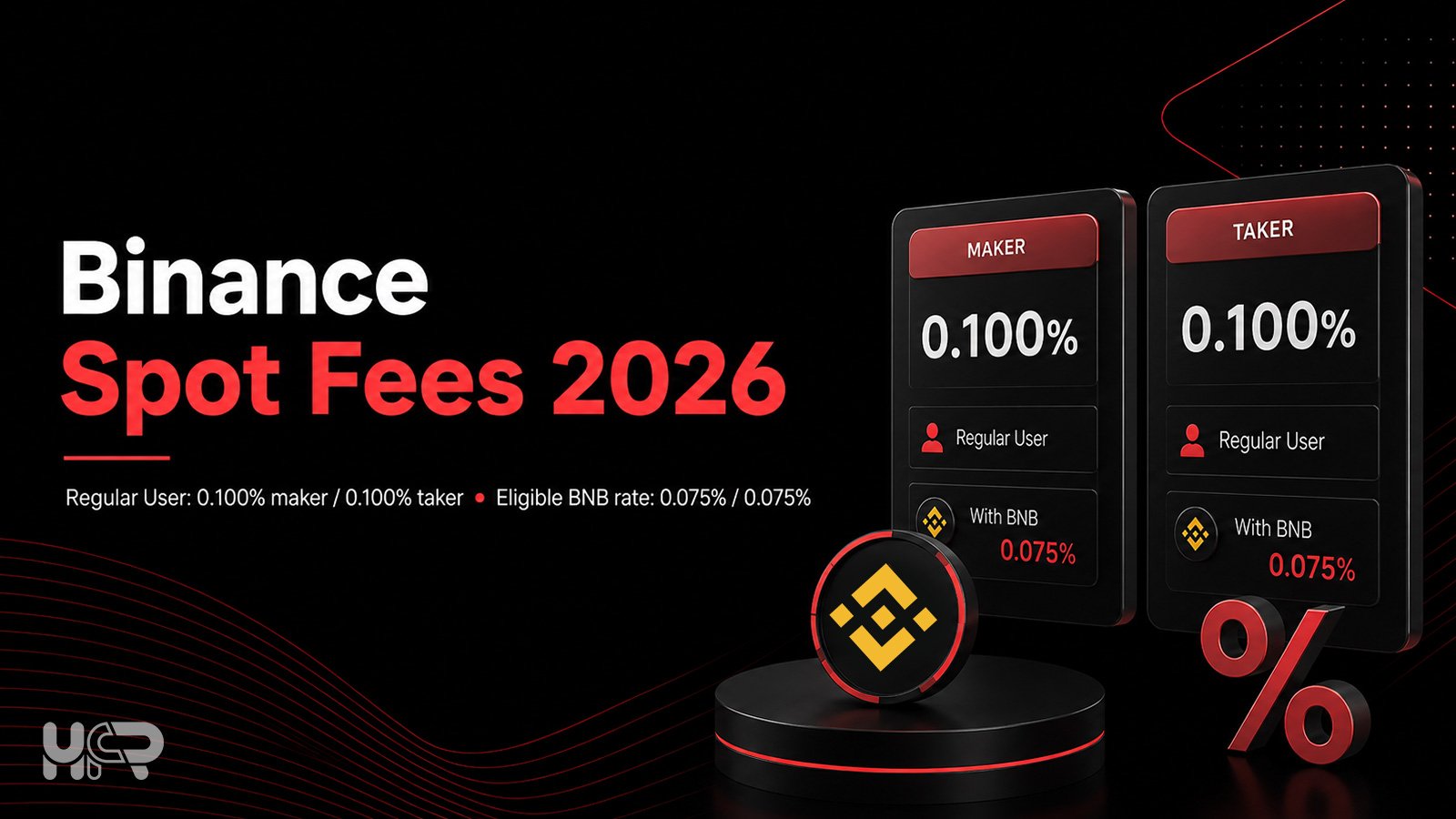
For a Regular User, Binance's current Spot schedule lists 0.100% maker and 0.100% taker. Where eligible BNB fee payment is enabled, the current table shows 0.075% maker and 0.075% taker, reflecting the standard 25% Spot fee reduction.
A maker order adds liquidity because it rests on the order book before execution; a taker order removes available liquidity by matching an existing order. The fee classification depends on how the order executes, not simply whether a limit or market order was selected.
VIP levels can reduce fees further, and selected pairs can have promotional pricing. The 0.100% and 0.075% figures are therefore useful regular-user baselines rather than universal rates.
Binance Futures fees and funding
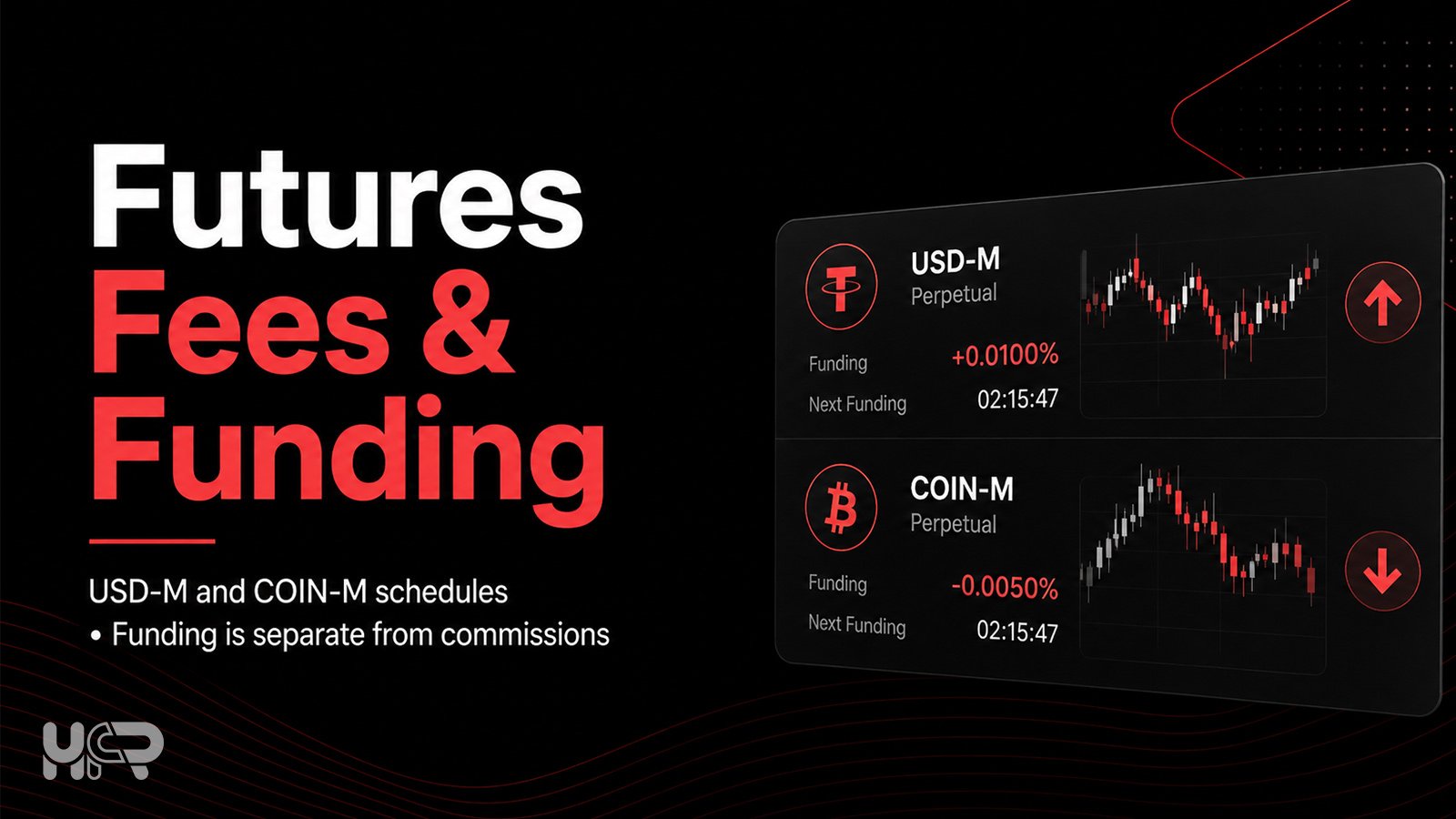
Binance Futures uses separate fee schedules for USDⓈ-M and COIN-M contracts. Public Binance fee guidance uses 0.020% maker and 0.050% taker in Regular User examples, but the live Futures fee table should be checked before calculating costs because product, VIP level, BNB eligibility and promotions can change the effective rate.
Funding payments are separate from maker/taker commissions. For perpetual contracts, funding is exchanged periodically between long and short positions and can be paid or received depending on the contract and funding rate. Funding intervals and caps can vary by contract.
Futures also involve leverage and liquidation risk. A lower commission or BNB discount does not reduce the market exposure of the position or guarantee that liquidation will be avoided.
VIP levels, BNB discounts and promotions
Binance uses VIP tiers that can reduce trading fees when the relevant volume, BNB balance or other programme conditions are met. Binance's live fee page states that VIP fees and benefits can apply across Binance products, but each product still has its own fee schedule.
BNB fee payment is a separate Binance mechanism. The current Spot table shows the standard 25% eligible discount. Binance also publishes BNB-related Futures fee benefits under its applicable rules. Pair-specific zero-fee or reduced-fee campaigns can override the usual baseline while they are active.
These Binance discounts are separate from HFR cashback. Where an eligible Binance discount reduces the commission actually charged, HFR cashback should be calculated from the eligible commission actually paid and reported rather than from an undiscounted headline rate.
Deposits, withdrawals and other costs
Binance states that crypto deposits do not carry a Binance deposit fee, although the sending wallet or exchange can charge a blockchain or withdrawal fee. Users must also select a compatible network and, where required, the correct memo or tag.
Crypto withdrawal fees and minimum amounts vary by asset and network and can change with network conditions. Fiat deposits and withdrawals are more region-dependent: available bank transfers, cards and payment services vary by currency, provider, Binance entity and country.
Other costs should be kept separate. Margin trading can involve borrowing interest; Futures can involve funding payments; Convert uses quoted pricing rather than standard Spot maker/taker fees; and card or payment-provider charges can apply in some regions. These costs should not automatically be treated as HFR-eligible commissions.
Binance products and trading markets
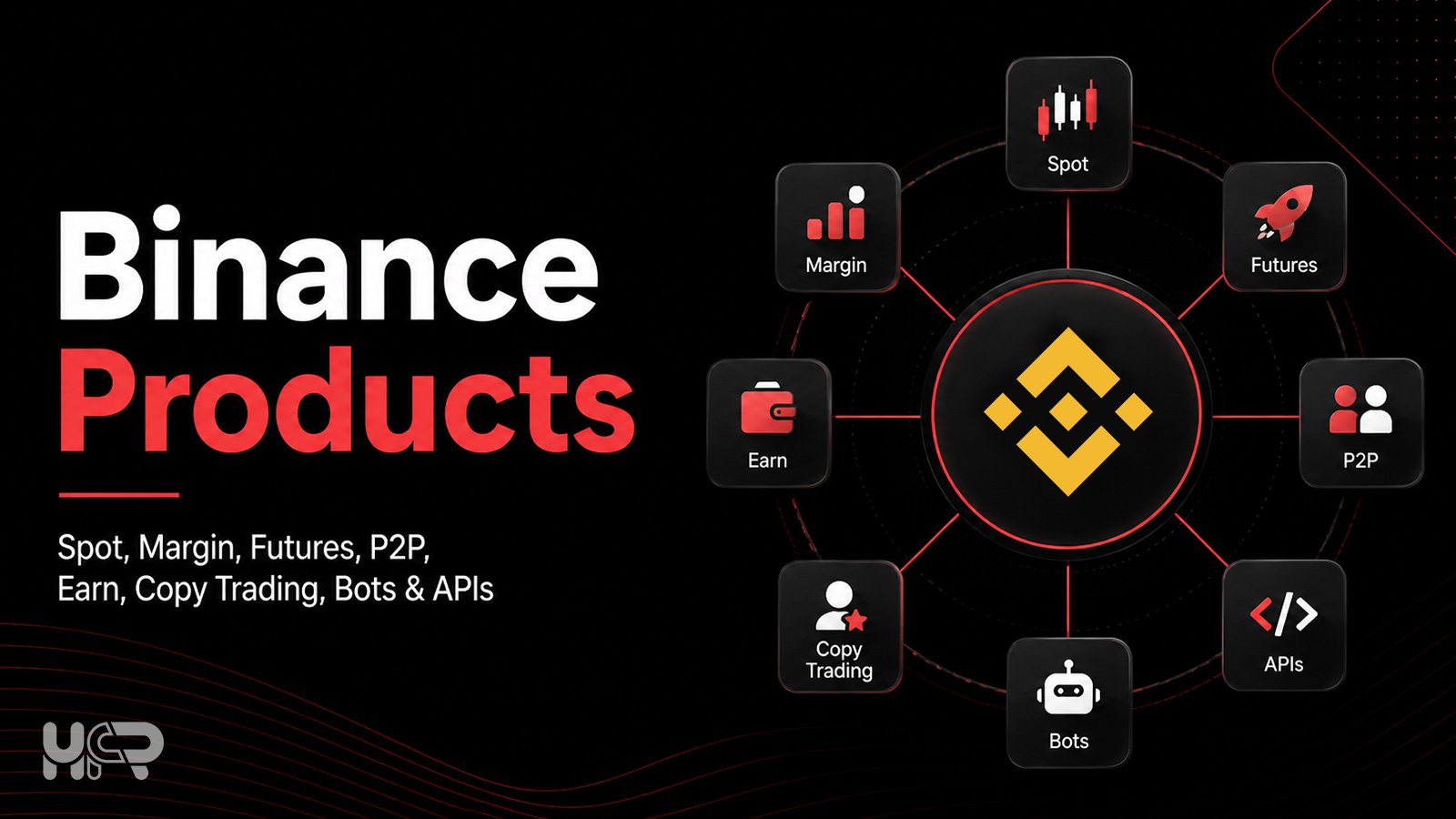
Binance combines trading, conversion, yield and automation services in one ecosystem, but product availability remains jurisdiction-specific. The most relevant products for a review are summarised below.
Spot, Convert and Margin
Spot trading allows users to buy and sell supported cryptoassets through the Binance order book. After a completed Spot purchase, the asset is held in the Binance account rather than represented by a leveraged derivative contract.
Binance Convert offers direct asset conversion using a quoted rate rather than a normal order-book maker/taker fee structure. Margin trading adds borrowing to the transaction and can introduce interest, collateral requirements and forced liquidation if account conditions deteriorate.
Futures, Options and TradFi perpetuals
Binance Futures includes USDⓈ-M and COIN-M derivatives. These products do not provide direct ownership of the underlying cryptoasset and can use leverage, funding and liquidation mechanisms.
In 2026 Binance expanded its TradFi perpetual range. Binance Academy material describes USDT-settled perpetuals linked to equities, ETFs and commodities. Some equity and ETF contracts offer up to 10x leverage, while contract-specific limits can differ; for example, later commodity contracts can use different leverage caps. These instruments are derivatives and do not give ownership of the underlying share, ETF or commodity.
Options are also available to eligible users in supported regions. Contract specifications, leverage limits and access should be checked on the relevant product page rather than assumed from the broader Binance product list.
Copy Trading, bots, APIs, P2P and Earn
Binance provides Spot and Futures Copy Trading in supported markets, trading bots for strategies such as grid, DCA or rebalancing, and APIs for market data and supported account/trading functions. These tools automate execution but do not reduce market or leverage risk, and historical lead-trader results do not predict future performance.
Binance P2P allows users to trade supported cryptoassets directly with other users through an escrow process. Earn and staking products provide reward mechanisms on supported assets, but rates, lock-up terms, redemption conditions and regional availability can change. P2P, Earn and staking introduce risks that differ from standard Spot trading, including counterparty, liquidity, product and platform risk.
Binance security and transparency
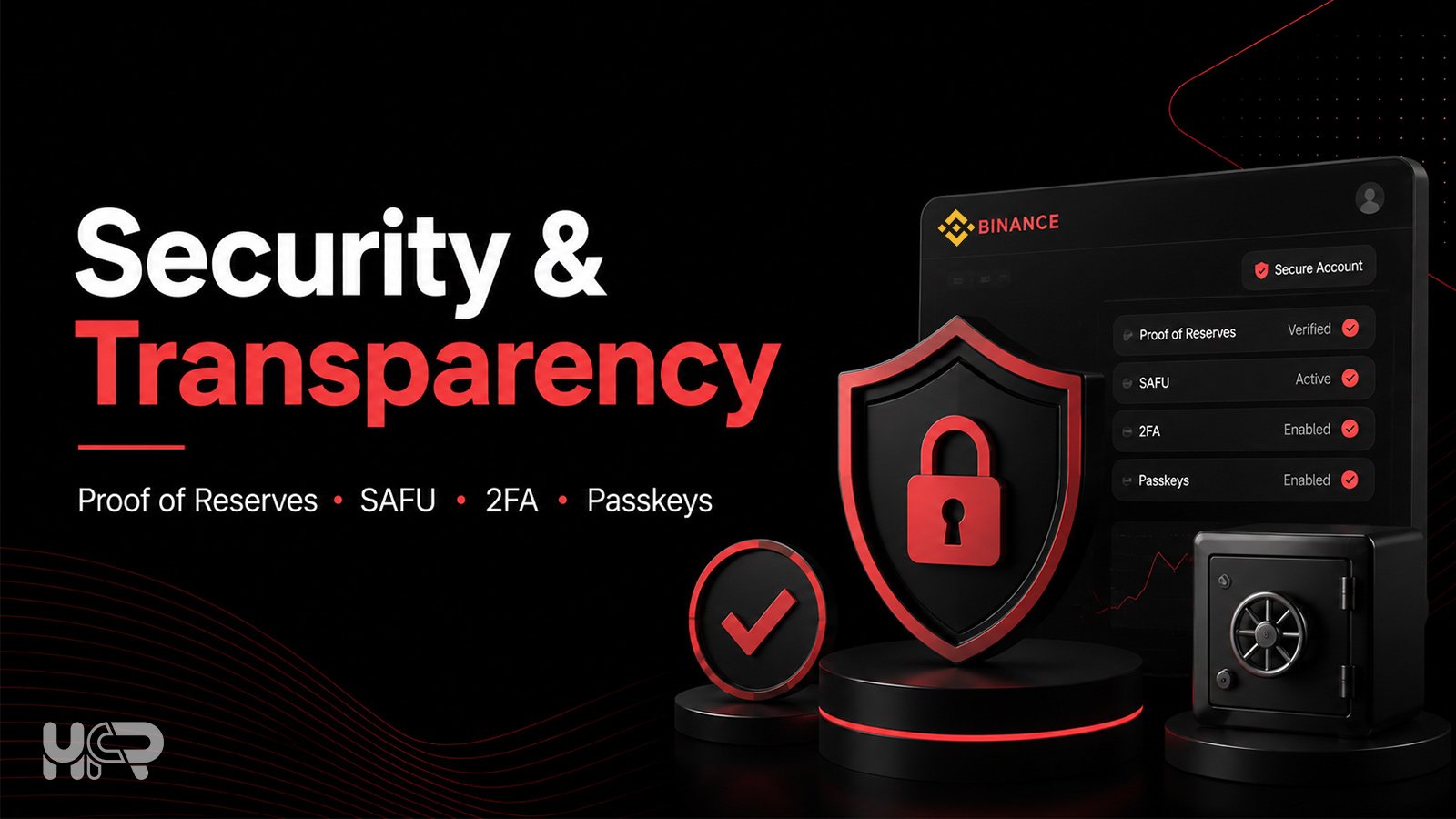
Binance uses platform-level and account-level controls, but centralised exchange custody still involves security, operational and counterparty risk.
Proof of Reserves
Binance's Proof of Reserves system is designed to provide cryptographic evidence that user balances included in a reserve snapshot are matched by reserve assets. It uses Merkle trees and zk-SNARK-based verification, and users can check whether their own balances were included in the relevant snapshot.
PoR can improve transparency, but it is a point-in-time mechanism. It should not be treated as a complete audit of Binance's entire corporate balance sheet, every off-chain liability or changes that occur between reserve snapshots. It also does not guarantee future solvency or prevent custody losses.
SAFU
The Secure Asset Fund for Users (SAFU) is an emergency reserve established by Binance in 2018. Current Binance material describes the fund as approximately US$1 billion and held entirely in Bitcoin, with custody and management through Nest Clearing and Custody Limited, an ADGM-regulated recognised clearing house.
SAFU is intended as a last-resort reserve for certain extreme events. It is not government deposit insurance, does not create a guaranteed claim for every user loss and can fluctuate in value because it is held in Bitcoin.
User account security
Binance provides controls including two-factor authentication, passkeys, hardware security keys, anti-phishing codes, device management and withdrawal-address controls. API users can also apply permission and IP restrictions.
These measures can reduce specific account-access risks but cannot eliminate phishing, malware, compromised email accounts, stolen devices or exchange-level risks. Users should treat account security and platform custody as separate layers of risk.
KYC and account verification
Binance uses Know Your Customer (KYC) checks to verify user identity and support anti-money-laundering and regulatory requirements. An account can be created before full verification, but access to trading and other activities is limited until the required checks are completed.
Verification can involve personal information, government-issued identification and, depending on the user and jurisdiction, proof of address or enhanced due-diligence information. Completing KYC does not guarantee access to every Binance product; Futures, Margin, fiat services, P2P, Earn and other features can have separate eligibility requirements.
How Binance cashback works through HighFxRebates
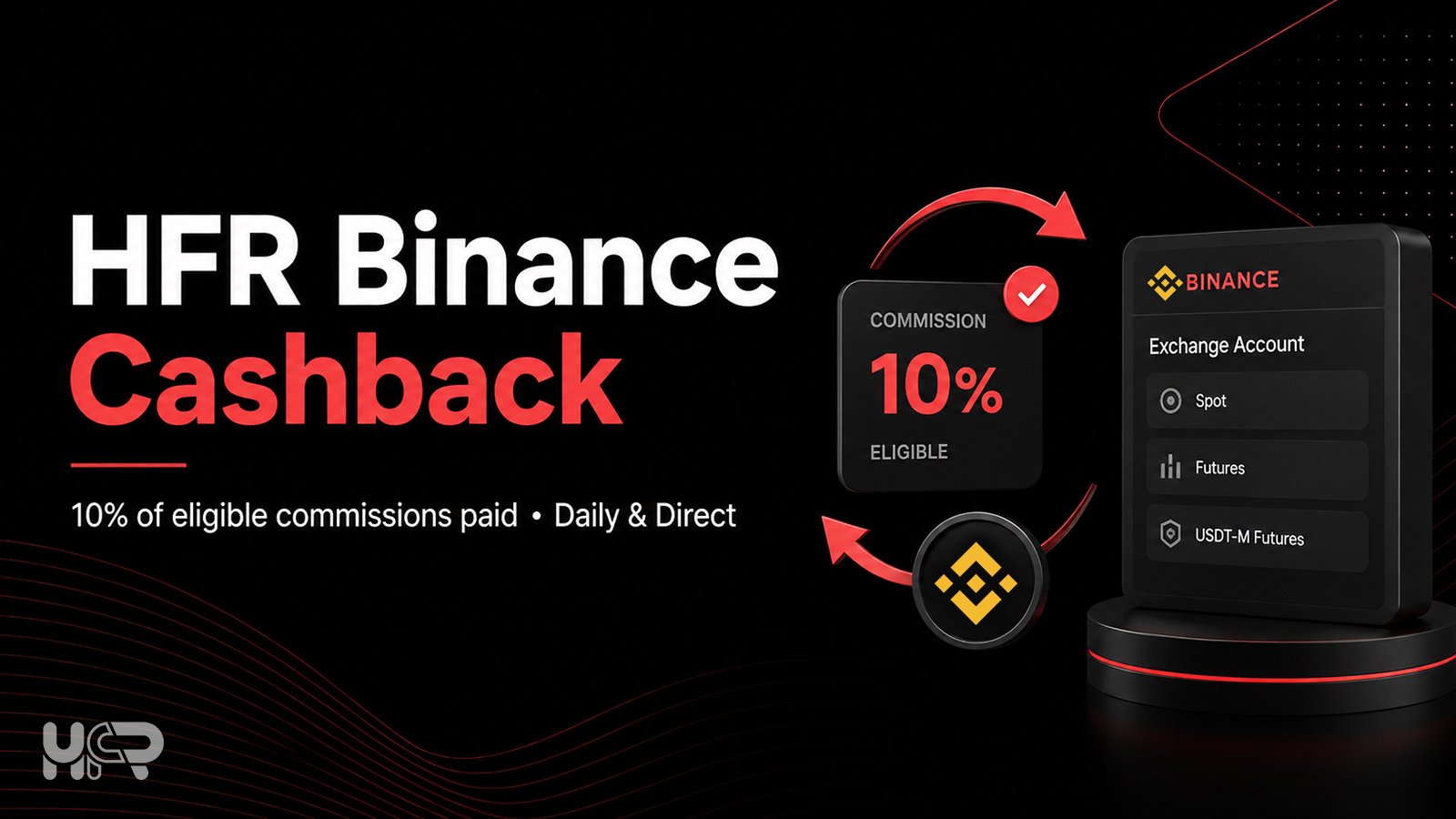
HighFxRebates offers eligible Binance users 10% of eligible commissions paid, credited Daily & Direct. The cashback is a partial return of an eligible trading cost and should not be treated as trading income, a profit guarantee or protection against market losses.
The confirmed rate does not mean every Binance fee or product is eligible. HFR's current detailed FAQ states that the exact eligible product list still requires confirmation. Funding payments, Margin borrowing interest, withdrawal and deposit charges, gas/network fees, liquidation losses, card-processing charges, spreads, slippage and third-party fees should therefore be treated as excluded unless HFR specifically confirms otherwise.
HFR cashback is also separate from Binance VIP pricing, BNB fee discounts and promotions. If Binance charges no eligible commission under a zero-fee campaign, there is normally no commission base from which to calculate the 10% cashback.
Current HFR reference: Binance cashback page
New Binance account
For a new account, use the Binance registration link provided by HighFxRebates rather than registering independently. Complete the required Binance verification, submit the Binance UID to HFR where requested and wait for HFR confirmation before relying on cashback tracking.
Trading completed before successful attribution or approval should not be assumed to qualify retroactively. Once the account is confirmed, eligible activity can generate the 10% cashback under the current HFR-Binance arrangement.
Existing Binance account
If you already have a Binance account, HFR currently instructs users to contact Binance Support or Live Chat and ask whether the account can be attributed under referral ID HFREBATES.
Existing-account attribution should therefore be treated as case-by-case. Obtain confirmation from Binance and HFR before relying on cashback tracking. If reassignment is not permitted, HFR's current route is to register a new account through the HFR-provided Binance link. Previous activity should not be assumed to become eligible retroactively.
Binance advantages and limitations
| Potential advantages | Material limitations / checks |
|---|---|
| Broad product range spanning Spot, Convert, Margin, derivatives, P2P, Earn, Copy Trading, bots and APIs. | Product access varies by country, legal entity, verification status and product rules. |
| Regular Spot baseline of 0.100% maker / 0.100% taker, with lower eligible BNB and VIP rates. | Promotions, VIP tiers and Futures schedules can change, so live rates should be checked. |
| Separate USDⓈ-M, COIN-M and TradFi perpetual markets. | Derivatives involve leverage, funding and liquidation risk and are restricted in some jurisdictions. |
| Proof of Reserves provides cryptographic verification tools. | PoR is not a full audit of every corporate liability and does not guarantee future solvency. |
| SAFU provides an emergency reserve for certain extreme events. | SAFU is not government deposit insurance and does not guarantee reimbursement of every loss. |
| Multiple account-security controls including 2FA, passkeys and withdrawal-address controls. | Security tools cannot eliminate phishing, custody, operational or counterparty risk. |
| Eligible HFR-linked activity can receive 10% of eligible commissions paid, Daily & Direct. | Exact eligible products and existing-account attribution should be confirmed rather than assumed. |
Binance review 2026: practical takeaway
Binance may be worth comparing for users who want a wide product range, published regular-user Spot pricing, multiple derivatives markets, automation tools and integrated account features. Its global structure includes ADGM entities regulated by the FSRA, while local entities, permissions and product availability still depend on jurisdiction.
The main limitations are complexity and jurisdictional variation. Futures and Margin involve leverage and liquidation risk; fiat, P2P, Earn and Copy Trading can have separate regional conditions; and Proof of Reserves or SAFU should not be interpreted as guarantees of safety.
Before registering, check the applicable Binance entity, available products, live Spot and Futures fees, KYC requirements, deposit and withdrawal methods and local restrictions. HFR cashback should then be checked separately. The confirmed HFR rate is 10% of eligible commissions paid, Daily & Direct, but exact product eligibility and any existing-account relinking should be confirmed before relying on tracking.
FAQ
Is Binance regulated in 2026?
Yes, but not under one universal regulator. Binance identifies Nest Exchange Limited, Nest Clearing and Custody Limited and Nest Trading Limited as ADGM entities regulated by the FSRA, while other licences and entities apply in specific jurisdictions. The applicable legal entity and protections depend on the user's location and service.
What are Binance Spot trading fees in 2026?
For a Regular User, the current Spot schedule lists 0.100% maker and 0.100% taker. Where the eligible 25% BNB fee-payment discount applies, the current table shows 0.075% maker and 0.075% taker. VIP tiers and promotions can produce different rates.
What are Binance Futures trading fees?
Binance uses separate USDⓈ-M and COIN-M fee schedules. Public Binance guidance uses 0.020% maker and 0.050% taker in Regular User examples, but live product and VIP rates should be checked before trading. Funding payments are separate from commissions.
What is Binance Proof of Reserves?
Binance Proof of Reserves uses cryptographic methods including Merkle trees and zk-SNARKs to help users verify that their balances were included in a reserve snapshot. It is a transparency mechanism, not a complete audit of every corporate liability or a guarantee of future solvency.
What is the Binance SAFU fund?
SAFU is an emergency reserve established by Binance in 2018. Current Binance material describes it as approximately US$1 billion and held in Bitcoin. It is not government deposit insurance and does not guarantee reimbursement of every loss.
Does Binance require KYC?
Binance uses identity verification and limits access to trading and other activities until the required KYC checks are completed. Individual products can still have additional regional and account-eligibility requirements.
How does Binance cashback work with HighFxRebates?
For eligible and correctly attributed accounts, the confirmed HFR condition is 10% of eligible commissions paid, credited Daily & Direct. Exact product eligibility should be confirmed with HFR, and non-commission charges should not be assumed to qualify.
Can an existing Binance account receive HFR cashback?
Potentially, but not automatically. HFR currently instructs users to ask Binance Support about attribution under referral ID HFREBATES, while HFR's detailed FAQ says existing-account relinking is not universally confirmed. Obtain confirmation from both Binance and HFR before relying on tracking.
Sources and methodology
This review was checked against current Binance and HighFxRebates sources on 28 August 2026. Changeable information such as fees, regulatory structure, product access, Proof of Reserves, SAFU and HFR cashback conditions was treated as time-sensitive. Where eligibility is product- or jurisdiction-specific, the article directs readers to confirm the live condition before relying on it.
Binance Fees & Transactions Overview — Spot, VIP, BNB and product-specific fee schedules.
Binance Licences & Registrations — ADGM/FSRA entities and other regulatory information.
Binance Terms of Use — Jurisdiction and product-access framework.
Binance Proof of Reserves — Reserve verification and user inclusion checks.
Binance Academy — Proof of Reserves — PoR methodology and limitations.
Binance Academy — SAFU — Current emergency-fund structure and purpose.
Binance Academy — Stock Perpetual Contracts — 2026 TradFi perpetual product specifications and risk context.
Binance Academy — KYC — identity-verification scope and limitations.
Binance Academy — Transaction Fees — maker/taker mechanics and BNB fee discounts.
HighFxRebates — Binance Cashback — 10% of eligible commissions paid / Daily & Direct and current account-attribution guidance.
Risk warning
Cryptoassets and derivatives can be highly volatile. Futures and Margin products use leverage and may lead to rapid losses or liquidation. Centralised exchanges also involve custody, operational, security and counterparty risk.
Proof of Reserves, regulatory licences, SAFU and account-security tools can provide transparency or protection mechanisms, but they do not guarantee that funds, platform access or trading results are risk-free.
HFR cashback may return part of eligible trading commissions after confirmation, but it does not reduce market, leverage, liquidation, funding-rate, exchange, custody, security or counterparty risk. The 10% of eligible commissions paid / Daily & Direct arrangement is a cost-offset mechanism, not protection against trading or platform losses.
This review is for educational and informational purposes only. It should not be treated as financial, investment, trading, or legal advice, or as a recommendation to use Binance, any cryptoasset, derivative, or trading strategy.
 6
6
Share Posts


Further Reading
- What is Proof of Reserves on a crypto exchange? What it shows and what it does not
- ActivTrades Review 2026: Accounts, Fees, Platforms, Regulation and Cashback
- Weekly market recap, 12–18 October 2026: Inflation, yields, gold and crypto
- Bitcoin, Ethereum, Solana, Gold and Silver: Daily technical outlook for 19 October 2026