

Get ThinkMarkets Rebates up to $37.50 per eligible round-turn lot, paid weekly and directly
ThinkMarkets Rebates
Crypto Exchange Cashback, Brokers & Fees
Compare Crypto Exchanges and Find the Best Cashback Deals
Comparing crypto exchange cashback, crypto trading brokers, and fees for crypto exchanges can help traders
understand the overall cost of their trading activity. Different exchanges and brokers may offer different fee
structures, trading conditions, and cashback or rebate opportunities.
When comparing crypto platforms, consider trading fees, withdrawal charges, spreads, supported cryptocurrencies,
and available rebate programs. Crypto exchange cashback can potentially help reduce eligible trading costs,
while comparing crypto trading brokers can help identify platforms that match your trading needs.
Understanding fees for crypto exchanges is especially important for active traders, as transaction costs can
vary depending on the platform, trading volume, and type of trade. Compare the available options carefully to
find competitive fees and suitable cashback opportunities.
HighFxRebates helps traders explore
crypto exchange
and broker rebate options while comparing important trading costs in one place.
| Exchanges |


Find the Crypto Exchange you want to compare

| Exchanges |
Exchange Rating
|
User Rating |
★
★
★
★
★
0.0
No Rating
|
★
★
★
★
★
0.0
No Rating
|
|
Regulation Rating |
★
★
★
★
★
2.0
Average
|
★
★
★
★
★
2.5
Average
|
|
Information Rating |
★
★
★
★
★
4.5
Excellent
|
★
★
★
★
★
4.0
Good
|
Exchange Rate
| Rebate Option | Weekly To HFR | Weekly To HFR |
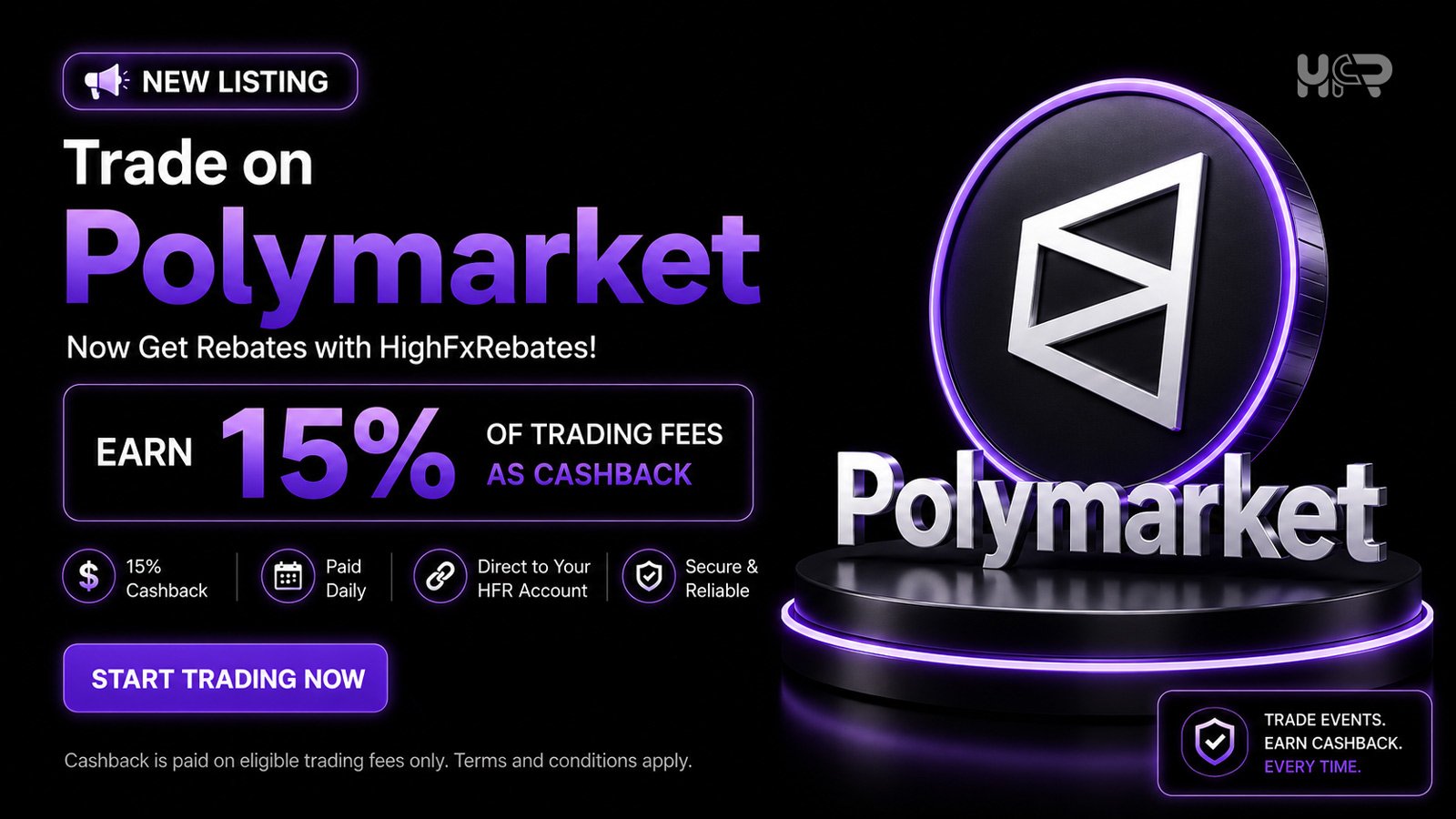
| Rebate Rate | 4% Discount + 5% Rebate on trading fees | 15% of trading fees |
Exchange Information
| Regulated | ||
| Regulated by | Not Regulated | |
| Country | Cyprus | Not Specified |
| Year Established | 2023 | 2020 |
|
Decentralized |
||
| Type Of Currency | Only Crypto | Only Crypto |
| Accept U.S Client | ||
| Accept Japanese Client | ||
| Accept Canadian Client |
Funding and Withdrawal Options and Fees
| Supported Blockchain Networks | Bitcoin (BTC), Ethereum (ETH), Solana (SOL), Arbitrum One (ARB) | Bitcoin (BTC), Ethereum (ETH), Solana (SOL), Arbitrum One (ARB) |
| Number of Currencies | 300 | 0 |
| Exchange Fee | 0.070% | 0% |
| Taker Fee | 0.070% | 0% |
| Maker Fee | 0.040% | 0% |
| Deposit Fiat Methods | ||
| Withdrawal Fiat Methods |
Account Options
| Minimum Deposit | 5 | 0 |
|
Leverage |
40 | 0 |
|
Anonymity |
||
|
Integrated Wallets |
||
|
KYC Required |
||
| Demo Account | ||
| Two-factor Authentication | ||
|
Affiliate Program |
Trading Options
|
Asset Classes |
CryptoCurrency, Futures, Indices, Metals | CryptoCurrency |
|
Copy Trading(Expert Advisor) |
||
|
Social Trading |
||
|
Proof Of Reserves |
||
|
Technical Analysis Tools |
||
|
Margin Trading |
||
|
API availability |
Platforms
| Trading Platform | Web Platform | Web Platform, Iphone App, Android App |
|
Mobile App |
Customer Support
| 24 hr Support | ||
| Support Languages | English | Bahasa (Indonesian), Dutch, English, French |
| Support Options | Email, Discord, Ticket | Email, Live Chat, Discord, X (Twitter) |
| Restricted Countries | Canada, United States | Cuba, Iran, North Korea, Syria |
FAQ
-
What are crypto exchanges comparison tools?
Crypto exchanges comparison tools allow traders to evaluate different cryptocurrency trading platforms based on fees, features, and rebate opportunities. HighFxRebates provides a detailed comparison interface that helps users analyze exchange ratings, supported assets, trading platforms, and cashback programs before selecting a crypto exchange. -
How do cryptocurrency trading platform comparisons help traders?
Cryptocurrency trading platform comparisons help traders review important exchange details such as trading fees, supported cryptocurrencies, rebate rates, and account features. HighFxRebates offers a structured comparison tool so traders can analyze multiple exchanges and identify platforms that align with their trading strategies. -
Which crypto exchange features comparisons matter most?
Crypto exchange features comparisons typically include trading fees, asset availability, platform usability, and security tools. HighFxRebates displays these comparisons in one place so traders can evaluate exchanges based on functionality, supported trading options, and cashback opportunities offered through the platform. -
Where are crypto trading platforms comparison lists available?
Crypto trading platforms comparison lists are available on platforms that aggregate data about cryptocurrency exchanges. HighFxRebates maintains a comprehensive comparison list where traders can review exchange ratings, supported coins, trading features, and rebate programs before selecting a trading platform. -
How do cryptocurrency exchanges fee comparisons work?
Cryptocurrency exchanges fee comparisons allow traders to review maker fees, taker fees, and other trading costs across different exchanges. HighFxRebates provides a comparison system that helps traders identify platforms offering competitive fee structures along with cashback rebate opportunities. -
Are crypto exchange comparison platforms reliable for decision-making?
Crypto exchange comparison platforms are reliable when they provide accurate and updated data. HighFxRebates offers transparent information on fees, features, and rebates, helping traders make confident decisions while selecting exchanges that align with their trading goals and cost management strategies. -
Which crypto exchange offers better trading conditions overall?
Trading conditions vary across exchanges depending on fees, execution speed, and available features. HighFxRebates helps traders identify suitable options by comparing these factors along with cashback rebates, enabling users to select exchanges that provide better value and improved profitability over time. -
Where can I compare different crypto exchanges in one place?
You can compare multiple crypto exchanges on HighFxRebates using detailed data such as trading fees, rebate rates, and platform features. This helps traders evaluate options side by side and choose exchanges that match their trading strategy while reducing overall costs through cashback rebates. -
What should I compare when choosing a crypto exchange?
When choosing a crypto exchange, you should compare trading fees, available rebates, liquidity, security features, and supported assets. HighFxRebates simplifies this process by providing structured comparison data, allowing traders to make informed decisions while optimizing cost efficiency and trading performance. -
Which crypto exchanges have the highest liquidity and why does liquidity matter for trading?
Binance consistently reports the highest spot trading volume globally, followed by OKX and Bybit. Higher liquidity means tighter bid-ask spreads and less slippage on large orders. For traders executing orders above $50,000 at a time, the difference in liquidity between a top-tier and second-tier exchange can translate to meaningful price impact. Liquidity also affects how quickly a position can be exited in a fast-moving market. -
How do crypto exchanges differ in the staking and yield products they offer, and what should I compare?
Exchanges offering staking typically provide both flexible and locked staking options. Flexible staking allows withdrawal at any time with lower yield, while locked staking requires committing for a fixed period for higher returns. APY rates differ by asset and exchange. Binance Earn, Bybit Savings, and OKX Earn are the main centralised products. Key comparison points are APY, lock-up period, whether principal is at risk, and the redemption processing time. -
Which crypto exchanges offer the highest leverage on futures and what are the risks involved?
Bybit, Binance, and OKX offer up to 125x leverage on BTC perpetual futures for eligible users. Leverage above 20x significantly increases liquidation risk during normal market volatility. At 100x leverage, a 1% adverse price move liquidates the entire position. Most exchanges apply lower leverage limits to new accounts or smaller position sizes, and some jurisdictions restrict leverage for retail users under local regulations. -
What are the main fee differences between major crypto exchanges and how do they affect trading costs?
Spot trading fees typically range from 0.08% to 0.20% per trade across major exchanges. Binance charges 0.10% standard, reduced to 0.075% when using BNB. Bybit charges 0.10% for spot takers. OKX charges 0.08% to 0.10%. Futures fees are lower, commonly 0.02% to 0.06%. Fee differences appear small per trade but compound significantly at high volume. A trader executing $1 million monthly in spot volume saves $200 per month by choosing an exchange with 0.08% versus 0.10% fees. -
How do spot trading fees compare to futures trading fees across major crypto exchanges?
Spot trading fees at major exchanges typically range from 0.08% to 0.20% per trade. Futures fees are lower, commonly 0.02% to 0.06% for takers and 0.00% to 0.02% for makers. Binance futures charges 0.02% taker and 0.00% maker at base tier. Bybit and OKX offer similar futures fee structures. The lower futures fees make perpetual contracts more cost-efficient for high-frequency traders, though funding rates add a separate cost component not present in spot trading. -
What is a proof-of-reserves audit for a crypto exchange, and how does it protect traders?
A proof-of-reserves audit is an independent verification that an exchange holds sufficient assets to cover all client deposit liabilities. The auditor compares the exchange's on-chain wallet balances against its internal ledger of client balances. A positive audit confirms the exchange is not operating a fractional reserve. It does not guarantee the exchange will not become insolvent for other reasons, but it confirms client deposits are backed by actual assets at the time of the audit. -
Which crypto exchanges have the lowest fees and best liquidity for trading stablecoin pairs?
Binance and OKX typically offer the deepest liquidity for USDT and USDC pairs due to their large user bases and market maker programs. Stablecoin-to-stablecoin pairs such as USDT/USDC often trade at near-zero spread on these exchanges. Fee-wise, Binance charges 0.10% spot taker, reducible to 0.075% with BNB. OKX charges 0.08% to 0.10%. For large stablecoin conversions, OTC desks on these exchanges can offer better rates than the spot order book for amounts above $100,000. -
How reliable is the reported trading volume on crypto exchange comparison sites, and can it be manipulated?
Reported volume on comparison sites is sourced from exchange APIs or third-party aggregators like CoinGecko and CoinMarketCap. Wash trading, where an exchange trades with itself to inflate volume figures, has been documented at unregulated exchanges. Regulated exchanges with transparent order books and independent volume verification are more reliable. Comparing volume figures across multiple independent aggregators rather than relying on a single source reduces the risk of being misled by inflated data. -
Which crypto exchanges have the widest selection of smaller altcoins, and is liquidity sufficient?
BingX, Gate.io, and MEXC are known for listing large numbers of altcoins, often earlier than Binance or Coinbase. BingX lists approximately 887 coins. However, lesser-known altcoins on any exchange typically have shallow order books, wide bid-ask spreads, and low trading volumes. This means large orders cannot be executed without significant price impact. Traders interested in smaller altcoins should use limit orders and check the 24-hour volume on the specific pair before placing a position of meaningful size. -
Which crypto exchange makes it easiest to deposit fiat currency and convert it to crypto?
Coinbase and Kraken are generally rated highest for ease of fiat deposits in the US and Europe due to their support for bank transfers, credit cards, and local payment methods including SEPA in Europe and ACH in the US. Binance supports fiat deposits in many regions but has faced payment partner restrictions in some countries. For users outside major markets, P2P trading desks on Binance or Bybit provide an alternative route to acquire crypto using local bank transfers even where direct fiat deposits are unavailable. -
Do any crypto exchanges offer insurance on deposited assets, and what does it actually cover?
No major crypto exchange offers insurance on trading losses or price declines. Some exchanges maintain internal insurance funds for security incidents. Binance's SAFU fund, Coinbase's crime insurance policy covering a portion of hot wallet assets, and Bybit's protection fund are examples. These funds are not equivalent to traditional bank deposit insurance and have defined limits. They specifically cover losses from exchange-side security failures, not from individual account compromises resulting from user negligence such as weak passwords or phishing.